Showing posts with label parental behavior. Show all posts

Tuesday, November 27, 2018

Birds, Vitamin E, and the Race Against Time: A Guest Post

A reposting of an original article by Alyssa DeRubeis

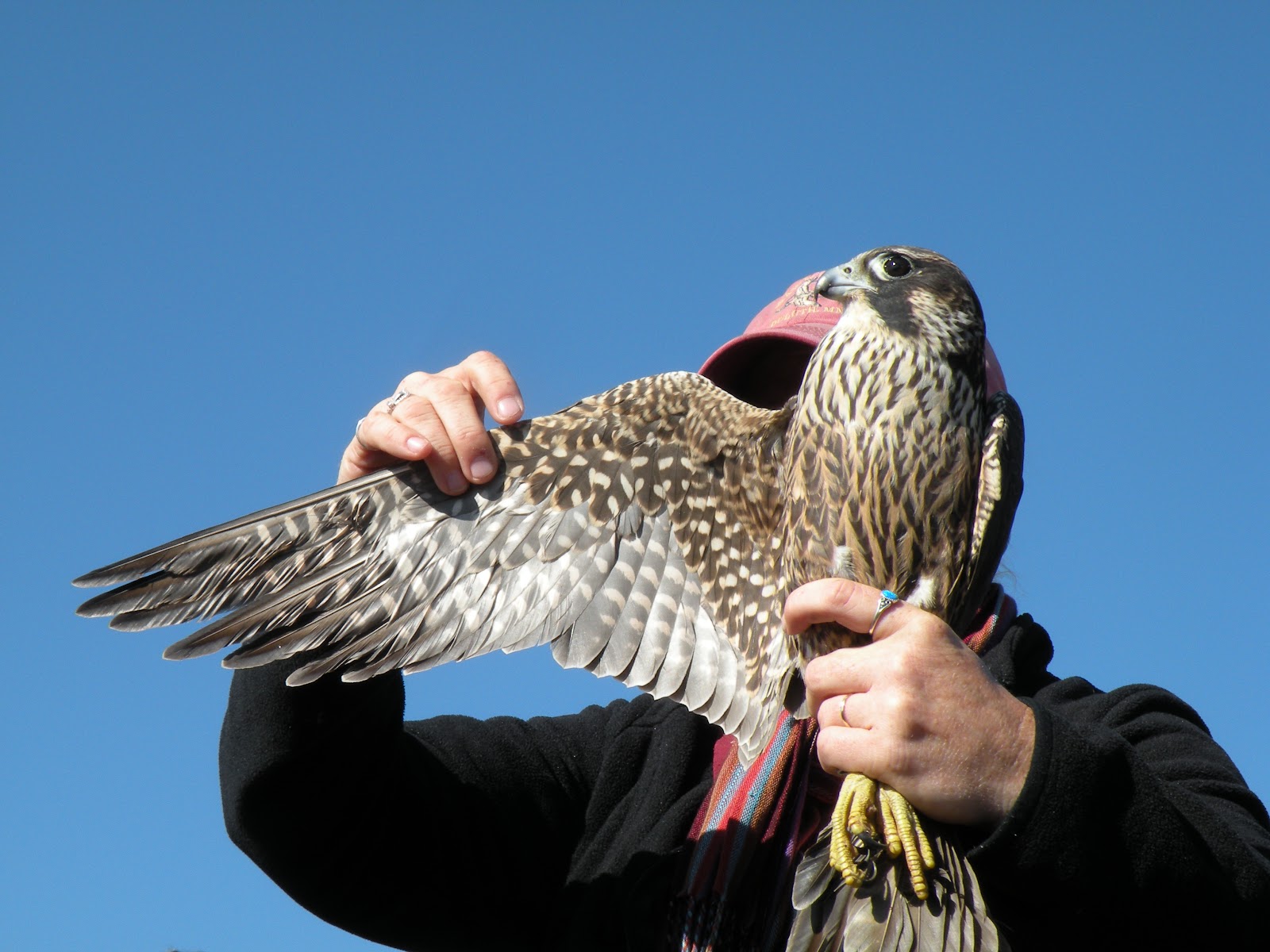
The long and tapered wings on this young
Peregrine Falcon means it was built for some
serious speed! Photo by Alyssa DeRubeis.
Maybe you’ve been put under the false assumption that humans are cool. Don’t get me wrong; our bodies can do some pretty neat physiological stuff. But I’m gonna burst your bubble: humans are lame. Just think of how fast we can run compared to a Peregrine Falcon in a full stoop: 27 MPH versus 242 MPH.

Keep thinking about all the cool things birds can do. It doesn’t take us long to realize that our feathered friends are vastly more fascinating compared to humans. Now that you’re finally admitting defeat, I ask that you read on.

The most amazing avian physiological feat is the ability to travel long distances seasonally (a.k.a migrate). Between poor weather conditions, preventing fat loss, and staying alert, migration is not easy by any means. However, birds can cope with all of these things by assimilating and using antioxidants like vitamin E.

Here’s a classic bird migration scene: thousands of Tundra Swans, geese, and ducks congregate on the Mississippi River in Minnesota. Here, they rest and refuel before continuing their journey south. Photo by Alyssa DeRubeis.

Let’s talk a little bit about bird migration. It’s a two-way street, where a migratory bird will (usually) fly north as soon as possible to rear its young, and then fly south where it can stay warm and eat all sorts of goodies. During these two bouts of intense exercise, the birds produce free radicals, which are types of atoms, molecules, and ions that can harm DNA and other important stuff inside the body. This is where vitamin E comes in to save the day, because this vitamin, along with vitamin A and carotenoids, are antioxidants. They drive away bad things like free radicals from birds’ bodies; some scientists suggest that they may even reduce risks of cancer! In the case of migrating birds, antioxidants can make this migration headache a lot more bearable.

Well, that’s great. But where do these antioxidants come from? The short answer is avian nom-noms, but it’s one thing to eat something with an antioxidant in it. It’s quite another to actually be able to assimilate and use this antioxidant. Okay…so where do the birds get this ability from? It’s parentals!

Anders Møller from the University of Paris-Sud, along with his international team including Clotilde Biard (France), Filiz Karadas (Turkey), Diego Rubolini (Italy), Nicola Saino (Italy), and Peter Surai (Scotland), pointed out that there is little research looking at maternal effects on our feathered friends. Møller hypothesized that maternal effects (the direct effects a mother has on her offspring) play a critical role in migration: If mothers put a lot of antioxidants in their eggs, the chicks will be able to absorb antioxidants better later in life. This would give these birds a competitive edge because they will migrate in a healthier condition and arrive to breeding grounds earlier.

This male Barn Swallow on the left must’ve gotten back pretty early for him to have landed himself such a beautiful female. Thank you, Vitamin E! Photo by Alyssa DeRubeis.

In the early 2000s, Møller and his five colleagues collected 93 bird species’ eggs. The crew was able to analyze how the natural differences in antioxidant concentrations (put in by the mother) related to the birds’ spring arrival dates in 14 of them. They found that vitamin E concentration, but not vitamin A concentration, was a reliable predictor of earlier arrival dates.

This European posse took it a step further by injecting over 700 barn swallow eggs with either a large dose of vitamin E or a dose of corn oil (which contains a small amount of vitamin E). It was soon evident that the chicks with more vitamin E were bigger than chicks that received less vitamin E, thus already giving the big chicks a competitive edge over their less vitamin E-affiliated brethren. The researchers kept track of the eggs that hatched out as males in the following spring via frequent mist-netting sessions (a bird-capturing technique). Guess what? The fellas with higher vitamin E concentrations arrived earlier on average by ten days than those with lower concentrations!

Sweet. But what does it all mean? First off, vitamin E is crucial for migratory birds because it allows them to process antioxidants more efficiently. In fact, another study done by Møller, Filiz Karadas, and Johannes Emitzoe out of University of Paris-Sud suggested that birds killed by feral cats had less vitamin E than birds that died of other reasons. Furthermore, the early birds get the worm. Events such as insect hatches—vital for baby birds—now occur earlier in the spring as temperatures rise (read: climate change). Plus, if you’re a male arriving at the breeding grounds early, you get to pick the best spots to raise your offspring.

Wood-warblers, such as this Palm Warbler, must get back to their northerly breeding grounds in a timely fashion in order to hit the insect hatch for da babies. Photo by Alyssa DeRubeis.

Obviously, there’s an advantage to up the vitamin E intake and get a head start as a developing embryo. In an egg, most nutrients come from the yolk…which comes from the mother. The healthier the mother, the more vitamin E she will put in her eggs. And vitamin E isn’t produced internally; birds must consume it. While Møller’s paper on maternal effects states that vitamin E can be found widely in nature, a separate study found no apparent association between vitamin E and avian diet. Hmm. So then where DO birds get vitamin E from? Is it a limiting resource? Is there competition for it?

Clearly, we’ve got some questions and answers. As the field of “birdology,” advances, we will learn more and keep humans jealous of birds for years to come.


REFERENCES

1. Møller, A., Biard, C., Karadas, F., Rubolini, D., Saino, N., & Surai, P. (2011). Maternal effects and changing phenology of bird migration Climate Research, 49 (3), 201-210 DOI: 10.3354/cr01030

2. Møller AP, Erritzøe J, & Karadas F (2010). Levels of antioxidants in rural and urban birds and their consequences. Oecologia, 163 (1), 35-45 PMID: 20012100

3. Cohen, A., McGraw, K., & Robinson, W. (2009). Serum antioxidant levels in wild birds vary in relation to diet, season, life history strategy, and species Oecologia, 161 (4), 673-683 DOI: 10.1007/s00442-009-1423-9

Tuesday, May 1, 2018

Mr. Nanny Makes Mr. Right

A reposting of an original article from November 28, 2012.

Quick! Introduce yourself to this guy before
his baby-high wears off! Photo by David
Castillo Dominici at FreeDigitalPhotos.net
What happens if you take a wrestler or action star and force him to babysit obnoxious but lovable kids? Well, if you’ve seen movies like The Pacifier with Vin Diesel, The Tooth Fairy with Dwayne ‘The Rock’ Johnson, Kindergarten Cop with Arnold Schwarzenegger, or The Spy Next Door with Jackie Chan, you know that he will fall madly in love both with his young charges and with the closest available woman. Hollywood is so sure of this phenomenon that they have based a whole genre of family movies on it. Now, scientists are finding that Hollywood may be on to something.

Prairie voles are one of the only 3-5% of mammals that are monogamous and in which both parents help take care of young. In females, maternal care is regulated in part by the hormones associated with pregnancy, birth and lactation. The fact that males don’t do those things and they still provide paternal care is curious. The fact that male prairie voles will often provide care to offspring that aren’t even their own is even more curious.

Will Kenkel, Jim Paredes, Jason Yee, Hossein Pournajafi-Nazarloo, Karen Bales, and Sue Carter at the University of Illinois at Chicago recently explored what happens to male prairie voles when they are exposed to unfamiliar vole pups. Male voles without any experience with females or pups were placed in a new clean cage. Then the researchers put either a pup (that was not related to the male), a dowel rod (an unfamiliar object), or nothing into the cage with them for 10 minutes. Afterwards, they measured oxytocin (a hormone associated with bonding between mothers and their offspring) and corticosterone (a stress hormone) in the males’ blood at different time points. In another study, they also looked at the activity of brain neurons associated with the production of these hormones.


A male prairie vole is startled to find a baby in his cage...
But then he takes care of it. Video by Will Kenkel.

Both adult and juvenile males exposed to a pup for 10 minutes had higher oxytocin and lower corticosterone compared to the males not exposed to a pup. But this effect was short-lived, as male hormone levels quickly evened out again. Most of these males that were exposed to a pup showed alloparental care (care of a baby that is not their own), like approaching the pup, cuddling with it and grooming it. Males with higher oxytocin and lower corticosterone levels were more attentive towards the pups. Additionally, alloparental males exposed to pups had more activity of oxytocin-producing neurons and less activity of neurons associated with corticosterone-production in a specific brain region called the paraventricular nucleus (or PVN for short).

Oxytocin is strongly associated with pair bonding in prairie voles, particularly in females, and corticosterone affects pair bonding too (generally increasing pair bonding in males and preventing it in females). If exposure to a pup affects these hormones, maybe it affects how the male would interact with adult females. To test this, the researchers put male voles in a new clean cage and put a pup, a dowel rod, or nothing into the cage with them for 20 minutes. Then they put the males with an unfamiliar adult female for 30 minutes. After getting acquainted with the female, the males were put in a “partner preference apparatus”, which has three connected chambers: a neutral center chamber, a connected chamber with the familiar female tethered into it, and a connected chamber with an unfamiliar female tethered into it. The researchers measured how much time the males spent in each of the three chambers and with each of the two females over the next 3 hours.


A prairie vole pair snuggles. Photo from Young,
Gobrogge, Liu and Wang paper in
Frontiers in Neuroendocrinology (2011)
Males that were exposed to a dowel rod or to nothing before they were introduced to a female spent equal amounts of time with each of the two females. But males that were exposed to a pup before they were introduced to a female spent nearly 4 times as much time with that female than with the unfamiliar one. In other words, hanging out with a random pup acted like Love Potion #9 on these bachelor males and made them fall for the next female they encountered! Interestingly, this effect was true not only for the males that acted in an alloparental way towards the pups, but it was also true of males that attacked the pups (The researchers quickly rescued the pups if this occurred). Perhaps, males that were alloparental with the pups had increased oxytocin and males that were aggressive with the pups had increased corticosterone, either of which would make it more likely for them to form a preference for the female they were with.

Hmm… Got your eye on a special someone? Try volunteering him to babysit before your next date.

Want to know more? Check this out:

Kenkel, W., Paredes, J., Yee, J., Pournajafi-Nazarloo, H., Bales, K., & Carter, C. (2012). Neuroendocrine and Behavioural Responses to Exposure to an Infant in Male Prairie Voles Journal of Neuroendocrinology, 24 (6), 874-886 DOI: 10.1111/j.1365-2826.2012.02301.x

Tuesday, April 17, 2018

Birds, Vitamin E, and the Race Against Time: A Guest Post

A repost of an original article by Alyssa DeRubeis on February 6, 2013

The long and tapered wings on this young
Peregrine Falcon means it was built for some
serious speed! Photo by Alyssa DeRubeis.
Maybe you’ve been put under the false assumption that humans are cool. Don’t get me wrong; our bodies can do some pretty neat physiological stuff. But I’m gonna burst your bubble: humans are lame. Just think of how fast we can run compared to a Peregrine Falcon in a full stoop: 27 MPH versus 242 MPH.

Keep thinking about all the cool things birds can do. It doesn’t take us long to realize that our feathered friends are vastly more fascinating compared to humans. Now that you’re finally admitting defeat, I ask that you read on.

The most amazing avian physiological feat is the ability to travel long distances seasonally (a.k.a migrate). Between poor weather conditions, preventing fat loss, and staying alert, migration is not easy by any means. However, birds can cope with all of these things by assimilating and using antioxidants like vitamin E.

Here’s a classic bird migration scene: thousands of Tundra Swans, geese, and ducks congregate on the Mississippi River in Minnesota. Here, they rest and refuel before continuing their journey south. Photo by Alyssa DeRubeis.

Let’s talk a little bit about bird migration. It’s a two-way street, where a migratory bird will (usually) fly north as soon as possible to rear its young, and then fly south where it can stay warm and eat all sorts of goodies. During these two bouts of intense exercise, the birds produce free radicals, which are types of atoms, molecules, and ions that can harm DNA and other important stuff inside the body. This is where vitamin E comes in to save the day, because this vitamin, along with vitamin A and carotenoids, are antioxidants. They drive away bad things like free radicals from birds’ bodies; some scientists suggest that they may even reduce risks of cancer! In the case of migrating birds, antioxidants can make this migration headache a lot more bearable.

Well, that’s great. But where do these antioxidants come from? The short answer is avian nom-noms, but it’s one thing to eat something with an antioxidant in it. It’s quite another to actually be able to assimilate and use this antioxidant. Okay…so where do the birds get this ability from? It’s parentals!

Anders Møller from the University of Paris-Sud, along with his international team including Clotilde Biard (France), Filiz Karadas (Turkey), Diego Rubolini (Italy), Nicola Saino (Italy), and Peter Surai (Scotland), pointed out that there is little research looking at maternal effects on our feathered friends. Møller hypothesized that maternal effects (the direct effects a mother has on her offspring) play a critical role in migration: If mothers put a lot of antioxidants in their eggs, the chicks will be able to absorb antioxidants better later in life. This would give these birds a competitive edge because they will migrate in a healthier condition and arrive to breeding grounds earlier.

This male Barn Swallow on the left must’ve gotten back pretty early for him to have landed himself such a beautiful female. Thank you, Vitamin E! Photo by Alyssa DeRubeis.

In the early 2000s, Møller and his five colleagues collected 93 bird species’ eggs. The crew was able to analyze how the natural differences in antioxidant concentrations (put in by the mother) related to the birds’ spring arrival dates in 14 of them. They found that vitamin E concentration, but not vitamin A concentration, was a reliable predictor of earlier arrival dates.

This European posse took it a step further by injecting over 700 barn swallow eggs with either a large dose of vitamin E or a dose of corn oil (which contains a small amount of vitamin E). It was soon evident that the chicks with more vitamin E were bigger than chicks that received less vitamin E, thus already giving the big chicks a competitive edge over their less vitamin E-affiliated brethren. The researchers kept track of the eggs that hatched out as males in the following spring via frequent mist-netting sessions (a bird-capturing technique). Guess what? The fellas with higher vitamin E concentrations arrived earlier on average by ten days than those with lower concentrations!

Sweet. But what does it all mean? First off, vitamin E is crucial for migratory birds because it allows them to process antioxidants more efficiently. In fact, another study done by Møller, Filiz Karadas, and Johannes Emitzoe out of University of Paris-Sud suggested that birds killed by feral cats had less vitamin E than birds that died of other reasons. Furthermore, the early birds get the worm. Events such as insect hatches—vital for baby birds—now occur earlier in the spring as temperatures rise (read: climate change). Plus, if you’re a male arriving at the breeding grounds early, you get to pick the best spots to raise your offspring.

Wood-warblers, such as this Palm Warbler, must get back to their northerly breeding grounds in a timely fashion in order to hit the insect hatch for da babies. Photo by Alyssa DeRubeis.

Obviously, there’s an advantage to up the vitamin E intake and get a head start as a developing embryo. In an egg, most nutrients come from the yolk…which comes from the mother. The healthier the mother, the more vitamin E she will put in her eggs. And vitamin E isn’t produced internally; birds must consume it. While Møller’s paper on maternal effects states that vitamin E can be found widely in nature, a separate study found no apparent association between vitamin E and avian diet. Hmm. So then where DO birds get vitamin E from? Is it a limiting resource? Is there competition for it?

Clearly, we’ve got some questions and answers. As the field of “birdology,” advances, we will learn more and keep humans jealous of birds for years to come.

REFERENCES

1. Møller, A., Biard, C., Karadas, F., Rubolini, D., Saino, N., & Surai, P. (2011). Maternal effects and changing phenology of bird migration Climate Research, 49 (3), 201-210 DOI: 10.3354/cr01030

2. Møller AP, Erritzøe J, & Karadas F (2010). Levels of antioxidants in rural and urban birds and their consequences. Oecologia, 163 (1), 35-45 PMID: 20012100

3. Cohen, A., McGraw, K., & Robinson, W. (2009). Serum antioxidant levels in wild birds vary in relation to diet, season, life history strategy, and species Oecologia, 161 (4), 673-683 DOI: 10.1007/s00442-009-1423-9

Tuesday, March 6, 2018

Caught in My Web: Marine Technology

Image by Luc Viatour at Wikimedia Commons
For this edition of Caught in My Web, allow yourself to be amazed both by the range and depth of behaviors of marine animals, and by the incredible technologies we have used to learn these things.

1. Penguincams show that Gentoo penguins “talk” to one another while foraging and you can see some of the penguincam footage here.

2. Scientists built an 8-foot touchscreen for the dolphins at the National Aquarum in Baltimore and discovered they like to play “Whack-an-Angelfish”.

3. Using audio-recording tags, we learned that mother and baby humback whales “whisper” to one another to avoid predators.

4. Scientists created virtual reality holodeck for zebrafish.

5. Thanks to the fact that zebrafish larvae are transparent, scientists have discovered a way to image brain activity in an animal as it is behaving in real time. Humans may be cool enough to have developed this technology, but now we know that zebrafish have developed predator eversion strategies when they are still larvae.


What will we come up with next?

Wednesday, February 14, 2018

The Love Chemical Pageant of 2018

A modified repost of an original article from February 15, 2012.

Hello and welcome to the Love Chemical Pageant of 2018! I’m your host, Miss Behavior, and YOU are the judges.

Since the beginning of…well, social animals, many hormones and neurotransmitters have been quietly working in their own ways to fill our world with love. Lately (over the last few decades), some of them have been brought out of the background and into the limelight, credited with every crush, passionate longing, parental hug, embrace among friends, and cuddle between spouses. But who truly deserves the title of The Love Chemical?

Let’s meet our contestants!

Let’s first meet our reining title-holder, Dopamine! Dopamine is a neurotransmitter produced in the brain. Sex increases dopamine levels in both males and females and blocking its effects during sex can prevent prairie voles (a monogamous species often used to test questions on pair bonding) from forming preferences for their own partner. Dopamine also plays a role in maternal and paternal behaviors.

But dopamine is not just involved in love. It has a wide range of known functions in the brain, involved in everything from voluntary movement, mood, motivation, punishment and reward, cognition, memory, learning, aggression, pain perception and sleep. Abnormally high levels of dopamine have been linked to schizophrenia and psychosis. And dopamine is especially well-known for its role in addiction... in fact, many researchers believe that we may even be addicted to our own romantic partners.

Now let’s meet Dopamine’s partner, Opioids! When natural opioids are released in the brain, they can cause a rewarding feeling that often cause us to seek more of it. When prairie voles are given drugs that prevent opioids from acting on a particular opioid receptor type (mu-opioid receptors) in a particular brain region (the caudate-putamen), they do not form pair bonds with sexual partners. Interestingly, people that see the faces of their loved ones experience lots of activity in the caudate-putamen region of the brain, especially if they rate their relationship with that person as very romantic and passionate. The caudate-putamen region of the brain also uses dopamine, so the two chemicals appear to work together there to promote the feelings of romantic love.

Please welcome Oxytocin! Oxytocin is a peptide hormone, most of which is made in the brain. Some of this oxytocin is released into the blood and affects body organs, such as the uterus and cervix during child birth and the mammary glands during breast feeding. But some of it stays in the brain and spinal cord, acting on neurons with oxytocin receptors to affect a number of behaviors. Released during child birth and nursing, oxytocin is important for helping mammalian mothers behave like moms and in species in which both parents raise young, it helps fathers behave like dads. Also released during sex, oxytocin plays an important role in pair bonding in prairie voles (particularly in the female of the pair). In humans, people given oxytocin nasal sprays have been reported to have less fear, more financial trust in strangers, increased generosity, improved memory for faces, improved recognition of social cues, and increased empathy.

But before you fall head-over-heels for oxytocin, you should know a few more things. For one thing, oxytocin isn’t exclusively linked with feel-good emotions; It has also been associated with territoriality, aggressive defense of offspring, and forming racist associations. Also, oxytocin doesn’t work alone. It has been shown to interact with vasopressin, dopamine, adrenaline and corticosterone and all these interactions affect pair bonding.

Next up is Vasopressin! Vasopressin is closely related to oxytocin. Like oxytocin receptors, vasopressin receptors are expressed in different patterns in the brains of monogamous vole species compared to promiscuous vole species. Released during sex, vasopressin plays an important role in pair bonding in monogamous prairie voles (particularly in the male of the pair). If you block vasopressin in the brain of a paired male prairie vole, he will be more likely to prefer spending time around a new female rather than his mate. On the flip side, if you increase vasopressin activity in specific brain regions of an unpaired male prairie vole or even a promiscuous male meadow vole and introduce him to a female, he will prefer spending time with her than other females. Vasopressin may also make male prairie voles more paternal.

But vasopressin does a lot of things. In the body, its primary function is to regulate water retention. In the brain, it plays a role in memory formation and territorial aggression. And even its role in monogamy is not exclusive: Vasopressin interacts with oxytocin and testosterone when working to regulate pair bonding and parental behavior.

Look out for Cortisol! Cortisol is produced by the adrenal glands (on top of the kidneys) and is involved in stress responses in humans and primates. Both men and women have increased cortisol levels when they report that they have recently fallen in love. Many studies have also found relationships between cortisol and maternal behavior in primates, but sometimes they show that cortisol increases maternal behavior and sometimes it prevents it. In rodents, where corticosterone is similar to cortisol, the story is also not very clear. Corticosterone appears to be necessary for male prairie voles to form pair bonds and it plays a role in maintaining pair bonds and promoting paternal behavior. But in female prairie voles, the opposite seems to be true! Corticosterone in females appears to prevent preference for spending time with their partner and pair bond formation.

Put your hands together for Testosterone! Testosterone is a steroid hormone and is primarily secreted from the gonads (testes in males and ovaries in females). Frequently referred to as “the male hormone”, both males and females have it and use it, although maybe a little differently. Testosterone is associated with sex drive in both men and women. But men who have recently fallen in love have lower testosterone levels than do single males, whereas women who have recently fallen in love have higher testosterone than single gals.

This is Estrogen! Estrogen is another steroid hormone, frequently referred to as “the female hormone”, although again, both males and females have it. Estrogen also seems to play a role in sex drive in both men and women. The combination of high estrogen levels and dropping progesterone levels (another steroid hormone) is critical for the development of maternal behavior in primates, sheep and rodents. But look closer and you will find that the activation of estrogen receptors in particular brain regions is associated with less sexual receptivity, parental behavior, and the preference for spending time with the mate.

So let’s have a round of applause for this year’s contenders in The Love Chemical Pageant! Now it is your turn to voice your opinion in the comments section below. Vote for the neurochemical you believe deserves the title The Love Chemical. Or suggest an alternative pageant result!


Want to know more? Check these out:

Burkett, J.P. and Young, L.J. (2012). The behavioral, anatomical and pharmacological parallels between social attachment, love and addiction. Psychopharmacology, 224:1-26.

Fisher, H.E. (1998). Lust, attraction, and attachment in mammalian reproduction. Human Nature, 9(1) 23-52.

Marazziti, D. and Canale, D. (2004). Hormonal changes when falling in love. Psychoneuroendocrinology, 29, 931-936.

Van Anders, S.M. and Watson, N.V. (2006). Social neuroendocrinology: Effects of social contexts and behaviors on sex steroids in humans. Human Nature, 17(2), 212-237.

Young, K.A., Gobrogge, K.L., Liu, Y. and Wang, Z. (2011). The neurobiology of pair bonding: Insights from a socially monogamous rodent. Frontiers in Neuroendocrinology, 32(2011), 53-69.

Tuesday, November 14, 2017

Let’s Talk Turkey: 8 Surprising Facts About Turkeys

A reposting of an article from November 24, 2014.

A wild male turkey struts his stuff.
Photo by Lupin at Wikimedia Commons.
1. Turkeys are all-American. The modern domesticated turkey is descended from the wild turkey of North America, which is essentially a pheasant.

2. Domestic turkeys can’t fly or have sex. Domestic turkeys have been bred to have enormous breast muscles for our dinner tables. Their breast muscles have become so large that these top-heavy birds have lost the ability to fly and even to have sex! Domestic turkey eggs now have to be fertilized by artificial insemination. Wild turkeys with their functionally-sized breast muscles, however, can fly up to 55 mph for short distances and have sex just fine.

3. Male turkeys (called toms) are courtship-machines. Wild turkey males are substantially larger than females, and their 5,000 to 6,000 feathers have red, purple, green, copper, bronze, and gold iridescence. Like peacocks, male turkeys puff up their bodies and spread their elaborate feathers to attract mates and intimidate rivals. In comparison, female wild turkey feathers are duller shades of brown and grey to better hide from predators. And as if their flashy feathers weren’t enough, toms also have fleshy body appendages called snoods (the fleshy snotsicle that hangs over their beak) and wattles (the thing that looks like a scrotum under their chin). When the male is excited, the snood and wattle fill with blood and turn bright red. Sexy!

4. Turkeys are intelligent animals. They even have the ability to learn the precise details of a 1,000-acre area. And no, turkeys will not drown if they look up into the sky during a rainstorm.

5. Turkeys are social animals. They create lasting social bonds with each other and are very affectionate. Turkeys can produce over 20 different vocalizations, including the distinctive gobble (produced only by males), which can be heard up to a mile away! Individual turkeys have unique voices that they use to recognize each other.

6. Female turkeys (called hens) are good moms. Wild turkey babies (called poults) are precocial, which means that they hatch out of their eggs already covered in fluffy down and able to walk, run and feed themselves. They stick close to their mother for protection from predators, but unlike many other species of bird mothers, she doesn't have to feed them. Although wild turkeys roost in the trees at night to avoid predators, poults are unable to fly for their first few weeks of life. The mother stays with them at ground level to keep them safe and warm until they are strong enough to all roost in the trees with her.

A wild turkey mom and her poults. Photo by Kevin Cole at Wikimedia Commons.

7. Ben Franklin wanted the turkey to be America’s national bird. Benjamin Franklin famously argued that the wild turkey, not the bald eagle, should be America's national bird. In a letter to his daughter, he wrote, "For my own part, I wish the bald eagle had not been chosen as the representative of our country; he is a bird of bad moral character; he does not get his living honestly...like those among men who live by sharping and robbing...he is generally poor, and often very lousy. Besides, he is a rank coward; the little king-bird, not bigger than a sparrow, attacks him boldly and drives him out of the district...For in truth, the turkey is in comparison a much more respectable bird, and withal a true original native of America. Eagles have been found in all countries, but the turkey was peculiar to ours...".

8. Turkeys were once endangered. Although millions of wild turkeys used to live across the Americas, they were almost completely wiped out due to a combination of over-hunting and habitat destruction. Thanks to strong conservation efforts that included better hunting management, habitat protection, captive breeding, and reintroduction into the wild, wild turkey populations are now healthy and found in all of the lower 48 states.

Tuesday, May 9, 2017

The Best Moms in the Animal Kingdom

Moms are really important to life on Earth, as evidenced by the fact that maternal care is fairly common across the animal kingdom. In most species, females produce fewer, larger, and costlier eggs than males do sperm. Therefore, it is usually beneficial to females to maximize the possible success of each one, sometimes by gestating them inside their own bodies (as mammals do), or incubating the eggs until they are ready to hatch (as birds do), or by providing prolonged protection, food and training until they are ready to take on the world for themselves. But there is still a lot of variation in how and how much each mother gives to her offspring. Here are some of the best moms in the animal kingdom:

1. The Endurance Prize goes to orangutans: Orangutan infants cling to their moms’ bellies non-stop for the first four months of their life and they continue to completely depend on their moms for the first two years for food and transport. Their moms will continue to carry them often until they are five and will sometimes continue to breastfeed them until they are eight! After that, the young still stay close to mom, learning from her and helping her until they are sometimes in their teens.

An orangutan mama and toddler. Photo by Mistvan at Wikimedia Commons.

2. The Provider Prize goes to the crab spider, Diaea ergandros: These crab spider moms create a brood chamber and nest out of eucalyptus leaves. They guard their eggs and then spiderlings, providing protection and prey for food. These moms also make extra eggs, just for their babies to eat, and finally, they give themselves… quite literally! The babies eat their mothers completely in a rare behavior called matriphagy.


3. The Pregnancy Prize goes to elephants: Elephants are pregnant for about 22 months… nearly two years! And a baby elephant is not light to carry around… by the time it is born, it will weigh nearly 250 pounds! Just the thought of it makes me uncomfortable. So why would elephant moms need to gestate their young for such an incredibly long time? It is thought that the long gestation is needed for the proper development of their brains, so they are born with the complex cognitive and social skills needed to survive in their herd.

An African elephant family plays in the hot sun. Photo by Bernard Dupont at Wikimedia Commons.

4. The Brooding Prize goes to a deep-sea octopus: Two years is a very long time to carry a developing baby inside your body, but some animals care for their developing empryos ouside of their bodies with a behavior called brooding. Although brooding may sound easier than pregnancy, it is not for the faint of heart. A deep-sea octopus was observed brooding her eggs in the Monterey Submarine Canyon off central California for 53 months… That is nearly 4 and a half years! And that whole time she did not eat, but instead guarded and aerated the water around her precious eggs.

A deep-sea octopus. Photo by NOAA at Wikimedia Commons.

5. The Multi-Generational Prize goes to humans: Many human moms are not only good mothers, but also good grandmothers. Grandparenting is extremely rare in the animal kingdom (the first documented case of grandparenting in non-humans was as recent as 2008) and human females excel at it. They provide care, advice, resources, lessons and hugs to increase the success of their offspring and grand-offspring… It’s amazing other species haven’t picked up on this amazing secret yet!

The best moms in the animal kingdom. Photos by Sarah Jane Alger.

Tuesday, April 18, 2017

What to Do If You Find Orphaned Wildlife

A reposting of an article from April 11, 2016.

A nest of baby cottontails waiting for sunset when their
mom will return. Image by Jhansonxi at Wikimedia.
Spring is finally in the air, and with Spring come babies! Finding baby animals in the wild is thrilling, but also concerning. Does this animal need your help? Where is its mom? What do you do?

Whenever possible, baby animals will do best when we leave them in the care of their mom. Even a well-meaning human is seen by a wild animal as a threat. Our interactions with them cause them extreme stress that can cause serious health problems and even death. Furthermore, if we take a baby animal home, it will not be able to learn its species-specific behaviors and skills and it can lose its natural and healthy fear of humans. It is also very hard to meet the specialized dietary needs of a wild animal in a captive setting. Taking a wild animal home can cause problems for us as well: many carry diseases that can be transmitted to our pets or even ourselves. And most wild animals are protected by state and federal laws that prohibit unlicensed citizens from possessing or raising them.

Luckily, most baby animals that seem alone actually have a mom that is not far away, either looking for food to feed herself and her babies or simply hiding from you. For example, rabbit mothers actively avoid their nests most of the time so as to not attract predators to the nest. Cottontail moms visit their babies only briefly at dawn and dusk for quick feedings. If you find a bunny nest, you can test to see if the mom is visiting by placing a few blades of grass or thin twigs in an X-shape over the babies. If you come back the next day and the pattern has been disturbed, then their mom is still caring for them and you should leave them be.

Many animal moms are prevented from taking care of their young when concerned people are hovering. Deer moms, for example, also actively avoid their babies (called fawns) so as to not attract predators to it. They generally return to nurse the fawns every few hours, but they won’t return to nurse if people or pets are around. If you find a fawn and it is not wandering and crying non-stop all day, then leave it alone so its mom will come back.

A red fox mom and baby. Photo by Nicke at Wikimedia.

Even if you find a baby all by itself in the open, the best course of action is often still to leave it alone. Many mammal moms, like squirrels, raccoons, mice, rats, foxes, and coyotes, will retrieve their young if they fall out of their nest or wander away from their den. Although it is a myth that most animal moms will abandon their babies if you get your smell on them, your odor can attract predators. It is best not to touch wildlife babies if you can avoid it.

Awww... as tempting as it is to pick up an adorable baby skunk, don't do it
unless you are a trained and licensed wildlife rehabilitator (like this woman is).
Image by AnimalPhotos at Wikimedia.

So when should you get involved? If an animal is in a dangerous location (like a busy street), then it may need to be moved. You can slowly, quietly and gently try to guide a mobile baby animal away from hazards and to a safer location. If the animal is not yet mobile, in most cases, you can use clean gloves to pick up the animal and move it to a safer location, placing it as close as possible to where you found it.

If you know that the mom is dead or has been relocated, then you are dealing with a truly orphaned baby animal. Likewise, if an animal has been attacked (or brought to you by your “helpful” cat), or is bleeding, injured, wet and emaciated, weak, infested with parasites, or has diarrhea, then it may need medical attention. In these cases, contact a licensed wildlife rehabilitator. Wildlife rehabilitators have been trained and have the necessary equipment to temporarily care for and treat injured, sick and orphaned wild animals so they can be released back into the wild. If you can’t find a wildlife rehabilitator, contact the Department of Natural Resources, a state wildlife agency, animal shelter, humane society, animal control agency, nature center, or veterinarian. Ideally, they will come to pick up the animal themselves. If they can’t, then they should give you detailed instructions for your situation on how to catch and transport the animal.

For more information, check here:

The Humane Society of the United States

The Wisconsin Department of Natural Resources

The Virginia Department of Game and Inland Fisheries

Tuesday, March 21, 2017

The Weirdest Animals on Earth: 12 Amazing Facts About Platypuses

What IS that? A photo by Stefan Kraft at Wikimedia Commons.
1. Platypuses are so strange, that when British scientists first encountered one, they thought it was a joke: A Governor of New South Wales, Australia, sent a platypus pelt and sketch to British scientists in 1798. Even in their first published scientific description of the species, biologists thought that this duck-beaked, beaver-bodied, web-footed specimen may be some Frankenstein-like creation stitched together as a hoax. But this is only the beginning of their oddities…

2. Platypuses are egg-laying mammals. Mammals are animals that have a backbone, are warm-blooded, and females produce milk for their young. Most females that nurse their young also carry their developing babies in their bodies and give birth to live young… But platypuses don’t play by those rules. Platypuses are monotremes, egg-laying mammals that include the platypus and four species of echidna. Most female mammals have two functional ovaries, but female platypuses, like most female birds, only have a functional left ovary. Once a year, a female platypus may produce a clutch of two or three small, leathery eggs (similar to reptile eggs), that develop in her uterus for 28 days. Because female platypuses don’t even have a vagina, when the eggs are ready, she lays them through her cloaca, an opening that serves for reproduction, peeing and pooping. (In fact, monotreme comes from the Greek for “one hole”). She then curls around them and incubates them for another 10 days until they hatch.


3. Platypuses sweat milk! Not only do female platypuses not have vaginas, they don’t have nipples either! Instead, lactating mothers ooze milk from pores in their skin, which pools in grooves on their bellies so the babies can lap it up. …And they’re not even embarrassed about it!

4. Adult platypuses are toothless. Baby platypuses (that is the actual technical term for them, by the way… not “puggles”, which would be way more fun) are born with teeth but they lose them around the time that they leave the breeding burrow. In their place are rigid-edged keratinized pads that they use as grinding plates. When they catch their prey (worms, bugs, shrimp, and even crayfish), they store it in their cheek pouches and carry it to the surface, where they use gravel to crush it in their toothless maw.

5. The platypus “duck bill” is a sensory organ used to detect electric fields. Muscles and neurons use electrical impulses to function, and these impulses can be detected by electroreceptors. Although common in shark and ray species, electroreception is rare in mammals, only having been discovered in monotremes and the Guiana dolphin. Platypuses have rows of around 40,000 electroreceptors on their highly sensitive bill, which they wave back and forth in the water, much like a hammerhead shark, to determine the location of their prey. It’s a good thing this sense is so sensitive, since they close their eyes, nose and ears every time they dive.


6. Platypuses don’t use their tails like beavers do. Whereas beavers use their large, flat, leathery tails for swimming and slapping the water to send signals, platypuses don’t use their tails for any of that. Platypuses have large, flat tails for storing fat in case of a food shortage. Unlike beaver tails, platypus tails are covered in fur, which the mothers use to snuggle with their incubating eggs.

A platypus ankle spur. Photo by E.Lonnon at Wikimedia Commons.
7. Male platypuses have venomous ankle spurs. Their venom is strong enough to kill small animals and to create excruciating pain in humans. Since only males have it and they produce more venom during the breeding season, we think its main function may be to compete for mates and breeding territories.

8. Platypuses are knuckle-walkers with a reptilian gait. Although they are well-built for swimming with their webbed feet and legs on the sides of their bodies, these traits make it quite awkward to get around on dry land. To walk, they pull in their webbing and walk on their knuckles, exposing their claws. Like reptiles and salamanders, platypuses flex their spines from side-to-side, supported by their sprawling legs.


9. Platypuses have unusually low body temperatures. As unusual as they are, platypuses are still mammals, which are defined, in part, by their ability to generate most of their own body heat with their metabolism. Platypuses do this as well, but whereas most mammals maintain body temperatures between 37-40 degrees C (99-104 degrees F), platypuses are happy with a body temperature of 32 degrees C (90 degrees F). This lower metabolism reduces the amount of calories they need to eat.

10. They have no stomach. Stomachs are specialized protein-digesting chambers of digestive tracts that contain protein-digesting enzymes and acids to activate them. Not all animals have them, but most carnivores do. The most common exceptions to this rule are fish… and platypuses. Why? We don’t know for sure, but many of these animals consume diets high in calcium carbonate, which is a natural antacid. If their own diet would constantly neutralize their stomach acid, then the stomach really isn’t going to do them any good anyway.

11. They have 10 sex chromosomes! Most mammals have two sex chromosomes, one from each parent. An individual that has two X chromosomes is usually female and an individual that has one X and one Y chromosome is usually male. Thus, female mammals pass along an X chromosome to each offspring and males can pass along an X or a Y. But platypuses are not content to be normal in any way…They have 10 sex chromosomes: 5 from mom and 5 from dad. All 5 chromosomes from mom are Xs, whereas a male sperm either contains 5 Xs or 5 Ys. Birds also have two sex chromosomes, but in birds, individuals with two of the same type are usually male and individuals with different chromosomes are usually female. Their system is called ZW, where the mammalian system is XY. The platypus X chromosome is more similar than the X chromosome of other mammals to the bird Z chromosome.

12. The platypus genome is as much of a hodgepodge as its body. Only 80% of the platypus’ genes are like other mammals. Some of their genes have only previously been found in birds, reptiles, fish, or amphibians.

To learn about more weird animals, go here.

References:

Scheich, H., Langner, G., Tidemann, C., Coles, R., & Guppy, A. (1986). Electroreception and electrolocation in platypus Nature, 319 (6052), 401-402 DOI: 10.1038/319401a0

Warren, W., Hillier, L., Marshall Graves, J., Birney, E., Ponting, C., Grützner, F., Belov, K., Miller, W., Clarke, L., Chinwalla, A., Yang, S., Heger, A., Locke, D., Miethke, P., Waters, P., Veyrunes, F., Fulton, L., Fulton, B., Graves, T., Wallis, J., Puente, X., López-Otín, C., Ordóñez, G., Eichler, E., Chen, L., Cheng, Z., Deakin, J., Alsop, A., Thompson, K., Kirby, P., Papenfuss, A., Wakefield, M., Olender, T., Lancet, D., Huttley, G., Smit, A., Pask, A., Temple-Smith, P., Batzer, M., Walker, J., Konkel, M., Harris, R., Whittington, C., Wong, E., Gemmell, N., Buschiazzo, E., Vargas Jentzsch, I., Merkel, A., Schmitz, J., Zemann, A., Churakov, G., Ole Kriegs, J., Brosius, J., Murchison, E., Sachidanandam, R., Smith, C., Hannon, G., Tsend-Ayush, E., McMillan, D., Attenborough, R., Rens, W., Ferguson-Smith, M., Lefèvre, C., Sharp, J., Nicholas, K., Ray, D., Kube, M., Reinhardt, R., Pringle, T., Taylor, J., Jones, R., Nixon, B., Dacheux, J., Niwa, H., Sekita, Y., Huang, X., Stark, A., Kheradpour, P., Kellis, M., Flicek, P., Chen, Y., Webber, C., Hardison, R., Nelson, J., Hallsworth-Pepin, K., Delehaunty, K., Markovic, C., Minx, P., Feng, Y., Kremitzki, C., Mitreva, M., Glasscock, J., Wylie, T., Wohldmann, P., Thiru, P., Nhan, M., Pohl, C., Smith, S., Hou, S., Renfree, M., Mardis, E., & Wilson, R. (2008). Genome analysis of the platypus reveals unique signatures of evolution Nature, 453 (7192), 175-183 DOI: 10.1038/nature06936

Tuesday, February 14, 2017

The Complexities of “The Love Hormone”

New York street art. Photo in
Wikimedia Commons posted by Pedroalmovar.
Oxytocin, commonly known as “the love hormone”, is a small chemical that is produced in the brain of mammals, but can both act as a neurotransmitter and enter the blood stream and act as a hormone. It has long been heralded for its role in both maternal and romantic love, but more recent research is showing us just how complicated the physiology of love can be.

Oxytocin is released in mammalian mothers after birth. It promotes nursing and bonding between a mother and her young. As children grow, oxytocin is involved in how both mothers and fathers “baby-talk” and mirror their children. It is involved in pro-social behaviors in both young and adults: trust, generosity, cooperation, hugging, and empathy. And of course, oxytocin promotes positive communication and pair bonding in romantic couples. Countless studies have found these relationships between affiliation and oxytocin in many mammalian species, giving oxytocin its commonly used nickname “the love hormone”.

But more recent studies show that it’s not so simple.

In a number of recent studies, people have been given oxytocin nasal sprays and tested for various behavioral effects in different contexts… and the context really seems to matter. Oxytocin increases trust, generosity, cooperation, and empathy towards people we already know and like. But it decreases trust, generosity, cooperation, and empathy towards strangers. When we play games with strangers, oxytocin makes us more jealous when we lose and it makes us gloat more when we win. It also seems to enhance many attributes relating to ethnocentrism: It increases our ability to read facially-expressed emotions in people of our own race while making it harder to read facial expressions of people of a different race. When forced to choose between being nice to a stranger of our own race versus a stranger of another race, oxytocin makes us more likely to choose the person of our own race. In studies of both people and rodents, oxytocin decreases aggression towards our families and friends, but increases aggression towards strangers.

Oxytocin is not the universal love hormone we once understood it to be. It helps us direct our positive support towards our “in-groups” (our family and friends) and defend them from our “out-groups” (individuals we don’t know). It is a delicate balance: Too little of it can cause social impairment and make it difficult to connect with loved-ones; Too much of it can increase our anxiety towards strangers and racist tendencies. And to make things more complicated, each of us has a slightly different oxytocin system: sex, gender, social history, history of childhood trauma or neglect, psychiatric illnesses and genetic variations all have profound effects on the oxytocin system.

There is much we don’t know about the role of oxytocin and love. But they are a good fit, because both, it seems, are complicated.


Want to know more? Check these out:

Shamay-Tsoory SG, & Abu-Akel A (2016). The Social Salience Hypothesis of Oxytocin. Biological psychiatry, 79 (3), 194-202 PMID: 26321019

Zik JB, & Roberts DL (2015). The many faces of oxytocin: implications for psychiatry. Psychiatry research, 226 (1), 31-7 PMID: 25619431

Monday, June 13, 2016

The Best Dads in the Animal Kingdom

Paternal care is not nearly as common in the animal kingdom as maternal care, and for good biological reason. In most species, females produce fewer, larger, and costlier eggs than males do sperm. Therefore, it is usually beneficial to females to maximize the possible success of each one, sometimes by gestating them inside their own bodies (as mammals do), or incubating the eggs until they are ready to hatch (as birds do), or by providing prolonged protection, food and training until they are ready to take on the world for themselves. Males, on the other hand, are usually benefitted more by spending their time trying to mate with as many females as possible and avoiding the costs of parenting. But for some species, these costs and benefits of parenting are such that it pays for males to be good dads. Here are some of the best dads in the animal kingdom:

1. The Endurance Prize goes to the emperor penguin: Emperor penguins breed on the sea ice of Antarctica, the coldest place on Earth. After Mom lays her egg, her nutritional reserves are so depleted that she must return to the ocean (which can be over 100 miles away) to feed. This leaves the responsibility of keeping the egg warm through the freezing Antarctic winter to Dad. Dad goes months without feeding to balance the egg on his feet in subzero weather (-30 degrees Fahrenheit, on average) with freezing winds up to 120 mph, often forced to huddle together with other dads for warmth until their chicks hatch. If he moves too suddenly or the egg becomes exposed to the freezing temperatures, the chick will die. Even though he hasn’t eaten for months and has lost about 40% of his body weight, Dad provides the newly hatched chick with sustenance: a milky-type substance produced by a gland in his throat until Mom returns to the family with a belly-full of fish.

An Emperor penguin dad feeds his chick after a brutal winter without
eating a single bite himself. Photo by Mtpaley at Wikimedia Commons.

2. The Provider Prize goes to the water bug: Water bugs (also known as toe-biters) are huge, predatory, aquatic insects that can reach sizes up to 4 inches in length! They have a strong beak and a painful bite and they have been known to eat small fish, frogs and even birds! In order to grow into a large predatory insect, one must hatch from a large egg. Water bug eggs are so large that they require more oxygen for development than they can naturally absorb through the water. This requires a parent to help supply them with oxygen. However, Mom spends so much of her energy producing these humongous eggs that she doesn’t have enough energy reserves to then care for them. This leaves all of the parental duties up to Dad. In these species, Mom lays her eggs on Dad’s back in between matings. Once the full clutch of up to 150 eggs are glued to Dad’s back, he dances around and does underwater pushups to keep the water circulating and periodically takes them on a field trip to the surface for air (which has more oxygen that water does) until they hatch.

A water bug dad carries his eggs. Photo by Marshal Hedin at Wikimedia Commons.

3. The Protector Prize goes to the Darwin’s frog: Darwin’s frogs are small South American frogs that look a bit like a bloated leaf. When they mate, Mom lays her eggs in the leaf litter, which Dad fertilizes and then guards for a few weeks until the developing embryos begin to move. At that point, he “swallows” the eggs into a pouch near his throat called a vocal sac, where they hatch. He carries the tadpoles in his vocal sac until they have fully developed into frogs, at which point he “vomits” them up and they hop away to start their new lives. It’s pretty gross. Watch:


4. The Pregnancy Prize goes to the seahorse: Male seahorses have fewer (and thus more precious) sperm than males of other species and they are the only males that take on the full responsibility of pregnancy, carrying up to 2,000 babies at a time! Although they don’t have a mammalian womb and placenta, they do have an enclosed abdominal pouch specifically for the purpose of incubating the babies. Mom deposits her eggs in Dad’s brood pouch. He fertilizes them and incubates them in his expanding belly for 10-45 days (depending on the species). During this time, his body undergoes a number of hormonal and physiological changes and Mom never even makes an ice cream run for him or rubs his (non-existent) aching feet. When the babies are ready to emerge as fully developed little seahorses, seahorse dads even experience contractions as they give birth!


The best dad and grandpa in the world.
Photo by Sarah Jane Alger.
5. The Multi-Generational Prize goes to humans: Many human dads are not only good fathers, but also good grandfathers. Grandparenting is extremely rare in the animal kingdom (the first documented case of grandparenting in non-humans was as recent as 2008) and human males excel at it. They provide care, advice, lessons and resources to increase the success of their offspring and grand-offspring… It’s amazing other species haven’t picked up on this amazing secret yet!