Showing posts with label humans. Show all posts

Sunday, September 29, 2019

A Yawn & Man’s Best Friend

By Erin Gellings

There’s nothing quite like the feeling of coming home after a long hard day and being welcomed by your dog. Many things dogs do are in response to their owners’ actions, including comforting and mimicking actions like yawning. There are many theories about why humans and other animals yawn, but no one theory has been proven 100% correct. What causes dogs to yawn in response to seeing a human yawn though?

Yawning Dog. Image by Scientre from Wikimedia Commons

This was the question Silvia Karine and Bessa Joana from the Universidade do Porto in Portugal set out to examine. The researchers found preliminary evidence that simply the sound of a human yawn and their relationship with their owner is enough to make a dog yawn.

Sometimes, when dogs are under stress, they can do something called a ‘tension yawn.’ There is still little evidence that explains why dogs yawn when experiencing stress. The best way to know if a dog is yawning due to feeling stressed, or in response to a human is to look at the environment. If the dog is in a new setting with new people, it is likely yawning due to stress. Researchers were very careful to make sure all the yawns dogs produced were genuine and not stress related. This was partly achieved by allowing dogs to become used to researchers before being introduced to audio of yawns. They made this determination by carefully reviewing what events led up to the dog’s yawn.

Karine and Joana used 29 dogs of various breeds and let each one become acclimated to them by just sitting in the dog’s home for about 10 minutes before they started the experiment. The researchers then exposed them to four conditions: a prerecorded sound of their owner’s yawn, familiar control sounds from their home, a stranger’s yawn, or control sounds not from their home. Each dog experienced the prerecorded sounds in a random order during two different sessions. A researcher played the sounds through a large set of speakers from audio files from a laptop in the dog’s home. The researcher wrote down every time the dog yawned, and also made a video recording of the dogs listening to the sounds so other researchers could go back and double check that their count was correct.

Twelve of the twenty-nine dogs yawned during the experiment. Out of the dogs who yawned, more dogs yawned at the yawning audio than at the background audio. This leads us to believe that the sounds of yawning are contagious and the dogs “caught” the yawn. The researchers also found that dogs yawned more when listening to the yawn of their owners than of strangers.

Aside from showing that dogs tend to yawn after hearing a human yawn, this research also hints that there may be some sort of social variable in why dogs yawn more at their owner’s yawn. The researchers suggest this may be related to a sense of empathy dogs feel towards humans, but this claim needs more research in order to be demonstrated. This research also showed that dogs do not necessarily need a visual cue of seeing a person yawn in order to yawn on their own. This is a claim that is unique to this particular project. While this research is still in its early stages, it does give us a new perspective on why dogs may yawn when around humans, and what leads to this unique behavior.

Although this study does not help us understand the function of yawning in dogs, it does bring us closer to understanding why dogs yawn in response to humans and sets the stage for future research in the field. So, after your next long day when you sit down and yawn and notice your dog yawn too, take a moment to appreciate the connection they have with you.


References

Finlay, K. (2017, June 15). Why do dogs yawn? American Kennel Club.

Silva, K., Bessa, J., & De Sousa, L. (2012). Auditory contagious yawning in domestic dogs (Canis familiaris): First evidence for social modulation. Animal Cognition, 15(4), 721-724.

Why do I yawn? (2019).

Tuesday, March 5, 2019

Hey Hey! We’re The Monkeys!

 Updated and reposted from March 6, 2013.

A tamarin rock star
(photographed by Ltshears at Wikimedia)
Our moods change when we hear music, but not all music affects us the same way. Slow, soft, higher-pitched, melodic songs soothe us; upbeat classical music makes us more alert and active; and fast, harsh, lower-pitched, dissonant music can rev us up and stress us out. Why would certain sounds affect us in specific emotional ways? One possibility is because of an overlap between how we perceive music and how we perceive human voice. Across human languages, people talk to their babies in slower, softer, higher-pitched voices than they speak to adults. And when we’re angry, we belt out low-pitched growly tones. The specific vocal attributes that we use in different emotional contexts are specific to our species… So what makes us so egocentric to think that other species might respond to our music in the same ways that we do?

A serene tamarin ponders where he placed
his smoking jacket (photographed by
Michael Gäbler at Wikimedia)
Chuck Snowdon, a psychologist and animal behaviorist at the University of Wisconsin in Madison, and David Teie, a musician at the University of Maryland in College Park, teamed up to ask whether animals might respond more strongly to music if it were made specifically for them.

Cotton-top tamarins are squirrel-sized monkeys from northern Colombia that are highly social and vocal. As in humans (and pretty much every other vocalizing species studied), they tend to make higher-pitched tonal sounds when in friendly states and lower-pitched growly sounds when in aggressive states. But tamarin vocalizations have different tempos and pitch ranges than our tempos and pitch ranges.

Chuck and David musically analyzed recorded tamarin calls to determine the common attributes of the sounds they make when they are feeling friendly or when they are aggressive or fearful. Then they composed music based on these attributes, essentially creating tamarin happy-music and tamarin death metal. They also composed original music based on human vocal attributes. They played 30-second clips of these different music types to pairs of tamarins and measured their behavior while the song was being played and for the first 5 minutes after it had finished. They compared these behavioral measures to the tamarins’ behavior during baseline periods (time periods not associated with the music sessions).

As the researchers had predicted, tamarins were much more affected by tamarin music than by human music. Happy tamarin music seemed to calm them, causing the tamarins to move less and eat and drink more in the 5 minutes after the music stopped. Compared to the happy tamarin music, the aggressive tamarin music seemed to stress them out, causing the tamarins to move more and show more anxious behaviors (like bristling their fur and peeing) after the music stopped.

The tamarins also showed lesser reactions to the human music. They showed less anxious behavior after the happy human music played and moved less after the aggressive human music played. So, human voice-based music also affected the tamarins to some degree, but not as strongly. This may be because there are some aspects of how we communicate emotions with our voice that are the same in tamarins.

Can you imagine what we could do with this idea of species-specific music? Well, David and Chuck did! They have since developed music for cats using similar techniques.

We often think of vocal signals conveying messages in particular sounds, like words and sentences. But calls seem to do much more than that, making the emotions and behaviors of those listening resemble the emotions of those calling.


Want to know more? Check these out:

Snowdon, C., & Teie, D. (2009). Affective responses in tamarins elicited by species-specific music Biology Letters, 6 (1), 30-32 DOI: 10.1098/rsbl.2009.0593

Snowdon, C., Teie, D. and Savage, M. (2015). Cats prefer species-appropriate music. Applied Animal Behaviour Science, 166, 106-111.

Tuesday, November 20, 2018

Science Beat: Round 9

If you're stressing out over midterms and you learn science better with a beat, take an educational break:

Chemistry:


Cellular Biology:


Genetics:


Which was your favorite? If you liked these, check out other science songs worth learning at Science Beat, Science Beat: Round 2, Science Beat: Round 3, Science Beat: Round 4, Science Beat: Round 5, Science Beat: Round 6, Science Beat: Round 7, Science Beat: Round 8, and Science Song Playlist. Check out some song battles about the life of scientists at The Science Life, Scientist Swagger and Battle of The Grad Programs! And if you feel so inspired, make a video of your own, upload it on YouTube and send me a link to include in a future post!

Tuesday, November 6, 2018

Striving for a Honeybee Democracy

A revision of an article from August 14, 2017.

Democracy is hard. And slow. And complicated. But if it is done well, it can result consistently in the best decisions and courses of action for a group. Just ask honeybees.

When a honeybee hive becomes overcrowded, the colony (which can have membership in the tens of thousands) divides in what will be one of the riskiest and potentially deadliest decisions of their lives. About a third of the worker bees will stay home to rear a new queen while the old queen and the rest of the hive will leave to establish a new hive. The newly homeless colony will coalesce on a nearby branch while they search out and decide among new home options. This process can take anywhere from hours to days, during which the colony is vulnerable and exposed. But they can’t be too hasty: choosing a new home that is too small or too exposed could be equally deadly.

Our homeless honeybee swarm found an unconventional "branch". We'd better
decide on a new home soon! Photo by Nino Barbieri at Wikimedia.

Although each swarm has a queen, she plays no role in making this life-or-death decision. Rather, this decision is made by a consensus among 300-500 scout bees after an intense “dance-debate”. Then, as a single united swarm, they leave their branch and move into their new home. At this point, it’s critical that the swarm is unified in their choice of home site, because a split-decision runs the risk of creating a chaos in which the one and only queen can be lost and the entire hive will perish. This is a high-stakes decision that honeybees make democratically, efficiently, and amazingly, they almost always make the best possible choice! How do they do that? And how can we do that?

The honeybee house-hunting process has several features that allow them, as a group, to hone in on the best possible solution. The process begins when a scout discovers a site that has the potential to be a new home. She returns to her swarm and reports on this site, using a waggle dance that encodes the direction and distance to the site and her estimate of its quality. The longer she dances, the more suitable she perceived the site to be. Other scouts do the same, perhaps visiting the same site or maybe a new one, and they report their findings in dance when they return. (Importantly, scouts only dance for sites that they have seen themselves). As more scouts are recruited, the swarm breaks into a dancing frenzy with many scouts dancing for multiple possible sites. Over time, scouts that are less enthusiastic about their discovered site stop dancing, in part discouraged by dancers for other sites that head-bump them while beeping. Eventually, the remaining dancing scouts are unified in their dance for what is almost always the best site. The swarm warms up their flight muscles and off they go, in unison, to their new home.

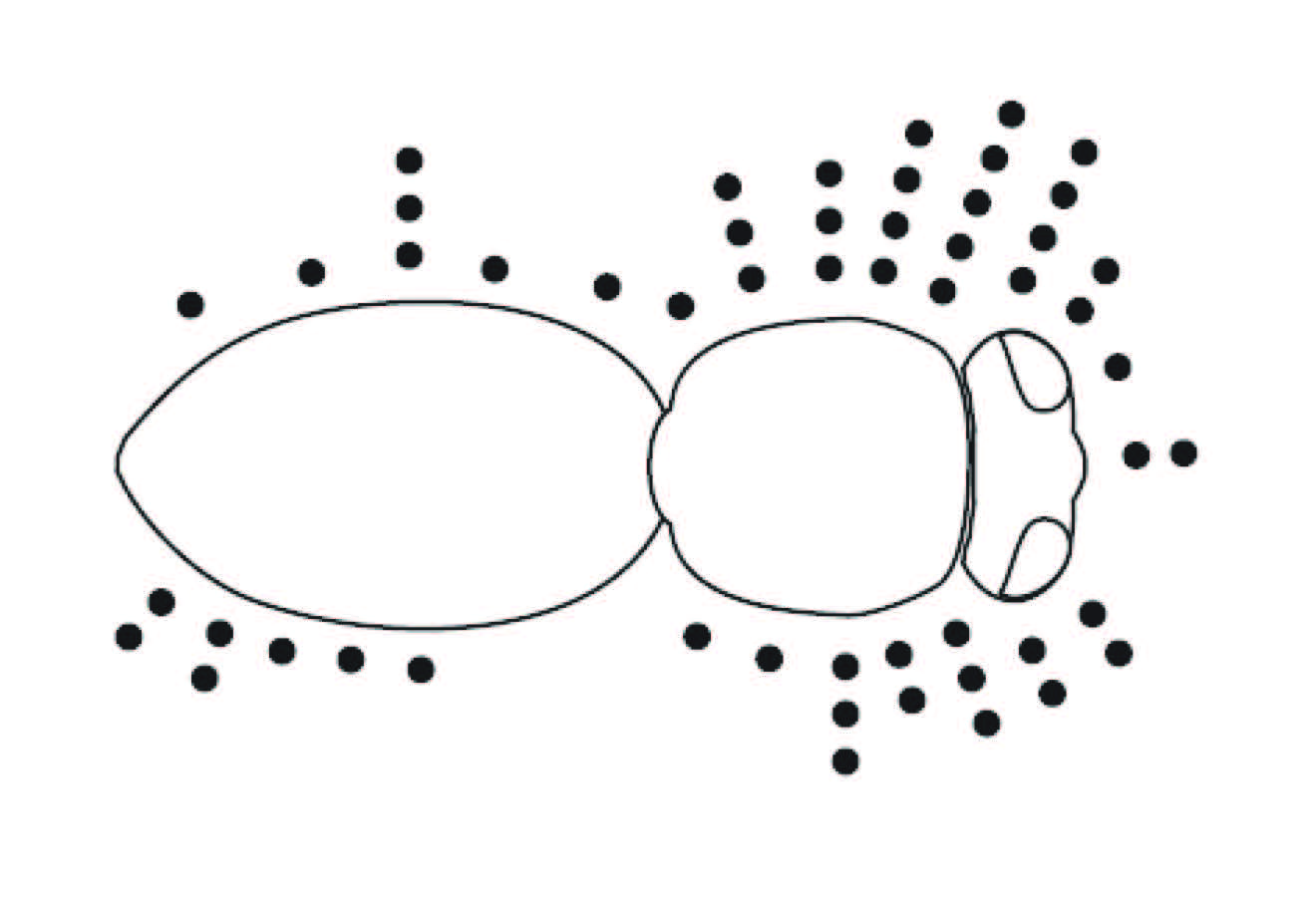
Each dot represents where on the body this dancer was head-bumped by a dancer for a
competing site. Each time she's bumped, she's a little less enthusiastic about her own dance.
Figure from Seeley, et al. 2012 paper in Science.

What can we learn from these democratic experts? As much as I would love to see Congress in a vigorous dance-debate head-butting one another, I don't think that is the take-home message of choice. Tom Seeley at Cornell University has gained tremendous insight into effective group decision-making from his years observing honeybees, which he shares with us in his book, Honeybee Democracy. Tom has summarized his wisdom gained from observing honeybees in the following:

Members of Highly Effective Hives:

1. share a goal

2. search broadly to find possible solutions to the problem

3. contribute their information freely and honestly

4. evaluate the options independently and vote independently

5. aggregate their votes fairly

All of these critical guidelines can be encapsulated with a single objective: The decision-making body needs to objectively consider a range of information from individuals with diverse backgrounds, expertise, and knowledge. We can apply this to our own human decision-making: It means that we all need to vote objectively and honestly and independently. This means casting votes that are consistent with our own information and judgements, even when they are not consistent with the policical party we may align ourselves with. It also means that if you don't agree with the decisions of your School Board, Town Board, City Council, County Legislature, State Legislature, or National Legislature, then your background, expertise and knowledge are likely missing from the deciding body. Yes, you can write and call your representatives and provide them with part of your knowledge, or you can run for office yourself and make people with your background truly included in the decision-making process.

Many feel that our hive has been homelessly clinging to our exposed branch for too long. If we are going to make good, well-informed, effective, and efficient decisions, we need open and respectful communication across diverse backgrounds. Independent thinking and diversity improves the quality of the decisions that affect us all. If honeybees can do it, so can we.


Want to know more? Check these out:

1. Honeybee Democracy by Thomas Seeley

2. Seeley, T., Visscher, P., Schlegel, T., Hogan, P., Franks, N., & Marshall, J. (2011). Stop Signals Provide Cross Inhibition in Collective Decision-Making by Honeybee Swarms Science, 335 (6064), 108-111 DOI: 10.1126/science.1210361

3. List, C., Elsholtz, C., & Seeley, T. (2009). Independence and interdependence in collective decision making: an agent-based model of nest-site choice by honeybee swarms Philosophical Transactions of the Royal Society B: Biological Sciences, 364 (1518), 755-762 DOI: 10.1098/rstb.2008.0277

Tuesday, October 2, 2018

Friends Without Benefits: A Guest Post

A reposting of an original article by Joseph McDonald

Do you want to avoid the friend zone?
Photo by freedigitalphotos.net.
Guys DREAD the friend zone. That heart-aching moment when the girl you’ve been fawning over for years says you’re the best listener, the sister she never had, or so much better than a diary! You’ve been so nice to her and her friends, listening to all their drama. But that’s just the problem... you’re too nice to too many people.

Research performed by Aaron Lukaszewski and Jim Roney at the University of California – Santa Barbara (UCSB) tested whether preferences for personality traits were dependent on who the target was. In Experiment 1, they asked UCSB undergrads, on a scale from 1 to 7, the degree to which their ideal partner would display certain traits towards them and towards others. These traits included synonyms for kindness (e.g. affectionate, considerate, generous, etc.), trustworthiness (committed, dependable, devoted, etc.), and dominance (aggressive, brave, bold, etc.). Experiment 2 replicated the procedures of Experiment 1. The only difference was that the term “others” was divided into subsets including unspecified, family/friends, opposite sex non-family/friend, and same-sex non-family/friend.

Let’s go over the do’s and don’ts so that future “nice guys” aren’t friend zoned. According to the findings, as graphed below:

Figure from Aaron and Jim's 2010 Evolution and Human Behavior paper.
1. Women generally prefer men who are kind and trustworthy. So, to get that girl, don’t be mean; that’s not the point. This isn’t 3rd grade so don’t pull her hair and expect her to know that you LIKE-like her.

2. Women prefer men who are kinder and more trustworthy towards them than anyone else. So it’s not so much whether you are nice enough, its whether she knows you are nicer to her than anyone else.

3. Women prefer men who display similar amounts of dominance as they do kindness. Dominance isn’t a bad thing, as long as you can distinguish her friends from her foes; especially her male friends.

4. To make things more complicated, women also prefer men who are directly dominant toward other men but don’t display dominance toward them or their family/friends, whether male or female. Some guys may want to befriend these other men, but be weary. Women preferred dominance over kindness in this situation, so kindness may not be enough.

These preferences may have developed to avoid mating with someone willing to expend physical and material resources for extramarital relationships, and invest greater in her and the children. Moderate kindness and trustworthiness toward others will maintain social relationships and prevent detrimental relationships, which may be why women generally prefer kind and trustworthy guys. But in all fairness, women can be in the friend zone too; just look at Deenah and Vinny (excuse the shameful Jersey Shore reference).

There are some things that guys look for in a mate, so ladies, here is a little advice:

1. Guys generally want a mate who is kind and trustworthy, too. We’re not that different; so don’t act a little crazy because you think he likes it. He doesn’t.

2. Guys also prefer women who display dominance toward other women (non- family/friend). Don’t be afraid to put that random girl with the prying eyes in her place.

Contrary to the hypotheses predicting female mate preferences, male mate preferences may have developed as a way to take advantage of strong female-based social hierarchies. No matter what the reasoning, however, if you can
1) be kinder and more trustworthy towards that special someone than anyone else and
2) display dominance over other same-sex people, then feel free to say good-bye to the friend zone!


For further details, check out the original experiment:

Lukaszewski, A., & Roney, J. (2010). Kind toward whom? Mate preferences for personality traits are target specific Evolution and Human Behavior, 31 (1), 29-38 DOI: 10.1016/j.evolhumbehav.2009.06.008

Tuesday, March 13, 2018

The Science Life 3

The science life is a stressful one, no matter what stage you're at. Take a music break and know you're not alone.


"Take Exams" by AcapellaScience (parody of "Shake it Off" by Taylor Swift):


"Part of Your Lab" by Florence Schechter (parody of "Part of Your World" from The Little Mermaid):


"Some Budding Yeast I Used to Grow" by Nathaniel Krefman (parody of "Somebody That I Used to Know" by Gotye):


Vote for your favorite in the comments section below. If you would like to see more music videos on the life of a scientist, check out The Science Life and The Science Life 2. And if you feel so inspired, make a video of your own, upload it on YouTube and send me a link to include in a future post!

Tuesday, February 6, 2018

Addicted to Love

Image from imagerymajestic at FreeDigitalPhotos.net.
Early exposure creates a sense of euphoria, a heightening of senses, a rush of pleasure. In order to recreate and further heighten the experience, more is sought, but the euphoric effect eventually starts to wear off. Craving and palpable longing intensifies in its absence, but the effect of exposure is now a calm relief rather than a euphoric high. And once cut off abruptly and completely, desperation, grief, pain and depression set in. The pull to return to it is (almost) insurmountable.

This describes the phases of substance addiction, listed by the DSM-5, the latest version of the Diagnostic and Statistical Manual of Mental Disorders, published by the American Psychiatric Association. These phases include consumption (taking the substance), reinforcement learning (intense pleasure associated with consuming the substance), seeking more of the substance, developing a tolerance (intense pleasure is replaced with avoidance of discomfort), withdrawal (psychological and physical discomfort associated with not consuming the substance), and relapse (returning to consume the substance, even in the face of large costs of doing so).

Now re-read the first paragraph, but instead of imagining the development of a substance addiction, imagine the process of falling in love.

It sounds the same, doesn’t it? According to one theory, it sounds the same because it is the same. In essence, falling in love is the process of becoming addicted to another individual.

There are undeniable similarities between how the brain responds to substance addiction and how the brain responds to falling in love. Both substances of addiction and individuals we are attracted to cause the brain to release dopamine, a neurotransmitter, into a brain region called the nucleus accumbens. Dopamine acting in this region helps us learn to associate cues with rewarding feelings. However, dopamine acts on two different types of receptors, called D1-receptors and D2-receptors, in complex ways. Activation of D2-receptors promotes bonding with a partner; it also promotes the reward value of a substance. Activation of D1-receptors reduces bonding with a partner; it also reduces the reward value of a substance. During this time early on in a romantic relationship or early exposure to an addictive substance, dopamine is primarily acting on D2 receptors, heightening our senses and focusing our attention on the cues of our next encounter… developing our craving, our longing, our drive for the next meeting.

When we are in the early obsessive stages of love, every encounter (and especially sexual encounters) cause a pleasurable release of not just dopamine, but also natural opioids. These two brain chemicals work together in the brain to continually strengthen the association of the stimulus (the one you are falling in love with) with intense positive feelings. This will cause you to seek more and more of these interactions, craving them intensely in the times in between. These same chemicals act on the same receptors in the same way during the process of forming an addiction to a substance, causing the person to seek more and more of it.

With time, the brain adapts. Repeated encounters no longer cause the same euphoria they once did, but rather, a sense of calm contentment. The dopamine that is released before and during these encounters is now activating more of the D1-receptors, which result in less of a feeling of pleasure, and more agitation and aggression. In terms of relationships, it is thought that this transition actually helps maintain a pair bond with one individual, because in this stage you are less driven to seek a competing pair bond and you are more likely to aggressively defend the pair bond you have already established. In terms of substance abuse, this phase is called tolerance. (I know, this perspective really takes the romance out of long-term marriages, but...)

During this tolerance phase, lack of exposure to the object of your addiction (whether it is a person or a substance) results in a lack of dopamine and opioid release and an increase in stress hormone release. If we are talking about addiction to a substance, we call this withdrawal. If we are talking about a relationship, we call this separation anxiety or even heartbreak. To avoid these horrible feelings, we often relapse… right back into the arms of our addiction.

Love is not listed as a psychological disorder in the DSM-5, nor do we think of it as one. But in a true physiological sense, we may actually be addicted to the ones we love.


Want to know more? Check these out:

Burkett, J.P. and Young, L.J. (2012). The behavioral, anatomical and pharmacological parallels between social attachment, love and addiction. Psychopharmacology, 224:1-26.

Potenza, M.N. (2014). Non-substance addictive behaviors in the context of DSM-5. Addictive Behaviors, 39(1): 1-2.

Wednesday, November 22, 2017

Eye Didn’t See That

By Evan Hovey

A grandmother and her grandson watching the television.
The elder is straining to see while the young man is not having any troubles.
Photo by Evan Hovey.

It’s Thanksgiving and the family just finished stuffing their faces full of turkey and cranberry fluff. Everyone meanders into the living room to sit down, let the tryptophan sink in, and watch some football. As you sit there, you start to observe the older family members around you take out their glasses or bifocals and squint towards the television in attempts to see what is going on. You begin to ponder the thought, “am I going to start to lose my eye sight as well?” Well, as it turns out, as you age, the number of cells that respond to light and color (called photoreceptors) begins to decrease.

Songhomitra Panda-Jonas, Jost Jonas, and Martha Jakobczyk-Zmija at the University of Erlangen-Nurnberg, Germany, looked into the number of photoreceptors in the retina of the eye to determine whether there was a loss as you age. The retina is the thin layer of tissue that lines the back of the eye. It is the location where your eye transfers what you see to the brain. There are two different kinds of photoreceptors in your eyes: rods and cones. Rods are those that detect light at low levels, which is what helps us see at night. Cones, on the contrary, are those that take in high light levels and help decode color. The authors believed that there would be a decrease in both kinds of photoreceptors as the eye got older (the older the person, the fewer photoreceptors). They came up with this hypothesis in part because of prior knowledge of a loss of tissue associated with vision in other parts of the eye as you age.

The researchers approached this study by obtaining fifty-five eyes from human donors that died at ages ranging from 18-85. The eyes were removed from the bodies less than eleven hours after death. Then the eyes were cut open and tissue samples from the retina were obtained. To determine the amount of photoreceptors in the tissue samples, the researchers used an ultrasound to view the retina and counted the photoreceptors on a photograph taken with the ultrasound. The two different kinds of cells were distinguished by their sizes (the larger cells were the cones and the smaller cells were the rods).

The results they found were as expected: the older you get, the fewer photoreceptors you have and the worse your eyesight is. The decline of the number of photoreceptors was at a constant rate throughout all ages of life. However, the number of rods declined faster than the number of cones. The loss of these photoreceptors causes you to view things with more difficulty. As your rods die, you begin to develop night blindness (the inability to see well in poor lighting or darkness). When your cones die, you begin to lose more of your visual perception, which includes straining when looking at something from a distance, as well as affecting how you see fine detail such as reading a book or looking at a television. The combined loss of your rods and cones is part of what causes older individuals to have more vision problems.

As you progress through life, your photoreceptors decline, causing your vision to get worse. As you sit down after Thanksgiving to enjoy some good old-fashioned fall football and the elderly people strain to see the television, you now know that the oldest person in your family is most likely having the hardest time seeing that big touchdown.


If you would like to read the actual paper, the source is located below:

Panda-Jonas, S., Jonas J., Jakobczyk-Zmija, M. (1995). Retinal photoreceptor density decreases with age: Ophthalmology, 102 (12), 1853-1859

Tuesday, November 7, 2017

Science Beat: Round 8

It is midterm time again. If you learn science better with a beat, check these out:


Chemistry:


Cellular Biology:


Anatomy and Physiology:


Vote for your favorite in the comments section below and check out other science songs worth learning at Science Beat, Science Beat: Round 2, Science Beat: Round 3, Science Beat: Round 4, Science Beat: Round 5, Science Beat: Round 6, Science Beat: Round 7, and Science Song Playlist. Check out some song battles about the life of scientists at The Science Life, Scientist Swagger and Battle of The Grad Programs! And if you feel so inspired, make a video of your own, upload it on YouTube and send me a link to include in a future battle!

Monday, August 7, 2017

Drinking Beer Makes You More Attractive… To Mosquitoes

Summer is a time of backyard bar-b-ques, camping, baseball games, beer, and mosquitoes. Ugh, mosquitoes! Have you ever noticed that when a bunch of us are hanging out together outside, some of us get eaten alive by those pesky buggers while others are hardly touched at all? It turns out, differences in how much alcohol we have imbibed may be a factor.

An Anopheles gambiae mosquito ready for a meal. Photo by James D. Gathany
at the Public Health Image Library at Wikimedia Commons.

“No! Say it ain’t so!”

I hate to be the bearer of bad news, so I’ll let the scientific evidence speak for itself.

A research team from the French Research Institute for Development, including Thierry Lefèvre, Louis-Clément Gouagna, Eric Elguero, Didier Fontenille, François Renaud, Carlo Costantini, and Frédéric Thomas, and Kounbobr Roch Dabiré, from the Institute for Research in Health Sciences in Burkina Faso set out to test whether people were more attractive to female mosquitoes after drinking a beer compared to beforehand. They only tested females because only female mosquitoes bite, requiring extra protein for their eggs.

The researchers put groups of 50 hungry female mosquitoes into the end of a special Y-shaped maze that let them fly in the direction of one of two odors. At the end of one arm of the Y-maze was a fan, simply blowing outdoor air through a tent and into the apparatus. At the other end of the Y-maze was a fan blowing air through a tent past a shirtless man and into the apparatus. This shirtless man had either not had anything to drink recently, or had recently drunk either a liter of beer or a liter of water. Between the starting chamber and both ends of the arms of the Y-maze were traps that would capture mosquitoes that had chosen to head that direction (lucky for the shirtless men). The number of mosquitoes caught in both traps combined (compared to the total of 50 that was initially released) was called mosquito activation, and reflected how many mosquitoes were motivated to take off and fly upwind. The proportion of mosquitoes caught in the volunteer-bated trap compared to those caught in both traps combined was called mosquito orientation, and reflected the attractiveness of the volunteer’s odor compared to the control odor.

Image A shows the two tents: one in which the man-bait sat (having consumed beer or water), and the other with no one in it. Air from each tent blew threw a tube (seen in picture B) and then into the building, past the traps and into the downwind box, where the mosquito starting-line was located (seen in picture C). Photos from Lefèvre et al., 2010.

The mosquitoes significantly increased both activation and orientation in response to the beer-drinking volunteers, but not in response to the water-drinking volunteers. That is to say, that the smell of someone that has had a beer motivates more mosquitoes to actively pursue them, and makes them more of a focused target of the mosquitoes. The researchers believe there is an interaction between how our bodies naturally smell and how our bodies break down beer that increases the attractiveness of our odors to mosquitoes. People that were more attractive to mosquitoes before they drank were also more attractive to mosquitoes after they drank. But interestingly, people that were warmer or gave off more CO2 were not more attractive to mosquitoes.

You should know that this research is much more important than just being a drag on your summer bar-b-que. The particular mosquito species that these researchers studied was Anopheles gambiae, the primary vector for malaria in Africa. They did this study in Burkina Faso, a country in West Africa with a high rate of malaria, using a local beer called dolo. Dolo, a fermented sorghum beer with low (3%) alcohol content, is the most common alcoholic beverage in Burkina Faso. So if you are in a place with a high rate of malaria, knowing that you should take extra precautions against mosquitoes when you drink could be a life-saver.

Want to know more? Check this out:

Lefèvre, T., Gouagna, L.C., Dabiré, K.R., Elguero, E., Fontenille, D., Renaud, F., Costantini, C. and Thomas, F. (2010). Beer consumption increases human attractiveness to malaria mosquitoes. PloS one, 5(3), e9546.

Tuesday, May 9, 2017

The Best Moms in the Animal Kingdom

Moms are really important to life on Earth, as evidenced by the fact that maternal care is fairly common across the animal kingdom. In most species, females produce fewer, larger, and costlier eggs than males do sperm. Therefore, it is usually beneficial to females to maximize the possible success of each one, sometimes by gestating them inside their own bodies (as mammals do), or incubating the eggs until they are ready to hatch (as birds do), or by providing prolonged protection, food and training until they are ready to take on the world for themselves. But there is still a lot of variation in how and how much each mother gives to her offspring. Here are some of the best moms in the animal kingdom:

1. The Endurance Prize goes to orangutans: Orangutan infants cling to their moms’ bellies non-stop for the first four months of their life and they continue to completely depend on their moms for the first two years for food and transport. Their moms will continue to carry them often until they are five and will sometimes continue to breastfeed them until they are eight! After that, the young still stay close to mom, learning from her and helping her until they are sometimes in their teens.

An orangutan mama and toddler. Photo by Mistvan at Wikimedia Commons.

2. The Provider Prize goes to the crab spider, Diaea ergandros: These crab spider moms create a brood chamber and nest out of eucalyptus leaves. They guard their eggs and then spiderlings, providing protection and prey for food. These moms also make extra eggs, just for their babies to eat, and finally, they give themselves… quite literally! The babies eat their mothers completely in a rare behavior called matriphagy.


3. The Pregnancy Prize goes to elephants: Elephants are pregnant for about 22 months… nearly two years! And a baby elephant is not light to carry around… by the time it is born, it will weigh nearly 250 pounds! Just the thought of it makes me uncomfortable. So why would elephant moms need to gestate their young for such an incredibly long time? It is thought that the long gestation is needed for the proper development of their brains, so they are born with the complex cognitive and social skills needed to survive in their herd.

An African elephant family plays in the hot sun. Photo by Bernard Dupont at Wikimedia Commons.

4. The Brooding Prize goes to a deep-sea octopus: Two years is a very long time to carry a developing baby inside your body, but some animals care for their developing empryos ouside of their bodies with a behavior called brooding. Although brooding may sound easier than pregnancy, it is not for the faint of heart. A deep-sea octopus was observed brooding her eggs in the Monterey Submarine Canyon off central California for 53 months… That is nearly 4 and a half years! And that whole time she did not eat, but instead guarded and aerated the water around her precious eggs.

A deep-sea octopus. Photo by NOAA at Wikimedia Commons.

5. The Multi-Generational Prize goes to humans: Many human moms are not only good mothers, but also good grandmothers. Grandparenting is extremely rare in the animal kingdom (the first documented case of grandparenting in non-humans was as recent as 2008) and human females excel at it. They provide care, advice, resources, lessons and hugs to increase the success of their offspring and grand-offspring… It’s amazing other species haven’t picked up on this amazing secret yet!

The best moms in the animal kingdom. Photos by Sarah Jane Alger.

Tuesday, March 14, 2017

The Physiology of Your “Sense of Self”

Quick! Name all of your senses!

Now, close your eyes and wave your arms over your head. Which of those senses are helping you know where your arms are in space?

The answer is the often-forgotten sense of proprioception. Proprioception (derived from the Latin for “sense of self”) is an animal’s sense of its body’s position in space. We have several different specialized receptor cells that all detect a change in body position in different ways.

Grays muscle picture by Mikael Haggstrom
at Wikimedia Commons.
If you raise your arms over your head as if you are going to grab a pull-up bar, then some muscles in your back (like your trapezius muscles), shoulders (like your deltoids and rotator cuff muscles), and arms (like your triceps) will contract. Muscles are all connected with tendons to the bones they pull on. When a muscle contracts, its tendons are stretched. Specialized proprioceptor cells called Golgi tendon organs merge with tendons and detect when their corresponding muscle is being stretched. Together, they inform the brain about muscle tension in muscles all across the body.

Grays muscle picture by Mikael Haggstrom
at Wikimedia Commons.

However, while some muscles will contract during your movement, other muscles in your chest (like your pecs) and arms (like your biceps) will stretch. Each muscle contains muscle spindles, another kind of specialized proprioceptor cell. Muscle spindles are wrapped around individual muscle fibers within the muscles. They send signals to the brain to let it know when the muscle is stretched and by how much.

Joint receptors are specialized proprioceptor cells located between bones in the capsular tissue of joints. When the angle of a joint changes, the bones and tissues put pressure on the joint receptor, causing it to send a signal to the brain. Your brain collects information from all of your Golgi tendon organs, muscle spindles and joint receptors to know the angle of each joint and the tension and length of each muscle in your body, and thus, your body’s position in space.

gif by Extremistpullup at Wikimedia Commons.
Some animals, and some individuals, are better at this than others. This guy should be pretty proud of his proprioceptive abilities (and strength). But then again, let’s see him try this:


Tuesday, February 14, 2017

The Complexities of “The Love Hormone”

New York street art. Photo in
Wikimedia Commons posted by Pedroalmovar.
Oxytocin, commonly known as “the love hormone”, is a small chemical that is produced in the brain of mammals, but can both act as a neurotransmitter and enter the blood stream and act as a hormone. It has long been heralded for its role in both maternal and romantic love, but more recent research is showing us just how complicated the physiology of love can be.

Oxytocin is released in mammalian mothers after birth. It promotes nursing and bonding between a mother and her young. As children grow, oxytocin is involved in how both mothers and fathers “baby-talk” and mirror their children. It is involved in pro-social behaviors in both young and adults: trust, generosity, cooperation, hugging, and empathy. And of course, oxytocin promotes positive communication and pair bonding in romantic couples. Countless studies have found these relationships between affiliation and oxytocin in many mammalian species, giving oxytocin its commonly used nickname “the love hormone”.

But more recent studies show that it’s not so simple.

In a number of recent studies, people have been given oxytocin nasal sprays and tested for various behavioral effects in different contexts… and the context really seems to matter. Oxytocin increases trust, generosity, cooperation, and empathy towards people we already know and like. But it decreases trust, generosity, cooperation, and empathy towards strangers. When we play games with strangers, oxytocin makes us more jealous when we lose and it makes us gloat more when we win. It also seems to enhance many attributes relating to ethnocentrism: It increases our ability to read facially-expressed emotions in people of our own race while making it harder to read facial expressions of people of a different race. When forced to choose between being nice to a stranger of our own race versus a stranger of another race, oxytocin makes us more likely to choose the person of our own race. In studies of both people and rodents, oxytocin decreases aggression towards our families and friends, but increases aggression towards strangers.

Oxytocin is not the universal love hormone we once understood it to be. It helps us direct our positive support towards our “in-groups” (our family and friends) and defend them from our “out-groups” (individuals we don’t know). It is a delicate balance: Too little of it can cause social impairment and make it difficult to connect with loved-ones; Too much of it can increase our anxiety towards strangers and racist tendencies. And to make things more complicated, each of us has a slightly different oxytocin system: sex, gender, social history, history of childhood trauma or neglect, psychiatric illnesses and genetic variations all have profound effects on the oxytocin system.

There is much we don’t know about the role of oxytocin and love. But they are a good fit, because both, it seems, are complicated.


Want to know more? Check these out:

Shamay-Tsoory SG, & Abu-Akel A (2016). The Social Salience Hypothesis of Oxytocin. Biological psychiatry, 79 (3), 194-202 PMID: 26321019

Zik JB, & Roberts DL (2015). The many faces of oxytocin: implications for psychiatry. Psychiatry research, 226 (1), 31-7 PMID: 25619431

Tuesday, October 18, 2016

Why This Horde of Idiots is No Genius

A modified reposting of an article from May, 2012.

At first look (in Part 1 of this post), swarm theory seems to predict that the larger the social group, the better the resulting group decisions and behaviors. Then, with over 300 million of us in the U.S., shouldn’t we only be making brilliant decisions? And with over 7 billion worldwide, shouldn’t we have already prevented all international conflicts, cancer, and environmental destruction?

A riot in Vancouver, Canada after the Vancouver Canucks lost the Stanley Cup
in 2011 left the city with scars. Photo by Elopde at Wikimedia Commons.

Many large groups of people make incredibly stupid decisions. Like proverbial lemmings (a hoax perpetuated by Disney), large groups of people have caused incredible damage to their community after their hockey team lost the Stanley Cup, quit their jobs and given away all of their possessions believing the end of the world was coming on May 21, 2011 (ehem… we’re still here), and insisted that wearing baggy pants around the thighs is a reasonable thing to do even though it is not sexy and it trips you when you try to run. Where are we going wrong?

Tom Seeley at Cornell University has gained tremendous insight into effective group decision-making from his years observing honeybees, which he shares with us in his book, Honeybee Democracy. (By the way, this is also one of the best books out there for painting a picture of the life of a behavioral biologist).

Honeybees live in swarms of thousands. When the hive becomes overcrowded, about a third of the worker bees will stay home to rear a new queen while the old queen and the rest of the hive will leave to begin the process of finding a new home. During this time, the migrants will coalesce on a nearby branch while they search out and decide among new home options. This process can take anywhere from hours to days during which the colony is vulnerable and exposed. But they can’t be too hasty: choosing a new home that is too small or too exposed could be equally deadly.

This homeless honeybee swarm found an unconventional "branch". They'd better
decide on a new home before the cyclist gets back!  Photo by Nino Barbieri at Wikimedia.

Although each swarm has a queen, she plays no role in making this life-or-death decision. Rather, this decision is made by a consensus among 300-500 scout bees that results after an intense “dance-debate”. Then, as a single united swarm, they leave their branch and move into their new home. At this point, it’s critical that the swarm is unified in their choice of home site, because a split-decision runs the risk of creating a chaos in which the one and only queen can be lost and the entire hive will perish. This is a high-stakes decision that honeybees make democratically, efficiently, and amazingly, they almost always make the best possible choice! How do they do that? And how can we do that?


Each dot represents where on the body this dancer
was head-bumped by a dancer for a competing site.
Each time she's bumped, she's a little less
enthusiastic about her own dance. Figure from
Seeley, et al. 2012 paper in Science.
The honeybee house-hunting process has several features that allow them as a group to hone in on the best possible solution. The process begins when a scout discovers a site that has potential for a new home. She returns to her swarm and reports on this site, using a waggle dance that encodes the direction and distance to the site and her estimate of its quality. The longer she dances, the better she perceived the site to be. Other scouts do the same, perhaps visiting the same site or maybe a new one, and they report their findings in dance when they return. More scouts are recruited and the swarm breaks into a dancing frenzy, with many scouts dancing for multiple possible sites. Over time, scouts that are less enthusiastic about their discovered site stop dancing, in part discouraged by dancers for other sites that head-bump them while beeping. Eventually, the dancing scouts are unified in their dance for what is almost always the best site. The swarm warms up their flight muscles, and off they go, in unison to their new home.

What can we learn from this process? Tom has summarized his wisdom gained from observing honeybees in the following:

Tom Seeley’s Five Habits of Highly Effective Hives

1. “Group members share a goal”.
This is easy for honeybees, but not as much for us. All of the honeybees in a swarm share the same goal: Find the best possible home as quickly as possible. People are not always similar in our goals, needs and wants and one person’s goals are sometimes in direct conflict with another person’s goals. The trick here is finding common ground.

2. “Group members search broadly to find possible solutions to the problem”.
Seek out information from as many sources as you can. Be creative. Use your personal experience. And if the group is diverse, there will be a broader range of personal experience to harness. Diversity increases the ability of a group to make the best decisions.

3. “Group members contribute their information freely and honestly”.
This requires a welcoming and supportive environment that withholds judgment of the individuals for the ideas expressed. You don’t have to agree with an idea to respect and listen to the person expressing it.

4. “Group members evaluate the options independently and they vote independently”.
Just as scout bees don’t dance for a site they have not visited and assessed themselves, we should not advocate possible solutions or candidates that we have not ourselves looked into and thought critically about. A group can only be smarter than the individuals in it if the individuals think for themselves.

5. “Group members aggregate their votes fairly”.
Everyone gets a vote and each one counts equally. ‘Nuff said.

We can learn a lot from these honeybees. Even when the stakes are high, we can make good decisions for our group if we are open, honest, inclusive, fair and think independently.


Want to know more? Check these out:

1. Seeley, T., Visscher, P., Schlegel, T., Hogan, P., Franks, N., & Marshall, J. (2011). Stop Signals Provide Cross Inhibition in Collective Decision-Making by Honeybee Swarms Science, 335 (6064), 108-111 DOI: 10.1126/science.1210361

2. List, C., Elsholtz, C., & Seeley, T. (2009). Independence and interdependence in collective decision making: an agent-based model of nest-site choice by honeybee swarms Philosophical Transactions of the Royal Society B: Biological Sciences, 364 (1518), 755-762 DOI: 10.1098/rstb.2008.0277

3. Honeybee Democracy by Thomas Seeley

4. The Smart Swarm by Peter Miller

5. The Wisdom of Crowds by James Surowiecki

Monday, June 13, 2016

The Best Dads in the Animal Kingdom

Paternal care is not nearly as common in the animal kingdom as maternal care, and for good biological reason. In most species, females produce fewer, larger, and costlier eggs than males do sperm. Therefore, it is usually beneficial to females to maximize the possible success of each one, sometimes by gestating them inside their own bodies (as mammals do), or incubating the eggs until they are ready to hatch (as birds do), or by providing prolonged protection, food and training until they are ready to take on the world for themselves. Males, on the other hand, are usually benefitted more by spending their time trying to mate with as many females as possible and avoiding the costs of parenting. But for some species, these costs and benefits of parenting are such that it pays for males to be good dads. Here are some of the best dads in the animal kingdom:

1. The Endurance Prize goes to the emperor penguin: Emperor penguins breed on the sea ice of Antarctica, the coldest place on Earth. After Mom lays her egg, her nutritional reserves are so depleted that she must return to the ocean (which can be over 100 miles away) to feed. This leaves the responsibility of keeping the egg warm through the freezing Antarctic winter to Dad. Dad goes months without feeding to balance the egg on his feet in subzero weather (-30 degrees Fahrenheit, on average) with freezing winds up to 120 mph, often forced to huddle together with other dads for warmth until their chicks hatch. If he moves too suddenly or the egg becomes exposed to the freezing temperatures, the chick will die. Even though he hasn’t eaten for months and has lost about 40% of his body weight, Dad provides the newly hatched chick with sustenance: a milky-type substance produced by a gland in his throat until Mom returns to the family with a belly-full of fish.

An Emperor penguin dad feeds his chick after a brutal winter without
eating a single bite himself. Photo by Mtpaley at Wikimedia Commons.

2. The Provider Prize goes to the water bug: Water bugs (also known as toe-biters) are huge, predatory, aquatic insects that can reach sizes up to 4 inches in length! They have a strong beak and a painful bite and they have been known to eat small fish, frogs and even birds! In order to grow into a large predatory insect, one must hatch from a large egg. Water bug eggs are so large that they require more oxygen for development than they can naturally absorb through the water. This requires a parent to help supply them with oxygen. However, Mom spends so much of her energy producing these humongous eggs that she doesn’t have enough energy reserves to then care for them. This leaves all of the parental duties up to Dad. In these species, Mom lays her eggs on Dad’s back in between matings. Once the full clutch of up to 150 eggs are glued to Dad’s back, he dances around and does underwater pushups to keep the water circulating and periodically takes them on a field trip to the surface for air (which has more oxygen that water does) until they hatch.

A water bug dad carries his eggs. Photo by Marshal Hedin at Wikimedia Commons.

3. The Protector Prize goes to the Darwin’s frog: Darwin’s frogs are small South American frogs that look a bit like a bloated leaf. When they mate, Mom lays her eggs in the leaf litter, which Dad fertilizes and then guards for a few weeks until the developing embryos begin to move. At that point, he “swallows” the eggs into a pouch near his throat called a vocal sac, where they hatch. He carries the tadpoles in his vocal sac until they have fully developed into frogs, at which point he “vomits” them up and they hop away to start their new lives. It’s pretty gross. Watch:


4. The Pregnancy Prize goes to the seahorse: Male seahorses have fewer (and thus more precious) sperm than males of other species and they are the only males that take on the full responsibility of pregnancy, carrying up to 2,000 babies at a time! Although they don’t have a mammalian womb and placenta, they do have an enclosed abdominal pouch specifically for the purpose of incubating the babies. Mom deposits her eggs in Dad’s brood pouch. He fertilizes them and incubates them in his expanding belly for 10-45 days (depending on the species). During this time, his body undergoes a number of hormonal and physiological changes and Mom never even makes an ice cream run for him or rubs his (non-existent) aching feet. When the babies are ready to emerge as fully developed little seahorses, seahorse dads even experience contractions as they give birth!


The best dad and grandpa in the world.
Photo by Sarah Jane Alger.
5. The Multi-Generational Prize goes to humans: Many human dads are not only good fathers, but also good grandfathers. Grandparenting is extremely rare in the animal kingdom (the first documented case of grandparenting in non-humans was as recent as 2008) and human males excel at it. They provide care, advice, lessons and resources to increase the success of their offspring and grand-offspring… It’s amazing other species haven’t picked up on this amazing secret yet!