Tuesday, December 18, 2018

Reindeer Games: 8 Surprising Facts About Reindeer

A reposting of an original article from December, 2017.

A Swedish reindeer watches you. Photo by Alexandre Buisse at Wikimedia Commons.

1. Reindeer are caribou (kinda): Reindeer are the same species as caribou (with the scientific name Rangifer tarandus), but the terms are not completely interchangeable. Rangifer tarandus is a species of deer that is native to Northern regions of Europe, Siberia and North America, which includes many different habitat types, like arctic, subarctic, tundra, snow forest and mountains. These variations in harsh environments have led to variations among populations, resulting in multiple subspecies. The Rangifer tarandus subspecies that live in North America are commonly called caribou and the subspecies that live in Europe and Siberia are commonly called reindeer. We also often refer to domesticated populations as reindeer, regardless of where they are.

A map of reindeer and caribou distributions. Image by TBjornstad at Wikimedia Commons.

2. Rudolf’s red nose was an adaptation: Technically, reindeer don’t have red noses, but they do have lots extra blood flow in them. The inside of their noses are twisted and vascularized so the warm blood can heat up the frigid Arctic air before it gets into the lungs.

3. Santa’s reindeer were probably girls: Not only do reindeer have the biggest antlers of all deer species (relative to body size), but they are the only deer species in which both males and females grow antlers. Both males and females use their antlers to scrape through the snow and look for food, but males also use their antlers to compete with one another and impress the ladies during the breeding season. Unlike horns, antlers shed and regrow every year, and this process is regulated by sex hormones. When the new antlers grow in spring, they are made up of cartilage and lots of blood vessels and are covered in a furry skin called velvet. The blood carries lots of calcium into the antlers, which helps them to grow and harden into bone. When testosterone levels drop in males at the end of their breeding season in early December, their antlers fall off. Females, however, generally keep their antlers until March or April. So, if Santa’s reindeer had antlers at the end of December, they were probably female!

4. If you’re going to pick an animal to travel the world in one night, reindeer are a good choice: Some North American caribou migrate over 3,000 miles a year (more than any other land mammal). They can run up to 50 miles per hour and swim over 6 miles per hour. Migration herds can be up to 500,000 animals and baby reindeer learn to run within two hours of birth!

A swimming caribou herd. Photo by Lestar Kovac at Wikimedia Commons.

5. Reindeer eat weird stuff: Like cows, reindeer are ruminants, which means their stomachs have multiple compartments, some of which specialize in maintaining microbial communities to help them digest. Unlike cows, reindeer predominantly eat lichen, which are combinations of algae and fungi that are typically high in carbohydrates and low in proteins. To make up for this low amount of protein in their diet, reindeer may occasionally eat rodents and bird eggs.

6. They have the coolest feet: Their hooves have four toes: two that splay out like snow shoes and two dew claws. Their hooves have sharp edges to dig for food and are paddle-shaped for swimming. Their hooves even change with the seasons to provide the best traction, being softer in the summer when the ground is soft and hard in the winter to walk on slippery snow and ice.

7. Some reindeer use clicking knees to communicate: Some subspecies have knees that click when tendons slip over bone extensions in their feet. They use this sound to stay with their herd, even when weather conditions limit visibility. But because larger reindeer have larger legs and therefore make louder knee-clicks, they also use these sounds to establish dominance.

8. Reindeer are the only mammals that can see UV light: They have a reflective layer in the back of their eyes that is golden in summer and blue in winter. When it is blue, this allows reindeer to see contrasts in UV light, such as lichen (which absorbs UV) versus snow (which reflects UV).

Tuesday, December 11, 2018

Not Fair! Even Dogs Know the Importance of Gift-Equity

A repost of an original article from December 2012.

Don't leave out your best friend when
gift-giving this holiday season!
Photo by Ohsaywhat at Wikimedia.
When I was a child, I think one of the things that stressed my mom out most about the holidays was making sure that all of us kids got Christmas gifts worth the exact same amount. Why all the fuss? Because if the value of the gifts wasn’t equal, we were guaranteed to spend our holidays in a chorus of “Not fair!” cries rather than appreciating the holiday bounty and cheer around us.

As a species, we have a pretty developed sense of fairness. This sense of fairness is central to our ability to cooperate to achieve goals that are too difficult for one person to accomplish alone. But we’re not the only social species that cooperates… and it turns out, we’re not the only ones with a sense of fairness, either.

Domestic dogs and their wild relatives, like wolves and African wild dogs, are very social and have cooperative hunting, territory defense, and parental care. Friederike Range, Lisa Horn, Zsófia Viranyi, and Ludwig Huber from the University of Vienna, Konrad Lorenz Institute, and Wolf Science Center, all in Austria, sought out to test whether domesticated dogs have a sense of fairness.

The researchers tested pairs of dogs who had lived together in the same household for at least a year. All of these dogs had been previously trained to give their paw on command, as if giving a handshake. Each pair of dogs was asked to sit in front of an experimenter (one dog was designated the “subject” and the other was the “partner”). In this position, the willingness of the subject dog to shake paws with the experimenter was tested under six different situations.

An experimenter asks two dog-buddies to each give her a paw and they wait
to see who gets rewarded. Photo from Range et al., PNAS, 2009.
In the basic situation, both dogs were asked to give a paw, and both dogs were rewarded with a “low-value” reward (a piece of bread). This happened repeatedly and the researchers measured how many times the subject dogs would give their paw.

In another situation, both dogs were asked to give a paw, but the subject dog was rewarded with a “low-value” reward (a piece of bread) while its buddy was rewarded with a “high-value” reward (a piece of sausage).

In a third situation, both dogs were asked to give a paw, but only the partner dog was rewarded with a piece of bread (the subject dog got nothing).

In the fourth situation, only the subject dog was asked to give a paw, but both dogs were rewarded with a piece of bread.

In the fifth situation, the experimenter measured how many times the subject dog would give its paw for a piece of bread if his doggy-buddy wasn’t around.

In the last situation, the experimenter measured how many times the subject dog would give its paw for no reward if his doggy-buddy wasn’t around.

When both dogs received bread, they were happy to keep giving the experimenter their paw for as long as they were asked to. But when dogs saw their buddy get a piece of bread when they got nothing, they soon refused to give their paw to the experimenter (and started showing signs of stress). You may think this is just what happens when you stop rewarding a dog for doing what you ask, but something different was going on here. The dogs that never got a reward gave their paw to the experimenter for longer when their buddy wasn’t around than if their buddy was around and getting bread treats. Clearly, even dogs know that equal work for unequal pay is not fair.

But the doggy-sense-of-fairness is limited. As long as they got their bread when they gave their paw, they really didn’t seem to care (or notice) if their buddy got bread or sausage, or even whether their buddy had to perform the same trick or not.

So this holiday season, don’t forget to get a present for your four-legged friend so he doesn’t feel left out. But don’t worry about getting something expensive – He doesn’t care anyway. For him, it’s the gesture that counts.

Want to know more? Check these out:

1. Range F, Horn L, Viranyi Z, & Huber L (2009). The absence of reward induces inequity aversion in dogs. Proceedings of the National Academy of Sciences of the United States of America, 106 (1), 340-5 PMID: 19064923

2. Range, F., Leitner, K., & Virányi, Z. (2012). The Influence of the Relationship and Motivation on Inequity Aversion in Dogs Social Justice Research, 25 (2), 170-194 DOI: 10.1007/s11211-012-0155-x

Tuesday, December 4, 2018

The Beginnings of Jurassic Park: Dinosaur Blood Discovered? (A Guest Post)

A reposting of an original article by Samantha Vold

The classic tale of Jurassic Park, where dinosaurs once again walked the earth has tickled the fancy of many a reader. Dinosaur DNA preserved in a fossilized mosquito was used to bring these giants back to life. But in real life, it was previously thought that there was no possible way for organic materials to be preserved, that they often degraded within 1 million years if not rapidly attacked by bacteria and other organisms specialized in decomposition. Skin and other soft tissues, such as blood vessels, would never withstand the test of time. Or would they…?

T. rex skeleton at Palais de la découverte. Image by David Monniaux at Wikimedia

In 1992, Mary Schweitzer was staring through a microscope at a thin slice of fossilized bone, but this bone had something unusual. There were small red disks located in this tissue and each had a small dark circle in the middle resembling a cell nucleus, the command center of the cell. And these little disks very much resembled the red blood cells of reptiles, birds, and other modern-day vertebrates (excluding mammals). But it wasn’t possible, was it? These cells came from a 67 million-year old T. rex. And it was commonly accepted that organic material never lasted that long.

Comparison of red blood cells. Image by John Alan Elson at Wikimedia

This opened a huge controversy in the scientific community, but Schweitzer persisted. She consulted with her mentor, Jack Horner, a leading scientist in the paleontology field, and he told her to prove to him that they weren’t red blood cells. Schweitzer took the challenge and began to run some tests.

The first clue to these mysterious scarlet-colored cells potentially being red blood cells was the fact that they were located within blood vessel channels of the dense bone that were not filled with mineral deposits. And these microscopic structures only appeared inside the vessel channels, as would be true of blood cells.

Schweitzer then began to focus on the chemical composition of these puzzling structures. Tests showed that these “little red round things” were rich in iron, and that the iron was specific to them. Iron is important in red blood cells as it helps to transport oxygen throughout the body. And the elemental make-up of these little red round things differed greatly from the surrounding bone and sediment around them.

The next test was looking for heme, a small iron-containing molecule that gives blood its characteristic color and allows hemoglobin proteins to transport oxygen throughout the body. Schweitzer tested for this through spectroscopy tests, which measure the light that a given material emits, absorbs, and scatters. Her results from these tests were consistent with what one would find in heme, suggesting that this molecule existed in the dinosaur bone she was analyzing.

Schweitzer then conducted a few immunology tests to see if she indeed had found hemoglobin in these ancient bones. Antibodies are produced when the body detects a foreign substance that could potentially be harmful. Extracts from the dinosaur bone were injected into mice to see if antibodies were produced to ward against this new organic compound. When these antibodies were then exposed to hemoglobin from turkeys and rats, they bound to the hemoglobin. This suggested that the extracts that caused an antibody response in the mice included hemoglobin. This in turn suggested the T. rex bone contained hemoglobin, or something very similar.

Through years of research, Schweitzer has shown that what was once believed to be impossible is indeed true. Soft tissues, blood cells, and proteins can withstand the test of time. This process is possibly done through iron binding to amino acids (the molecules that make up proteins) and thereby preserve them. Research is advancing in this area, but as of yet, no DNA has been found to bring Jurassic Park to life. But for the avid believer, don’t get up hope yet. Perhaps one day we truly could walk amongst dinosaurs.


References:

Fields, Helen. (May 2006). Dinosaur Shocker. Smithsonian. Smithsonian Magazine.

Pappas, Stephanie. (13 Nov. 2013). Mysteriously Intact T. Rex Tissue Finally Explained : DNews. DNews. Live Science.

Schweitzer, M. (2010). Blood from Stone Scientific American, 303 (6), 62-69 DOI: 10.1038/scientificamerican1210-62

Tuesday, November 27, 2018

Birds, Vitamin E, and the Race Against Time: A Guest Post

A reposting of an original article by Alyssa DeRubeis

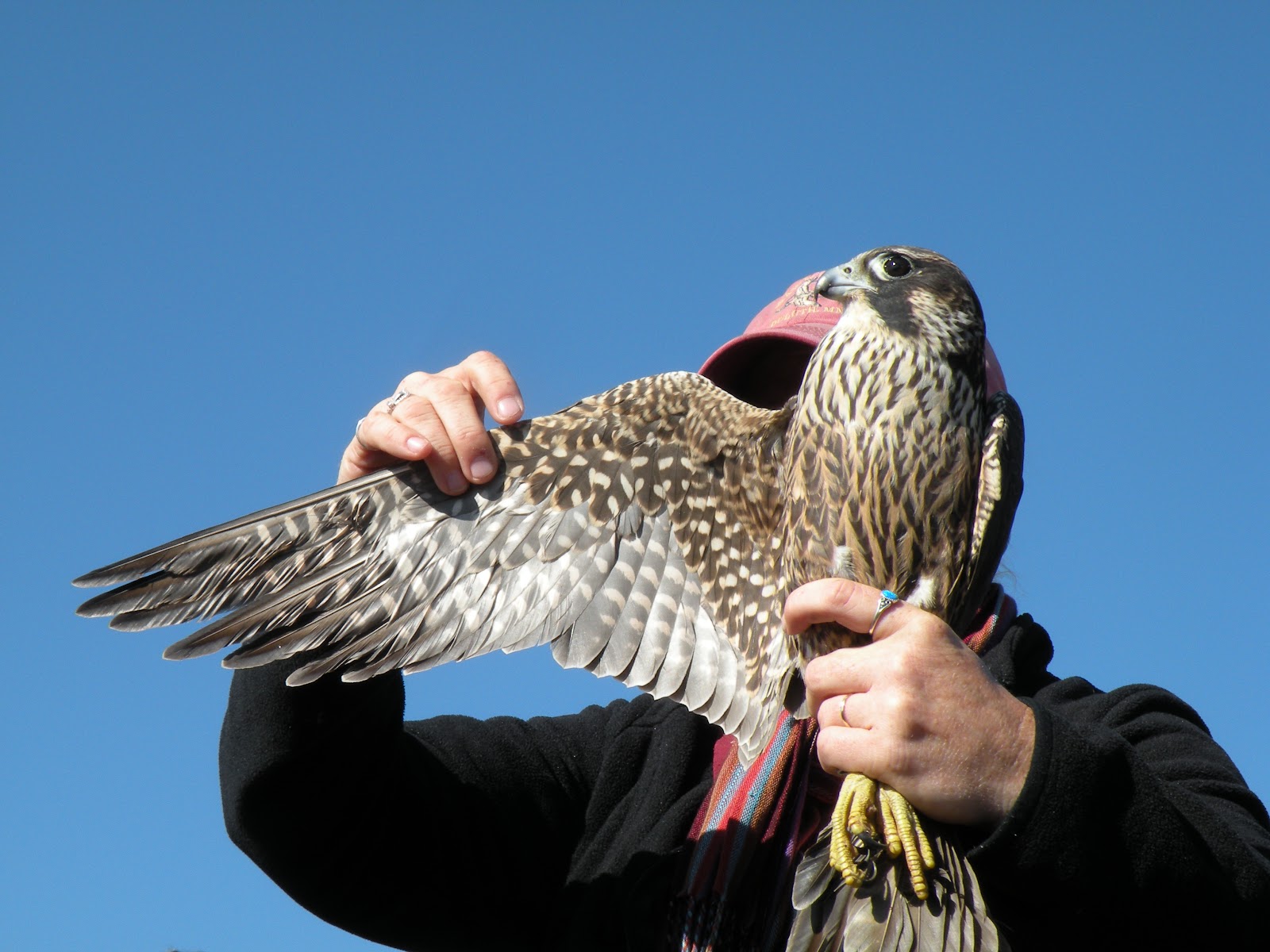
The long and tapered wings on this young
Peregrine Falcon means it was built for some
serious speed! Photo by Alyssa DeRubeis.
Maybe you’ve been put under the false assumption that humans are cool. Don’t get me wrong; our bodies can do some pretty neat physiological stuff. But I’m gonna burst your bubble: humans are lame. Just think of how fast we can run compared to a Peregrine Falcon in a full stoop: 27 MPH versus 242 MPH.

Keep thinking about all the cool things birds can do. It doesn’t take us long to realize that our feathered friends are vastly more fascinating compared to humans. Now that you’re finally admitting defeat, I ask that you read on.

The most amazing avian physiological feat is the ability to travel long distances seasonally (a.k.a migrate). Between poor weather conditions, preventing fat loss, and staying alert, migration is not easy by any means. However, birds can cope with all of these things by assimilating and using antioxidants like vitamin E.

Here’s a classic bird migration scene: thousands of Tundra Swans, geese, and ducks congregate on the Mississippi River in Minnesota. Here, they rest and refuel before continuing their journey south. Photo by Alyssa DeRubeis.

Let’s talk a little bit about bird migration. It’s a two-way street, where a migratory bird will (usually) fly north as soon as possible to rear its young, and then fly south where it can stay warm and eat all sorts of goodies. During these two bouts of intense exercise, the birds produce free radicals, which are types of atoms, molecules, and ions that can harm DNA and other important stuff inside the body. This is where vitamin E comes in to save the day, because this vitamin, along with vitamin A and carotenoids, are antioxidants. They drive away bad things like free radicals from birds’ bodies; some scientists suggest that they may even reduce risks of cancer! In the case of migrating birds, antioxidants can make this migration headache a lot more bearable.

Well, that’s great. But where do these antioxidants come from? The short answer is avian nom-noms, but it’s one thing to eat something with an antioxidant in it. It’s quite another to actually be able to assimilate and use this antioxidant. Okay…so where do the birds get this ability from? It’s parentals!

Anders Møller from the University of Paris-Sud, along with his international team including Clotilde Biard (France), Filiz Karadas (Turkey), Diego Rubolini (Italy), Nicola Saino (Italy), and Peter Surai (Scotland), pointed out that there is little research looking at maternal effects on our feathered friends. Møller hypothesized that maternal effects (the direct effects a mother has on her offspring) play a critical role in migration: If mothers put a lot of antioxidants in their eggs, the chicks will be able to absorb antioxidants better later in life. This would give these birds a competitive edge because they will migrate in a healthier condition and arrive to breeding grounds earlier.

This male Barn Swallow on the left must’ve gotten back pretty early for him to have landed himself such a beautiful female. Thank you, Vitamin E! Photo by Alyssa DeRubeis.

In the early 2000s, Møller and his five colleagues collected 93 bird species’ eggs. The crew was able to analyze how the natural differences in antioxidant concentrations (put in by the mother) related to the birds’ spring arrival dates in 14 of them. They found that vitamin E concentration, but not vitamin A concentration, was a reliable predictor of earlier arrival dates.

This European posse took it a step further by injecting over 700 barn swallow eggs with either a large dose of vitamin E or a dose of corn oil (which contains a small amount of vitamin E). It was soon evident that the chicks with more vitamin E were bigger than chicks that received less vitamin E, thus already giving the big chicks a competitive edge over their less vitamin E-affiliated brethren. The researchers kept track of the eggs that hatched out as males in the following spring via frequent mist-netting sessions (a bird-capturing technique). Guess what? The fellas with higher vitamin E concentrations arrived earlier on average by ten days than those with lower concentrations!

Sweet. But what does it all mean? First off, vitamin E is crucial for migratory birds because it allows them to process antioxidants more efficiently. In fact, another study done by Møller, Filiz Karadas, and Johannes Emitzoe out of University of Paris-Sud suggested that birds killed by feral cats had less vitamin E than birds that died of other reasons. Furthermore, the early birds get the worm. Events such as insect hatches—vital for baby birds—now occur earlier in the spring as temperatures rise (read: climate change). Plus, if you’re a male arriving at the breeding grounds early, you get to pick the best spots to raise your offspring.

Wood-warblers, such as this Palm Warbler, must get back to their northerly breeding grounds in a timely fashion in order to hit the insect hatch for da babies. Photo by Alyssa DeRubeis.

Obviously, there’s an advantage to up the vitamin E intake and get a head start as a developing embryo. In an egg, most nutrients come from the yolk…which comes from the mother. The healthier the mother, the more vitamin E she will put in her eggs. And vitamin E isn’t produced internally; birds must consume it. While Møller’s paper on maternal effects states that vitamin E can be found widely in nature, a separate study found no apparent association between vitamin E and avian diet. Hmm. So then where DO birds get vitamin E from? Is it a limiting resource? Is there competition for it?

Clearly, we’ve got some questions and answers. As the field of “birdology,” advances, we will learn more and keep humans jealous of birds for years to come.


REFERENCES

1. Møller, A., Biard, C., Karadas, F., Rubolini, D., Saino, N., & Surai, P. (2011). Maternal effects and changing phenology of bird migration Climate Research, 49 (3), 201-210 DOI: 10.3354/cr01030

2. Møller AP, Erritzøe J, & Karadas F (2010). Levels of antioxidants in rural and urban birds and their consequences. Oecologia, 163 (1), 35-45 PMID: 20012100

3. Cohen, A., McGraw, K., & Robinson, W. (2009). Serum antioxidant levels in wild birds vary in relation to diet, season, life history strategy, and species Oecologia, 161 (4), 673-683 DOI: 10.1007/s00442-009-1423-9

Tuesday, November 20, 2018

Science Beat: Round 9

If you're stressing out over midterms and you learn science better with a beat, take an educational break:

Chemistry:


Cellular Biology:


Genetics:


Which was your favorite? If you liked these, check out other science songs worth learning at Science Beat, Science Beat: Round 2, Science Beat: Round 3, Science Beat: Round 4, Science Beat: Round 5, Science Beat: Round 6, Science Beat: Round 7, Science Beat: Round 8, and Science Song Playlist. Check out some song battles about the life of scientists at The Science Life, Scientist Swagger and Battle of The Grad Programs! And if you feel so inspired, make a video of your own, upload it on YouTube and send me a link to include in a future post!