Showing posts with label birds. Show all posts

Sunday, October 13, 2019

4 Real-Life Monsters

A repost of an original article published October 26, 2015.

During the Halloween season, we find ourselves surrounded by monsters in movies, stores and decorations. We laugh at the ridiculousness of it all, oblivious to the fact that there are true monsters on our planet today! Mind you, these are not monsters in that they are evil, but they do have many of the same abilities and inclinations of our own mythical werewolves, vampires, zombies and shape-shifters.


Werewolf birds:


A Barau's petrel. Photo by SEOR
available at Wikimedia Commons.
Barau’s petrel is a migrating sea bird that is most active during nights with a full moon. Researchers tied bio-loggers on the birds’ feet to track their activity levels and found that under the full moon, the birds spent nearly 80% of these moonlit nights in flight! It is thought that since these birds migrate longitudinally (parallel with the equator), they can’t use changes in day length as a cue to synchronize their breeding, so they use the phases of the moon instead.


Vampire bats:


Three different bat species feed solely on blood: the common vampire bat, the hairy-legged vampire bat and the white-winged vampire bat. Feeding on blood is not uncommon – The actual term for it is hematophagy, and it is common in insects (think of those pesky mosquitos) and leeches. Although we don’t commonly think of it this way, blood is a body tissue and, like meat, it is rich in protein and calories. The reason it has not become a more popular food source among mammals is probably because it is so watered down (literally) compared to meat, that it can’t provide enough nutrition to sustain a large warm-bodied mammal. This is where our little vampire bat friends come in… small, stealthy, and with specialized saliva that prevents their victims’ blood from clotting, these guys are able to take advantage of this abundant resource, drinking up to half of their body weight in blood every night.


Zombees:


Scientists have recently discovered some strange honey bees: They mindlessly leave their hives in the middle of the night and fly in circles, often towards lights. It turns out that these honey bees are being parasitized by a species of phorid fly called the zombie fly. Female phorid flies lay their eggs inside the abdomens of honey bees, where the eggs hatch into larvae. The larvae feed on the insides of their bee hosts until they are mature enough to leave through the poor bee’s neck (the honey bee is generally dead by this time). Once out, the zombie flies develop into adults so they can breed and start the cycle anew with a new bee host. This phenomenon is still in the early stages of discovery, so if you would like to get involved in this project by watching honey bees in your area, check out ZomBee Watch, a citizen science project to track this zombie infestation.


Shape shifters:


The mimic octopus is a small harmless octopus that lives on the exposed shallow sandy bottoms of river mouths. To avoid its many predators it has developed an amazing strategy: it pretends to be something else, morphing its body into new shapes, like the shape of a deadly lion-fish, a poisonous flatfish, a venomous banded sea-snake, or any number of other animals that live in the area. Not only does the mimic octopus change its shape, it also changes its behavior to match its “costume” to convincingly fool predators. Most cephalopods, which include octopuses, are well-known for their ability to change the color, pattern and texture of their skin to blend in with rocks, coral and plants. Furthermore, octopuses do not have rigid skeletal elements, which allows their bodies great flexibility in the forms they imitate. But this ability to change both physical appearance and behavior to switch back and forth among imitations of multiple species is unique to this astounding shape shifter.


Saturday, October 5, 2019

It Feels Good When You Sing a Song (In Fall)

A repost of an original article published October 3, 2012.

Most male songbirds will sing when they see a pretty female during the breeding season. But some male songbirds sing even when it’s not the breeding season. Why do so many birds sing in fall at all?

Maybe singing feels good… But how do you ask a bird if it feels good to sing? European starlings are one of those bird species that sing both in spring (the breeding season) and in fall (not the breeding season). Lauren Riters, Cindi Kelm-Nelson, and Sharon Stevenson at the University of Wisconsin at Madison did a series of ingenious experiments to ask starlings if and when it feels good to sing.

A European starling sings his fall-blues away. Photo by Linda Tanner at Wikimedia.

Psychologists have long used a paradigm called conditioned place preference (CPP) to evaluate whether an animal finds something rewarding or pleasurable. CPP is based on the idea that if an animal experiences something meaningless while at the same time experiencing something else that is rewarding, the animal will learn to associate these two things with each other in a phenomenon called conditioning. For example, a puppy that has learned that every time it sits it gets a treat, will find itself sitting more often.

A researcher can also compare how rewarding different types of treats are. If we want to know if puppies like carrots or steak better, we can give one group of puppies a carrot every time they sit and another group of puppies a piece of steak every time they sit. If the group of puppies that are conditioned with steak spend more time sitting, we can conclude that steak is more rewarding to puppies than carrots are.

Lauren and Sharon used this principle to ask starlings if singing is rewarding. They put spring starlings in a cage with a nestbox and a female and let them sing away, while counting how many songs they sang in 30 minutes. Then they immediately put them in another cage that was decorated with yellow materials on one side and green materials on the other, but they restricted each bird to only one of the two colored sides. This is the conditioning phase in which the bird learns to associate the colored cage with the feeling they get from singing.

The next day, they put the starlings in the yellow and green cage without restrictions so they could choose what side they wanted to hang out in. If singing is rewarding, we would expect starlings that sang a lot to spend more time on the side with the color they were placed in the day before.


Do people that sing in the car spend more time in the car?
Photo by freedigitalphotos.net.
That didn’t happen. The spring starlings spent the same amount of time in the yellow or green side of the cage regardless of how much they sang the day before.

But when Lauren and Sharon did the same test with fall starlings singing without a female, there has a huge effect: Males that sang more spent much more time on the colored side of the cage they were placed in the day before. Singing, for a male starling, is apparently rewarding in fall, but not in spring.

This result actually makes a lot of sense. In spring, males sing to attract and court females, so they are rewarded by the feeling they get from the female’s response, not from the act of singing itself. But in fall, males are not attracting females. So why do they sing in fall? Because it feels good.

It looks like Sesame Street got it right with their 1970s song “It Feels Good When You Sing a Song”:

You can't go wrong
when you're singing a song
Sing it loud, sing it strong
It feels good when you sing a song


But why does singing feel good? At least some of the reason, it seems, is opioids. Not quite what Sesame Street had in mind, but hey.

Despite their reputation for being one of the world’s oldest drugs, many opioids are naturally occurring neuropeptides (brain chemicals). They are involved in pain relief and euphoria, commonly combined in the phenomenon of runner’s high. Could opioids be involved in the feel-good sensation created by singing? Maybe.

Cindi, Sharon and Lauren suspect that singing in fall causes male starlings to release opioids in their little brains, which makes singing more rewarding and makes them want to sing more. But how do we know how much opioid an animal has in its brain? Hmmm… Opioids cause analgesia (pain relief). Therefore, if singing a lot in fall releases more opioids, then birds that sing a lot in fall should be more pain-tolerant, right? The researchers let male starlings sing and counted how many songs they produced for 20 minutes. Then they dipped their foot in uncomfortably warm water and timed how long it took for the bird to pull its toes out. Fall males that sang more took longer to pull their feet out of the birdy foot-spa than did the males that sang less.

Interestingly, if you give starlings a drug to enhance opioids, they leave their feet in the foot-spa longer than if you give them a drug to block opioids. So it seems that singing in fall increases pain tolerance in the same way that opioids do, likely because the act of singing in fall causes the brain to release its own opioids. (Although it is also possible that birds that produce more opioids feel like singing more).

And what about singing in spring? When Cindi, Sharon and Lauren repeated the study with spring starlings, these birds did not get pain relief from singing. Again, they are probably rewarded by their interactions with females and not the act of singing.

So if you ever find yourself in pain, just
Sing
Sing a song
Make it simple
To last your whole life long
Don't worry that it's not good enough
For anyone else to hear
Sing
Sing a song
La la la la la la la la la la la
La la la la la la la


Want to know more? Check these out:

1. Riters LV, & Stevenson SA (2012). Reward and vocal production: song-associated place preference in songbirds. Physiology & Behavior, 106 (2), 87-94 PMID: 22285212

2. Kelm-Nelson, C.A., Stevenson, S.A., & Riters, L.V. (2012). Context-dependent links between song production 1 and opioid-mediated analgesia in male European starlings (Sturnus vulgaris) PLOS One, 7 (10)

3. Riters LV, Schroeder MB, Auger CJ, Eens M, Pinxten R, & Ball GF (2005). Evidence for opioid involvement in the regulation of song production in male European starlings (Sturnus vulgaris). Behavioral neuroscience, 119 (1), 245-55 PMID: 15727529

4. Kelm CA, Forbes-Lorman RM, Auger CJ, & Riters LV (2011). Mu-opioid receptor densities are depleted in regions implicated in agonistic and sexual behavior in male European starlings (Sturnus vulgaris) defending nest sites and courting females. Behavioural brain research, 219 (1), 15-22 PMID: 21147175

Tuesday, April 2, 2019

5 Animal Species With Surprising Memories

A repost of an original article from The Scorpion and the Frog.

We often think of animals as having hilariously short memories – the “memory of a goldfish”, if you will. But many animals have memories that can put yours to shame.

There are many different kinds of memory and each of them is controlled differently by different parts of the brain. Short-term memory can be thought of as the brain’s scratch pad: It holds a small amount of information for a short period of time while your brain decides whether it is worth retaining in long-term memory or if it can just fade away. When a short-term memory becomes a long-term memory, this process is called consolidation and involves physiological changes in the brain.

Long-term memory can be further divided into two main types: procedural memory and declarative memory. Procedural memory is used to remember how to do things and what objects are needed to do those things. Declarative memory is used for recall and can be further divided into memory used to recall facts (semantic memory) and events (episodic memory).Each of these different types of memories are stored in different parts of the brain. Furthermore, different types of facts (remembering faces versus numbers, for example) and different types of events (depending on if they have an emotional component or not, for example) are also stored in the brain differently. Because species differ in how we rely on our brains, it makes sense that this might be reflected in our abilities to remember in different ways.

So let’s check out some of the most amazing memories in the animal kingdom:

Do you know what all your kids and nieces and nephews are
doing right now? These elephants do. Photo by PJ KAPDostie
at Wikimedia.
1) They say an elephant never forgets. Elephants are very social animals that live in large stable herds. This has led to some incredible feats of social memory. They can keep track of the whereabouts of 30 group members at once and they can remember an animal they briefly met over 20 years ago. For an animal that lives about 50 or 60 years, this is very impressive. Elephants also have outstanding episodic memory: In 1993, Tarangire National Park in Tanzania suffered the worst drought that it had seen in 35 years. It was so severe that it killed 20% of elephant calves, compared to the average loss of about 2%. Of three herds that lived in the park in 1993, two of them were led by females that had lived during the severe droughts of 1958-61 and those herds left the park and were more successful at finding food and water. The herd that stayed was led by a younger female that had never experienced such a severe drought and that herd suffered 63% of the total mortality.

Dolphins never forget a name. Photo from the
NOAA Photo Library available at Wikimedia.
2) Bottlenose dolphins have even more incredible social memories. They, like elephants, live in complex social groups. Each dolphin has a unique whistle that it uses like a name. When they are played recordings of whistles of companions they lived with years or even decades earlier, they approach the speakers for longer than when they are played the whistles of dolphins they never met. The fact that they, like elephants, remember companions for over 20 years is much more impressive because their lifespan is only 40-50 years!

Sea lions can remember
meaningless tricks for years.
Photo by LSA2886 at Wikimedia.
3) Sea lions have amazing procedural memory. In 1991, marine biologists at the University of California, Santa Cruz, taught a California sea lion named Rio a card trick. They held up one card with a letter or number on it and another set of two cards: one that matched the first card and one that did not. Rio learned to pick the matching card to be rewarded with a fish. Everyone was impressed and she didn't do the trick again... until 10 years later, when researchers pulled out the cards and asked her to do it again. Rio had the same score in 2001 with no practice that she did in 1991 when she originally learned the trick!


Clark's nutcrackers can remember where they stashed
30,000 pine nuts.I can't even keep track of my keys.
Photo by Gunnsteinn Jonsson at Wikimedia.
4) Clark’s nutcrackers can remember the exact location of 30,000 pine nuts. This kind of superhero ability is born out of necessity: nutcrackers completely rely on their caches of food to get them through the winter. However, despite their amazing long-term spatial memory, their short-term memory is below average: they can’t even remember the color of a light for 30 seconds.

5) Chimpanzees can put your working memory to shame. Working memory is a form of short-term memory that is applied to a task. A group of researchers taught chimpanzees to do a task in which they were shown the numbers from 1-9 in random locations on a computer screen. When the numbers are covered, chimps can remember where each number was. Furthermore, they only need to see these randomly placed number for a few seconds to get this task correct. In comparison, only people that are considered savants have comparable abilities.


Tuesday, December 4, 2018

The Beginnings of Jurassic Park: Dinosaur Blood Discovered? (A Guest Post)

A reposting of an original article by Samantha Vold

The classic tale of Jurassic Park, where dinosaurs once again walked the earth has tickled the fancy of many a reader. Dinosaur DNA preserved in a fossilized mosquito was used to bring these giants back to life. But in real life, it was previously thought that there was no possible way for organic materials to be preserved, that they often degraded within 1 million years if not rapidly attacked by bacteria and other organisms specialized in decomposition. Skin and other soft tissues, such as blood vessels, would never withstand the test of time. Or would they…?

T. rex skeleton at Palais de la découverte. Image by David Monniaux at Wikimedia

In 1992, Mary Schweitzer was staring through a microscope at a thin slice of fossilized bone, but this bone had something unusual. There were small red disks located in this tissue and each had a small dark circle in the middle resembling a cell nucleus, the command center of the cell. And these little disks very much resembled the red blood cells of reptiles, birds, and other modern-day vertebrates (excluding mammals). But it wasn’t possible, was it? These cells came from a 67 million-year old T. rex. And it was commonly accepted that organic material never lasted that long.

Comparison of red blood cells. Image by John Alan Elson at Wikimedia

This opened a huge controversy in the scientific community, but Schweitzer persisted. She consulted with her mentor, Jack Horner, a leading scientist in the paleontology field, and he told her to prove to him that they weren’t red blood cells. Schweitzer took the challenge and began to run some tests.

The first clue to these mysterious scarlet-colored cells potentially being red blood cells was the fact that they were located within blood vessel channels of the dense bone that were not filled with mineral deposits. And these microscopic structures only appeared inside the vessel channels, as would be true of blood cells.

Schweitzer then began to focus on the chemical composition of these puzzling structures. Tests showed that these “little red round things” were rich in iron, and that the iron was specific to them. Iron is important in red blood cells as it helps to transport oxygen throughout the body. And the elemental make-up of these little red round things differed greatly from the surrounding bone and sediment around them.

The next test was looking for heme, a small iron-containing molecule that gives blood its characteristic color and allows hemoglobin proteins to transport oxygen throughout the body. Schweitzer tested for this through spectroscopy tests, which measure the light that a given material emits, absorbs, and scatters. Her results from these tests were consistent with what one would find in heme, suggesting that this molecule existed in the dinosaur bone she was analyzing.

Schweitzer then conducted a few immunology tests to see if she indeed had found hemoglobin in these ancient bones. Antibodies are produced when the body detects a foreign substance that could potentially be harmful. Extracts from the dinosaur bone were injected into mice to see if antibodies were produced to ward against this new organic compound. When these antibodies were then exposed to hemoglobin from turkeys and rats, they bound to the hemoglobin. This suggested that the extracts that caused an antibody response in the mice included hemoglobin. This in turn suggested the T. rex bone contained hemoglobin, or something very similar.

Through years of research, Schweitzer has shown that what was once believed to be impossible is indeed true. Soft tissues, blood cells, and proteins can withstand the test of time. This process is possibly done through iron binding to amino acids (the molecules that make up proteins) and thereby preserve them. Research is advancing in this area, but as of yet, no DNA has been found to bring Jurassic Park to life. But for the avid believer, don’t get up hope yet. Perhaps one day we truly could walk amongst dinosaurs.


References:

Fields, Helen. (May 2006). Dinosaur Shocker. Smithsonian. Smithsonian Magazine.

Pappas, Stephanie. (13 Nov. 2013). Mysteriously Intact T. Rex Tissue Finally Explained : DNews. DNews. Live Science.

Schweitzer, M. (2010). Blood from Stone Scientific American, 303 (6), 62-69 DOI: 10.1038/scientificamerican1210-62

Tuesday, November 27, 2018

Birds, Vitamin E, and the Race Against Time: A Guest Post

A reposting of an original article by Alyssa DeRubeis

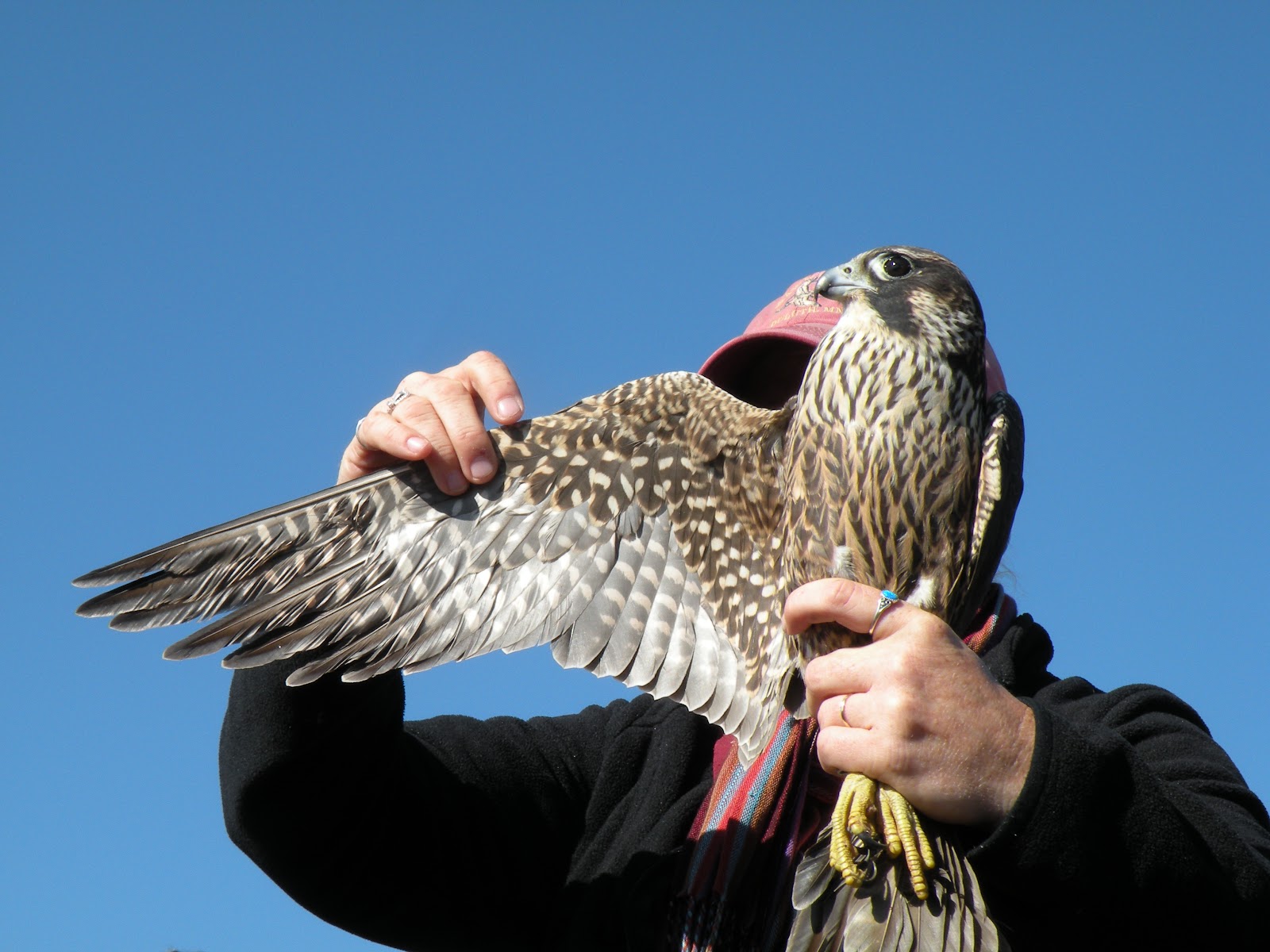
The long and tapered wings on this young
Peregrine Falcon means it was built for some
serious speed! Photo by Alyssa DeRubeis.
Maybe you’ve been put under the false assumption that humans are cool. Don’t get me wrong; our bodies can do some pretty neat physiological stuff. But I’m gonna burst your bubble: humans are lame. Just think of how fast we can run compared to a Peregrine Falcon in a full stoop: 27 MPH versus 242 MPH.

Keep thinking about all the cool things birds can do. It doesn’t take us long to realize that our feathered friends are vastly more fascinating compared to humans. Now that you’re finally admitting defeat, I ask that you read on.

The most amazing avian physiological feat is the ability to travel long distances seasonally (a.k.a migrate). Between poor weather conditions, preventing fat loss, and staying alert, migration is not easy by any means. However, birds can cope with all of these things by assimilating and using antioxidants like vitamin E.

Here’s a classic bird migration scene: thousands of Tundra Swans, geese, and ducks congregate on the Mississippi River in Minnesota. Here, they rest and refuel before continuing their journey south. Photo by Alyssa DeRubeis.

Let’s talk a little bit about bird migration. It’s a two-way street, where a migratory bird will (usually) fly north as soon as possible to rear its young, and then fly south where it can stay warm and eat all sorts of goodies. During these two bouts of intense exercise, the birds produce free radicals, which are types of atoms, molecules, and ions that can harm DNA and other important stuff inside the body. This is where vitamin E comes in to save the day, because this vitamin, along with vitamin A and carotenoids, are antioxidants. They drive away bad things like free radicals from birds’ bodies; some scientists suggest that they may even reduce risks of cancer! In the case of migrating birds, antioxidants can make this migration headache a lot more bearable.

Well, that’s great. But where do these antioxidants come from? The short answer is avian nom-noms, but it’s one thing to eat something with an antioxidant in it. It’s quite another to actually be able to assimilate and use this antioxidant. Okay…so where do the birds get this ability from? It’s parentals!

Anders Møller from the University of Paris-Sud, along with his international team including Clotilde Biard (France), Filiz Karadas (Turkey), Diego Rubolini (Italy), Nicola Saino (Italy), and Peter Surai (Scotland), pointed out that there is little research looking at maternal effects on our feathered friends. Møller hypothesized that maternal effects (the direct effects a mother has on her offspring) play a critical role in migration: If mothers put a lot of antioxidants in their eggs, the chicks will be able to absorb antioxidants better later in life. This would give these birds a competitive edge because they will migrate in a healthier condition and arrive to breeding grounds earlier.

This male Barn Swallow on the left must’ve gotten back pretty early for him to have landed himself such a beautiful female. Thank you, Vitamin E! Photo by Alyssa DeRubeis.

In the early 2000s, Møller and his five colleagues collected 93 bird species’ eggs. The crew was able to analyze how the natural differences in antioxidant concentrations (put in by the mother) related to the birds’ spring arrival dates in 14 of them. They found that vitamin E concentration, but not vitamin A concentration, was a reliable predictor of earlier arrival dates.

This European posse took it a step further by injecting over 700 barn swallow eggs with either a large dose of vitamin E or a dose of corn oil (which contains a small amount of vitamin E). It was soon evident that the chicks with more vitamin E were bigger than chicks that received less vitamin E, thus already giving the big chicks a competitive edge over their less vitamin E-affiliated brethren. The researchers kept track of the eggs that hatched out as males in the following spring via frequent mist-netting sessions (a bird-capturing technique). Guess what? The fellas with higher vitamin E concentrations arrived earlier on average by ten days than those with lower concentrations!

Sweet. But what does it all mean? First off, vitamin E is crucial for migratory birds because it allows them to process antioxidants more efficiently. In fact, another study done by Møller, Filiz Karadas, and Johannes Emitzoe out of University of Paris-Sud suggested that birds killed by feral cats had less vitamin E than birds that died of other reasons. Furthermore, the early birds get the worm. Events such as insect hatches—vital for baby birds—now occur earlier in the spring as temperatures rise (read: climate change). Plus, if you’re a male arriving at the breeding grounds early, you get to pick the best spots to raise your offspring.

Wood-warblers, such as this Palm Warbler, must get back to their northerly breeding grounds in a timely fashion in order to hit the insect hatch for da babies. Photo by Alyssa DeRubeis.

Obviously, there’s an advantage to up the vitamin E intake and get a head start as a developing embryo. In an egg, most nutrients come from the yolk…which comes from the mother. The healthier the mother, the more vitamin E she will put in her eggs. And vitamin E isn’t produced internally; birds must consume it. While Møller’s paper on maternal effects states that vitamin E can be found widely in nature, a separate study found no apparent association between vitamin E and avian diet. Hmm. So then where DO birds get vitamin E from? Is it a limiting resource? Is there competition for it?

Clearly, we’ve got some questions and answers. As the field of “birdology,” advances, we will learn more and keep humans jealous of birds for years to come.


REFERENCES

1. Møller, A., Biard, C., Karadas, F., Rubolini, D., Saino, N., & Surai, P. (2011). Maternal effects and changing phenology of bird migration Climate Research, 49 (3), 201-210 DOI: 10.3354/cr01030

2. Møller AP, Erritzøe J, & Karadas F (2010). Levels of antioxidants in rural and urban birds and their consequences. Oecologia, 163 (1), 35-45 PMID: 20012100

3. Cohen, A., McGraw, K., & Robinson, W. (2009). Serum antioxidant levels in wild birds vary in relation to diet, season, life history strategy, and species Oecologia, 161 (4), 673-683 DOI: 10.1007/s00442-009-1423-9

Tuesday, November 13, 2018

Can Animals Sense Each Other’s Wants and Hopes?

A repost of an original article from November 13, 2013.

Is the ability to empathize uniquely human? This question has long been pondered by philosophers and animal behaviorists alike. Empathy depends in part on the ability to recognize the wants and hopes of others. A study by researchers at the University of Cambridge suggests that we may not be alone with this ability.

A male Eurasian jay feeds his female mate. Photo provided by Ljerka Ostojić.
Ljerka Ostojić, Rachael Shaw, Lucy Cheke, and Nicky Clayton conducted a series of studies on Eurasian jays to explore whether male jays could perceive changes in what their female partners desired. Eurasian jays are a good species with which to explore this phenomenon because males routinely provide food to their female mates as a part of their courtship. The researchers wanted to know if males would adjust what food items males offered their mates depending on what food type the females wanted more.

In order to make a female prefer one food type over another, the researchers fed each female one of two food types (wax moth larvae and mealworm larvae) until they were full. But being full of one type of food doesn’t mean you can’t find room for desert, right? So when the researchers then offered the females access to both wax moth larvae and mealworm larvae, those that had previously eaten wax moth larvae now preferred mealworm larvae and those that had previously eaten mealworm larvae now preferred wax moth larvae. But could their male partners tell what they preferred at that moment?

In order to test whether male jays were sensitive to their partners’ desires, the researchers fed the females either wax moth larvae or mealworm larvae until they were full. They did this while their male partners watched from behind a transparent screen. They then removed the screen and gave the males 20 opportunities to choose between a single wax moth larvae or mealworm larvae to feed their partner. In this context, males usually chose to share with their mates the food that their partners preferred rather than the food their partners had already been fed! But are the males responding to their mate’s behavior or are they responding to what they saw when the females were eating earlier?


This video (provided by Ljerka Ostojić) shows the experimental process
in which the male chooses a food type and then shares it with his mate.

The researchers repeated the study with an opaque screen so the males could not see their mates while the females gorged on one particular food type. Without the ability to see the mate eating beforehand, males chose both food types equally and did not attend to their mate’s preferences. Because the females still had a preference for the opposite food type but the males were not adjusting for that preference, this means that the males are not responding to their mate’s behavior in this experiment or the previous one. This suggests that if male Eurasian jays see what their mates are eating, then somehow they have the ability to know to give their mate the opposite food type!

Whether this process involves the males having an understanding of their mate’s desires or some other mechanism is not fully known. But male Eurasian jays are certainly adjusting what they give their mates according to what she wants. Now if we can only teach human males to do that!

Want to know more? Check this out:

Ostojić, L., Shaw, R.C., Cheke, L.G., & Clayton, N.S. (2013). Evidence suggesting that desire-state attribution may govern food sharing in Eurasian jays PNAS, 110 (10), 4123-4128 DOI: 10.1073/pnas.1209926110

Tuesday, October 30, 2018

Nature's Halloween Costumes

A repost of an original article from October 23, 2013.

Image by Steve at Wikimedia Commons.
It seems like everyone is racking their brains to come up with a great Halloween costume. But we’re not the only ones to disguise ourselves as something we’re not. Many animals put on costumes just like we do. Take this gharial crocodile for example (do you see him?), covering himself in parts of his environment to hide.

Other animals, like this tawny frogmouth below, develop physical appearances that help them blend in with their surroundings. When threatened, these birds shut their eyes, erect their feathers and point their beak in such a way to match the color and texture of the tree bark.

Image by C Coverdale at Wikimedia Commons.
Rather than hide, some animals have a physical appearance to disguise themselves as other species that are often fierce, toxic or venomous. This type of mimicry is called Batesian mimicry, named after Henry Walter Bates, the English naturalist who studied butterflies in the Amazon and gave the first scientific description of animal mimicry. This plate from Bates’ 1862 paper, Contributions to an Insect Fauna of the Amazon Valley: Heliconiidae, illustrates Batesian mimicry between various toxic butterfly species (in the second and bottom rows) and their harmless mimics (in the top and third rows).

This plate from Bates’ 1862 paper, Contributions to an Insect Fauna of
the Amazon Valley: Heliconiidae is available on Wikipedia Commons.
The bluestriped fangblenny takes its costume another step further, by changing its shape, colors, and behavior to match the company. This fish changes its colors to match other innocuous fish species that are around so it can sneak up and bite unsuspecting larger fish that would otherwise bite them back! Learn more about them here.

The fish on the far left is a juvenile cleaner wrasse in the act of cleaning another fish. The two fish in
the middle and on the right are both bluestriped fangblennies, one in its cleaner wrasse-mimicking
coloration (middle) and the other not (right). Figure from the Cheney, 2013 article in Behavioral Ecology.
But the Master of Disguise title has got to go to the mimic octopus. This animal can change its color, shape and behavior to look and behave like a wide range of creatures, including an innocuous flounder, a poisonous lionfish, or even a dangerous sea snake! Check it out in action:


Tuesday, October 23, 2018

Vampires!

Photo by Alejandro Lunadei at Wikimedia.
A reposting of an original article from October 19, 2015

Vampire mythologies have been around for thousands of years, terrifying the young and old alike with stories of predatory bloodsuckers that feed on our life essences. You may not believe in vampires, but they are all around us. In fact, you may have some in the room with you right now! You just don’t notice them because they are not human, or even human-like.

Vampires feed on the blood of their victims in order to sustain their own lives. This phenomenon, called hematophagy, is more common than typically occurs to us at first. Just take mosquitoes and ticks as examples. Once we’ve opened our minds to the idea of bloodthirsty arthropods, we quickly think of many more: bedbugs, sandflies, blackflies, tsetse flies, assassin bugs, lice, mites, and fleas. In fact, nearly 14,000 arthropod species are hematophages. We can expand our thoughts now to worms (like leeches), fish (such as lampreys and candirús), some mammals (vampire bats), and even some birds (vampire finches, oxpeckers, and hood mockingbirds). We’ve been surrounded by vampires our whole lives, we just never sat up to take notice!

Hematophagous animals are not as scary as mythical vampires, in part because they don’t suck their victims dry – they just take a small blood meal to sustain their tiny bodies. Hematophagy is not, in itself, lethal. However, the process of exposing and taking the blood of many individuals transmits many deadly diseases, like malaria, rabies, dengue fever, West Nile virus, bubonic plague, encephalitis, and typhus.

Because blood feeders do not kill their meals, feeding can be even more dangerous for them than for traditional predators. As a result, many hematophagous animals have developed a similar toolkit. Many have mouthparts that are specialized to work as a needle or a razor and biochemicals in their saliva that work as anticoagulants and pain killers. Their primary skill, however, is their stealth: they can sneak up on you, eat their meal, and be home for bed before you even notice the itch.

Although a few species, like assassin bugs and vampire bats, are obligatory hematophages (only eat blood), most hematophages eat other foods as well. Somehow, Dracula is not quite so intimidating when you imagine him drinking his morning fruit juice, like many mosquitoes do.

Why drink blood in the first place? Blood is a body tissue like any other, and it contains a lot of protein and a variety of sugars, fats and minerals, just like meat. However, blood is mostly water, which means that a blood meal contains less protein and calories than the same weight of meat. Because you need to consume so much more to get enough protein and calories out of a meal, large animals and animals that generate their own body heat can't usually rely on blood meals alone. So much for human-like vampires that only live off the blood of their victims.

A deadly vampire spreading malaria. Photo by the CDC available at Wikimedia.

So true vampires are everywhere, but they are small, take small blood meals, don't generally kill their hosts, and often use blood to supplement their other meals. Not so scary any more, are they? ...Although, about 3.2 billion people (about half the world's population) are at risk of contracting the deadly disease, malaria, from these bloodsuckers... so maybe you aren't scared enough. Bwaa-haha!

Tuesday, October 9, 2018

Caught in My Web: Mind-Altering Substances

Image by Luc Viatour at Wikimedia Commons
Drunken birds have gone viral this week! For this edition of Caught in My Web, we wonder if animals alter their mental states like people do.

1. Drunk Minnesotan birds are flying into windows! At least that is what the viral story says. But the truth may be a bit more measured. As the Police Chief of Gilbert, Minnesota says, “It sounds like every bird in our town is hammered, and that’s not the case.” Read the real story here.

2. But do wild animals really drink alcohol? Not in the way that we do, maybe, but many consume overly fermented fruits. Some have developed a tolerance to the high alcohol content, others, not so much. Just ask this poor drunk moose that got herself stuck in a tree after eating too many fermented apples.

3. But it’s not just fermented fruits that get animals drunk. Some fish can make their own alcohol to help them survive a long winter under the ice.

4. What about the effects of other mind-altering substances on animals? Ever wonder what kind of web a spider would make on different drugs? In 1948, a zoologist at the University of Tubingen in Germany by the name of H.M. Peters did.


5. Octopuses are normally very solitary creatures… that is, unless they are given ecstasy. Apparently, even octopuses seek social interactions when they take the common party drug.

Tuesday, May 8, 2018

The Beginnings of Jurassic Park: Dinosaur Blood Discovered? (A Guest Post)

A reposting of an original post by Samantha Vold on February 9, 2015.

The classic tale of Jurassic Park, where dinosaurs once again walked the earth has tickled the fancy of many a reader. Dinosaur DNA preserved in a fossilized mosquito was used to bring these giants back to life. But in real life, it was previously thought that there was no possible way for organic materials to be preserved, that they often degraded within 1 million years if not rapidly attacked by bacteria and other organisms specialized in decomposition. Skin and other soft tissues, such as blood vessels, would never withstand the test of time. Or would they…?

T. rex skeleton at Palais de la découverte. Image by David Monniaux at Wikimedia

In 1992, Mary Schweitzer was staring through a microscope at a thin slice of fossilized bone, but this bone had something unusual. There were small red disks located in this tissue and each had a small dark circle in the middle resembling a cell nucleus, the command center of the cell. And these little disks very much resembled the red blood cells of reptiles, birds, and other modern-day vertebrates (excluding mammals). But it wasn’t possible, was it? These cells came from a 67 million-year old T. rex. And it was commonly accepted that organic material never lasted that long.

Comparison of red blood cells. Image by John Alan Elson at Wikimedia

This opened a huge controversy in the scientific community, but Schweitzer persisted. She consulted with her mentor, Jack Horner, a leading scientist in the paleontology field, and he told her to prove to him that they weren’t red blood cells. Schweitzer took the challenge and began to run some tests.

The first clue to these mysterious scarlet-colored cells potentially being red blood cells was the fact that they were located within blood vessel channels of the dense bone that were not filled with mineral deposits. And these microscopic structures only appeared inside the vessel channels, as would be true of blood cells.

Schweitzer then began to focus on the chemical composition of these puzzling structures. Tests showed that these “little red round things” were rich in iron, and that the iron was specific to them. Iron is important in red blood cells as it helps to transport oxygen throughout the body. And the elemental make-up of these little red round things differed greatly from the surrounding bone and sediment around them.

The next test was looking for heme, a small iron-containing molecule that gives blood its characteristic color and allows hemoglobin proteins to transport oxygen throughout the body. Schweitzer tested for this through spectroscopy tests, which measure the light that a given material emits, absorbs, and scatters. Her results from these tests were consistent with what one would find in heme, suggesting that this molecule existed in the dinosaur bone she was analyzing.

Schweitzer then conducted a few immunology tests to see if she indeed had found hemoglobin in these ancient bones. Antibodies are produced when the body detects a foreign substance that could potentially be harmful. Extracts from the dinosaur bone were injected into mice to see if antibodies were produced to ward against this new organic compound. When these antibodies were then exposed to hemoglobin from turkeys and rats, they bound to the hemoglobin. This suggested that the extracts that caused an antibody response in the mice included hemoglobin. This in turn suggested the T. rex bone contained hemoglobin, or something very similar.

Through years of research, Schweitzer has shown that what was once believed to be impossible is indeed true. Soft tissues, blood cells, and proteins can withstand the test of time. This process is possibly done through iron binding to amino acids (the molecules that make up proteins) and thereby preserve them. Research is advancing in this area, but as of yet, no DNA has been found to bring Jurassic Park to life. But for the avid believer, don’t get up hope yet. Perhaps one day we truly could walk amongst dinosaurs.


References:

Fields, Helen. (May 2006). Dinosaur Shocker. Smithsonian. Smithsonian Magazine.

Pappas, Stephanie. (13 Nov. 2013). Mysteriously Intact T. Rex Tissue Finally Explained : DNews. DNews. Live Science.

Schweitzer, M. (2010). Blood from Stone Scientific American, 303 (6), 62-69 DOI: 10.1038/scientificamerican1210-62

Tuesday, April 17, 2018

Birds, Vitamin E, and the Race Against Time: A Guest Post

A repost of an original article by Alyssa DeRubeis on February 6, 2013

The long and tapered wings on this young
Peregrine Falcon means it was built for some
serious speed! Photo by Alyssa DeRubeis.
Maybe you’ve been put under the false assumption that humans are cool. Don’t get me wrong; our bodies can do some pretty neat physiological stuff. But I’m gonna burst your bubble: humans are lame. Just think of how fast we can run compared to a Peregrine Falcon in a full stoop: 27 MPH versus 242 MPH.

Keep thinking about all the cool things birds can do. It doesn’t take us long to realize that our feathered friends are vastly more fascinating compared to humans. Now that you’re finally admitting defeat, I ask that you read on.

The most amazing avian physiological feat is the ability to travel long distances seasonally (a.k.a migrate). Between poor weather conditions, preventing fat loss, and staying alert, migration is not easy by any means. However, birds can cope with all of these things by assimilating and using antioxidants like vitamin E.

Here’s a classic bird migration scene: thousands of Tundra Swans, geese, and ducks congregate on the Mississippi River in Minnesota. Here, they rest and refuel before continuing their journey south. Photo by Alyssa DeRubeis.

Let’s talk a little bit about bird migration. It’s a two-way street, where a migratory bird will (usually) fly north as soon as possible to rear its young, and then fly south where it can stay warm and eat all sorts of goodies. During these two bouts of intense exercise, the birds produce free radicals, which are types of atoms, molecules, and ions that can harm DNA and other important stuff inside the body. This is where vitamin E comes in to save the day, because this vitamin, along with vitamin A and carotenoids, are antioxidants. They drive away bad things like free radicals from birds’ bodies; some scientists suggest that they may even reduce risks of cancer! In the case of migrating birds, antioxidants can make this migration headache a lot more bearable.

Well, that’s great. But where do these antioxidants come from? The short answer is avian nom-noms, but it’s one thing to eat something with an antioxidant in it. It’s quite another to actually be able to assimilate and use this antioxidant. Okay…so where do the birds get this ability from? It’s parentals!

Anders Møller from the University of Paris-Sud, along with his international team including Clotilde Biard (France), Filiz Karadas (Turkey), Diego Rubolini (Italy), Nicola Saino (Italy), and Peter Surai (Scotland), pointed out that there is little research looking at maternal effects on our feathered friends. Møller hypothesized that maternal effects (the direct effects a mother has on her offspring) play a critical role in migration: If mothers put a lot of antioxidants in their eggs, the chicks will be able to absorb antioxidants better later in life. This would give these birds a competitive edge because they will migrate in a healthier condition and arrive to breeding grounds earlier.

This male Barn Swallow on the left must’ve gotten back pretty early for him to have landed himself such a beautiful female. Thank you, Vitamin E! Photo by Alyssa DeRubeis.

In the early 2000s, Møller and his five colleagues collected 93 bird species’ eggs. The crew was able to analyze how the natural differences in antioxidant concentrations (put in by the mother) related to the birds’ spring arrival dates in 14 of them. They found that vitamin E concentration, but not vitamin A concentration, was a reliable predictor of earlier arrival dates.

This European posse took it a step further by injecting over 700 barn swallow eggs with either a large dose of vitamin E or a dose of corn oil (which contains a small amount of vitamin E). It was soon evident that the chicks with more vitamin E were bigger than chicks that received less vitamin E, thus already giving the big chicks a competitive edge over their less vitamin E-affiliated brethren. The researchers kept track of the eggs that hatched out as males in the following spring via frequent mist-netting sessions (a bird-capturing technique). Guess what? The fellas with higher vitamin E concentrations arrived earlier on average by ten days than those with lower concentrations!

Sweet. But what does it all mean? First off, vitamin E is crucial for migratory birds because it allows them to process antioxidants more efficiently. In fact, another study done by Møller, Filiz Karadas, and Johannes Emitzoe out of University of Paris-Sud suggested that birds killed by feral cats had less vitamin E than birds that died of other reasons. Furthermore, the early birds get the worm. Events such as insect hatches—vital for baby birds—now occur earlier in the spring as temperatures rise (read: climate change). Plus, if you’re a male arriving at the breeding grounds early, you get to pick the best spots to raise your offspring.

Wood-warblers, such as this Palm Warbler, must get back to their northerly breeding grounds in a timely fashion in order to hit the insect hatch for da babies. Photo by Alyssa DeRubeis.

Obviously, there’s an advantage to up the vitamin E intake and get a head start as a developing embryo. In an egg, most nutrients come from the yolk…which comes from the mother. The healthier the mother, the more vitamin E she will put in her eggs. And vitamin E isn’t produced internally; birds must consume it. While Møller’s paper on maternal effects states that vitamin E can be found widely in nature, a separate study found no apparent association between vitamin E and avian diet. Hmm. So then where DO birds get vitamin E from? Is it a limiting resource? Is there competition for it?

Clearly, we’ve got some questions and answers. As the field of “birdology,” advances, we will learn more and keep humans jealous of birds for years to come.

REFERENCES

1. Møller, A., Biard, C., Karadas, F., Rubolini, D., Saino, N., & Surai, P. (2011). Maternal effects and changing phenology of bird migration Climate Research, 49 (3), 201-210 DOI: 10.3354/cr01030

2. Møller AP, Erritzøe J, & Karadas F (2010). Levels of antioxidants in rural and urban birds and their consequences. Oecologia, 163 (1), 35-45 PMID: 20012100

3. Cohen, A., McGraw, K., & Robinson, W. (2009). Serum antioxidant levels in wild birds vary in relation to diet, season, life history strategy, and species Oecologia, 161 (4), 673-683 DOI: 10.1007/s00442-009-1423-9

Tuesday, March 6, 2018

Caught in My Web: Marine Technology

Image by Luc Viatour at Wikimedia Commons
For this edition of Caught in My Web, allow yourself to be amazed both by the range and depth of behaviors of marine animals, and by the incredible technologies we have used to learn these things.

1. Penguincams show that Gentoo penguins “talk” to one another while foraging and you can see some of the penguincam footage here.

2. Scientists built an 8-foot touchscreen for the dolphins at the National Aquarum in Baltimore and discovered they like to play “Whack-an-Angelfish”.

3. Using audio-recording tags, we learned that mother and baby humback whales “whisper” to one another to avoid predators.

4. Scientists created virtual reality holodeck for zebrafish.

5. Thanks to the fact that zebrafish larvae are transparent, scientists have discovered a way to image brain activity in an animal as it is behaving in real time. Humans may be cool enough to have developed this technology, but now we know that zebrafish have developed predator eversion strategies when they are still larvae.


What will we come up with next?