Showing posts with label migration. Show all posts

Tuesday, December 18, 2018

Reindeer Games: 8 Surprising Facts About Reindeer

A reposting of an original article from December, 2017.

A Swedish reindeer watches you. Photo by Alexandre Buisse at Wikimedia Commons.

1. Reindeer are caribou (kinda): Reindeer are the same species as caribou (with the scientific name Rangifer tarandus), but the terms are not completely interchangeable. Rangifer tarandus is a species of deer that is native to Northern regions of Europe, Siberia and North America, which includes many different habitat types, like arctic, subarctic, tundra, snow forest and mountains. These variations in harsh environments have led to variations among populations, resulting in multiple subspecies. The Rangifer tarandus subspecies that live in North America are commonly called caribou and the subspecies that live in Europe and Siberia are commonly called reindeer. We also often refer to domesticated populations as reindeer, regardless of where they are.

A map of reindeer and caribou distributions. Image by TBjornstad at Wikimedia Commons.

2. Rudolf’s red nose was an adaptation: Technically, reindeer don’t have red noses, but they do have lots extra blood flow in them. The inside of their noses are twisted and vascularized so the warm blood can heat up the frigid Arctic air before it gets into the lungs.

3. Santa’s reindeer were probably girls: Not only do reindeer have the biggest antlers of all deer species (relative to body size), but they are the only deer species in which both males and females grow antlers. Both males and females use their antlers to scrape through the snow and look for food, but males also use their antlers to compete with one another and impress the ladies during the breeding season. Unlike horns, antlers shed and regrow every year, and this process is regulated by sex hormones. When the new antlers grow in spring, they are made up of cartilage and lots of blood vessels and are covered in a furry skin called velvet. The blood carries lots of calcium into the antlers, which helps them to grow and harden into bone. When testosterone levels drop in males at the end of their breeding season in early December, their antlers fall off. Females, however, generally keep their antlers until March or April. So, if Santa’s reindeer had antlers at the end of December, they were probably female!

4. If you’re going to pick an animal to travel the world in one night, reindeer are a good choice: Some North American caribou migrate over 3,000 miles a year (more than any other land mammal). They can run up to 50 miles per hour and swim over 6 miles per hour. Migration herds can be up to 500,000 animals and baby reindeer learn to run within two hours of birth!

A swimming caribou herd. Photo by Lestar Kovac at Wikimedia Commons.

5. Reindeer eat weird stuff: Like cows, reindeer are ruminants, which means their stomachs have multiple compartments, some of which specialize in maintaining microbial communities to help them digest. Unlike cows, reindeer predominantly eat lichen, which are combinations of algae and fungi that are typically high in carbohydrates and low in proteins. To make up for this low amount of protein in their diet, reindeer may occasionally eat rodents and bird eggs.

6. They have the coolest feet: Their hooves have four toes: two that splay out like snow shoes and two dew claws. Their hooves have sharp edges to dig for food and are paddle-shaped for swimming. Their hooves even change with the seasons to provide the best traction, being softer in the summer when the ground is soft and hard in the winter to walk on slippery snow and ice.

7. Some reindeer use clicking knees to communicate: Some subspecies have knees that click when tendons slip over bone extensions in their feet. They use this sound to stay with their herd, even when weather conditions limit visibility. But because larger reindeer have larger legs and therefore make louder knee-clicks, they also use these sounds to establish dominance.

8. Reindeer are the only mammals that can see UV light: They have a reflective layer in the back of their eyes that is golden in summer and blue in winter. When it is blue, this allows reindeer to see contrasts in UV light, such as lichen (which absorbs UV) versus snow (which reflects UV).

Tuesday, November 27, 2018

Birds, Vitamin E, and the Race Against Time: A Guest Post

A reposting of an original article by Alyssa DeRubeis

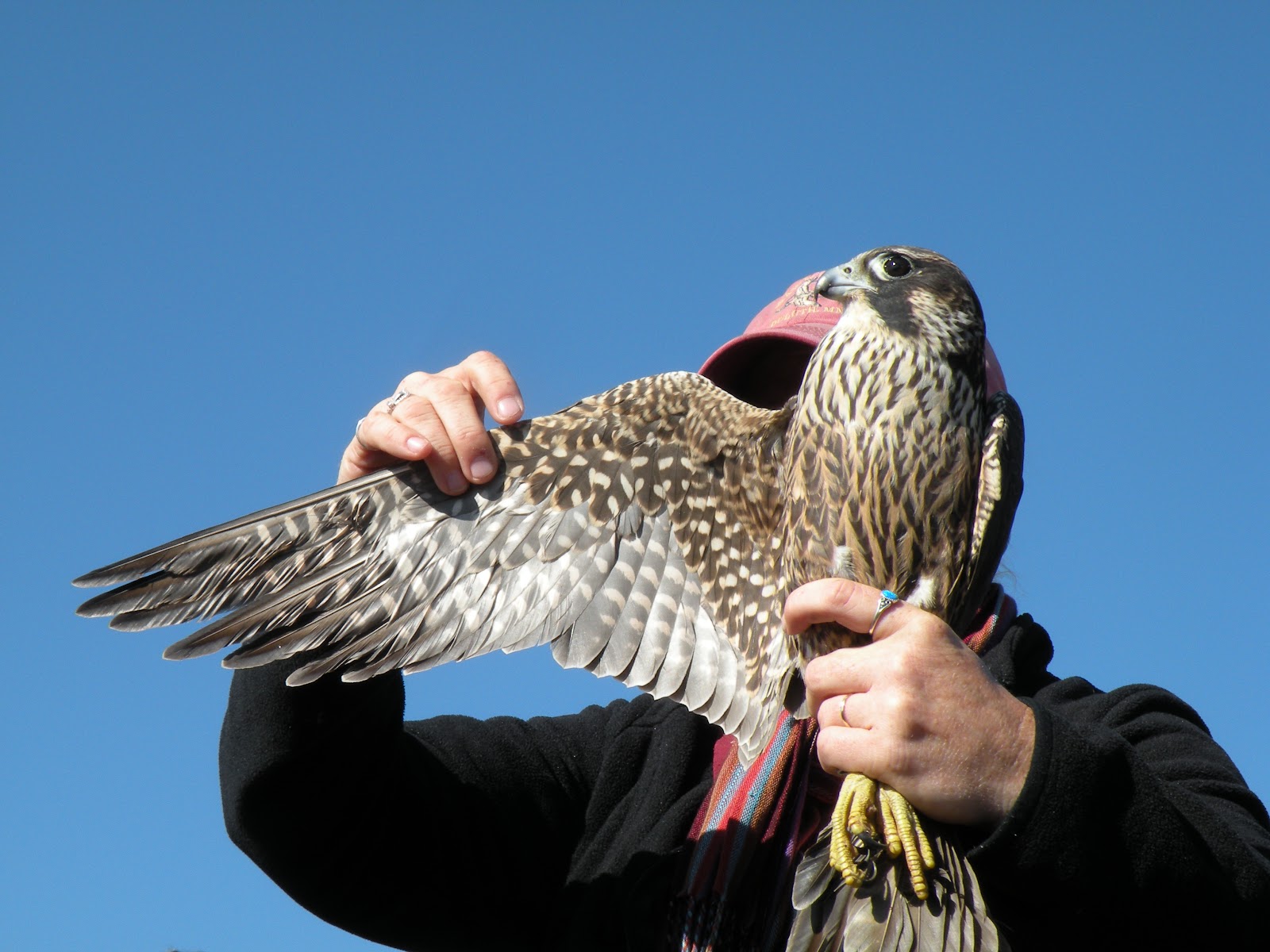
The long and tapered wings on this young
Peregrine Falcon means it was built for some
serious speed! Photo by Alyssa DeRubeis.
Maybe you’ve been put under the false assumption that humans are cool. Don’t get me wrong; our bodies can do some pretty neat physiological stuff. But I’m gonna burst your bubble: humans are lame. Just think of how fast we can run compared to a Peregrine Falcon in a full stoop: 27 MPH versus 242 MPH.

Keep thinking about all the cool things birds can do. It doesn’t take us long to realize that our feathered friends are vastly more fascinating compared to humans. Now that you’re finally admitting defeat, I ask that you read on.

The most amazing avian physiological feat is the ability to travel long distances seasonally (a.k.a migrate). Between poor weather conditions, preventing fat loss, and staying alert, migration is not easy by any means. However, birds can cope with all of these things by assimilating and using antioxidants like vitamin E.

Here’s a classic bird migration scene: thousands of Tundra Swans, geese, and ducks congregate on the Mississippi River in Minnesota. Here, they rest and refuel before continuing their journey south. Photo by Alyssa DeRubeis.

Let’s talk a little bit about bird migration. It’s a two-way street, where a migratory bird will (usually) fly north as soon as possible to rear its young, and then fly south where it can stay warm and eat all sorts of goodies. During these two bouts of intense exercise, the birds produce free radicals, which are types of atoms, molecules, and ions that can harm DNA and other important stuff inside the body. This is where vitamin E comes in to save the day, because this vitamin, along with vitamin A and carotenoids, are antioxidants. They drive away bad things like free radicals from birds’ bodies; some scientists suggest that they may even reduce risks of cancer! In the case of migrating birds, antioxidants can make this migration headache a lot more bearable.

Well, that’s great. But where do these antioxidants come from? The short answer is avian nom-noms, but it’s one thing to eat something with an antioxidant in it. It’s quite another to actually be able to assimilate and use this antioxidant. Okay…so where do the birds get this ability from? It’s parentals!

Anders Møller from the University of Paris-Sud, along with his international team including Clotilde Biard (France), Filiz Karadas (Turkey), Diego Rubolini (Italy), Nicola Saino (Italy), and Peter Surai (Scotland), pointed out that there is little research looking at maternal effects on our feathered friends. Møller hypothesized that maternal effects (the direct effects a mother has on her offspring) play a critical role in migration: If mothers put a lot of antioxidants in their eggs, the chicks will be able to absorb antioxidants better later in life. This would give these birds a competitive edge because they will migrate in a healthier condition and arrive to breeding grounds earlier.

This male Barn Swallow on the left must’ve gotten back pretty early for him to have landed himself such a beautiful female. Thank you, Vitamin E! Photo by Alyssa DeRubeis.

In the early 2000s, Møller and his five colleagues collected 93 bird species’ eggs. The crew was able to analyze how the natural differences in antioxidant concentrations (put in by the mother) related to the birds’ spring arrival dates in 14 of them. They found that vitamin E concentration, but not vitamin A concentration, was a reliable predictor of earlier arrival dates.

This European posse took it a step further by injecting over 700 barn swallow eggs with either a large dose of vitamin E or a dose of corn oil (which contains a small amount of vitamin E). It was soon evident that the chicks with more vitamin E were bigger than chicks that received less vitamin E, thus already giving the big chicks a competitive edge over their less vitamin E-affiliated brethren. The researchers kept track of the eggs that hatched out as males in the following spring via frequent mist-netting sessions (a bird-capturing technique). Guess what? The fellas with higher vitamin E concentrations arrived earlier on average by ten days than those with lower concentrations!

Sweet. But what does it all mean? First off, vitamin E is crucial for migratory birds because it allows them to process antioxidants more efficiently. In fact, another study done by Møller, Filiz Karadas, and Johannes Emitzoe out of University of Paris-Sud suggested that birds killed by feral cats had less vitamin E than birds that died of other reasons. Furthermore, the early birds get the worm. Events such as insect hatches—vital for baby birds—now occur earlier in the spring as temperatures rise (read: climate change). Plus, if you’re a male arriving at the breeding grounds early, you get to pick the best spots to raise your offspring.

Wood-warblers, such as this Palm Warbler, must get back to their northerly breeding grounds in a timely fashion in order to hit the insect hatch for da babies. Photo by Alyssa DeRubeis.

Obviously, there’s an advantage to up the vitamin E intake and get a head start as a developing embryo. In an egg, most nutrients come from the yolk…which comes from the mother. The healthier the mother, the more vitamin E she will put in her eggs. And vitamin E isn’t produced internally; birds must consume it. While Møller’s paper on maternal effects states that vitamin E can be found widely in nature, a separate study found no apparent association between vitamin E and avian diet. Hmm. So then where DO birds get vitamin E from? Is it a limiting resource? Is there competition for it?

Clearly, we’ve got some questions and answers. As the field of “birdology,” advances, we will learn more and keep humans jealous of birds for years to come.


REFERENCES

1. Møller, A., Biard, C., Karadas, F., Rubolini, D., Saino, N., & Surai, P. (2011). Maternal effects and changing phenology of bird migration Climate Research, 49 (3), 201-210 DOI: 10.3354/cr01030

2. Møller AP, Erritzøe J, & Karadas F (2010). Levels of antioxidants in rural and urban birds and their consequences. Oecologia, 163 (1), 35-45 PMID: 20012100

3. Cohen, A., McGraw, K., & Robinson, W. (2009). Serum antioxidant levels in wild birds vary in relation to diet, season, life history strategy, and species Oecologia, 161 (4), 673-683 DOI: 10.1007/s00442-009-1423-9

Tuesday, October 9, 2018

Caught in My Web: Mind-Altering Substances

Image by Luc Viatour at Wikimedia Commons
Drunken birds have gone viral this week! For this edition of Caught in My Web, we wonder if animals alter their mental states like people do.

1. Drunk Minnesotan birds are flying into windows! At least that is what the viral story says. But the truth may be a bit more measured. As the Police Chief of Gilbert, Minnesota says, “It sounds like every bird in our town is hammered, and that’s not the case.” Read the real story here.

2. But do wild animals really drink alcohol? Not in the way that we do, maybe, but many consume overly fermented fruits. Some have developed a tolerance to the high alcohol content, others, not so much. Just ask this poor drunk moose that got herself stuck in a tree after eating too many fermented apples.

3. But it’s not just fermented fruits that get animals drunk. Some fish can make their own alcohol to help them survive a long winter under the ice.

4. What about the effects of other mind-altering substances on animals? Ever wonder what kind of web a spider would make on different drugs? In 1948, a zoologist at the University of Tubingen in Germany by the name of H.M. Peters did.


5. Octopuses are normally very solitary creatures… that is, unless they are given ecstasy. Apparently, even octopuses seek social interactions when they take the common party drug.

Tuesday, September 4, 2018

Why Ask for Directions? (A Guest Post)

A reposting of an original article by Anna Schneider on Feburary 8, 2016.

For the iconic monarch butterfly, the shorter days in fall mean it’s time to pack up and head south to a warmer climate! Just like clockwork, the Eastern population of monarch butterflies makes a 2000 mile journey to their winter paradise roosts in central Mexico. The journey in itself is one of the greatest migrations among all animals.

But here’s the catch: none of these butterflies has made this trip before. Several generations of monarchs have come and gone over the course of a summer, but the generation born in late August and early September are genetically prepared for months of survival without feeding or breeding. But their predecessors didn’t exactly leave them with a map. How do they know where to go? Do they have a map and compass inside their heads? The answer: yes! Well, sort of…

Think about this: if you were lost in the woods and needed to find south, what would you do? Here’s a hint: look up! The sun can be a great resource when you’re lost, and I’m not talking about just asking it for directions. As the Earth rotates on its axis throughout the day, the sun appears to travel overhead. By knowing approximately what time of day it is, you can determine the cardinal directions. Monarchs use specialized cells or organs called photoreceptors that respond to light to establish the position of the sun.

Representation of time compensated sun compass orientation used by monarchs;
Image created by Anna Schneider.
Until recently, it was thought that monarchs simply used the photoreceptors on the top portion of their compound eyes, called the dorsal rim. Past studies have shown that the signals are passed from the photoreceptors on to the “sun compass” region in their brains and the butterflies change direction based on that information. Like most animals, it was assumed that their internal clock was located inside their brains. However, recent research has demonstrated that individuals whose antennae have been painted or removed altogether become disoriented when placed in flight simulators. These monarchs do not adjust for the time of day when trying to fly south. When those same antennae that were removed were placed in a petri dish, they continued to respond to light and showed signs that they continued the pattern of time. This indicates that antennae and the brain are both needed for the monarchs to correctly determine their direction.

Diagram of features on the head of a monarch butterfly; Image created by Anna Schneider.
Now, estimating which way is South might be fine and dandy on a bright sunny day, but what happens when it’s cloudy? Not a problem for these super-insects! In another recent study, researchers tethered monarchs to flight simulators and altered the magnetic field conditions to see what would happen. When the magnetic field was reversed so magnetic North was in the opposite direction, the butterflies altered their bearings and flew exactly opposite as well. This suggests that monarchs could have some sort of way to detect the earth’s magnetic field, called magnetoreception, which could enhance the photoreception capabilities.

Many of the mechanisms behind the migration of these incredible creatures are yet to be discovered, but much progress has been made in the past decade. So next time you see a monarch butterfly, take a second look. There is more than meets the eye.

Sources:

Gegear, R., Foley, L., Casselman, A., & Reppert, S. (2010). Animal cryptochromes mediate magnetoreception by an unconventional photochemical mechanism Nature, 463 (7282), 804-807 DOI: 10.1038/nature08719

Guerra, P., Gegear, R., & Reppert, S. (2014). A magnetic compass aids monarch butterfly migration Nature Communications, 5 DOI: 10.1038/ncomms5164

Merlin, C., Gegear, R., & Reppert, S. (2009). Antennal Circadian Clocks Coordinate Sun Compass Orientation in Migratory Monarch Butterflies Science, 325 (5948), 1700-1704 DOI: 10.1126/science.1176221

Steven M. Reppert. The Reppert Lab: Migration. University of Massachusetts Medical School: Department of Neurobiology.

Tuesday, April 17, 2018

Birds, Vitamin E, and the Race Against Time: A Guest Post

A repost of an original article by Alyssa DeRubeis on February 6, 2013

The long and tapered wings on this young
Peregrine Falcon means it was built for some
serious speed! Photo by Alyssa DeRubeis.
Maybe you’ve been put under the false assumption that humans are cool. Don’t get me wrong; our bodies can do some pretty neat physiological stuff. But I’m gonna burst your bubble: humans are lame. Just think of how fast we can run compared to a Peregrine Falcon in a full stoop: 27 MPH versus 242 MPH.

Keep thinking about all the cool things birds can do. It doesn’t take us long to realize that our feathered friends are vastly more fascinating compared to humans. Now that you’re finally admitting defeat, I ask that you read on.

The most amazing avian physiological feat is the ability to travel long distances seasonally (a.k.a migrate). Between poor weather conditions, preventing fat loss, and staying alert, migration is not easy by any means. However, birds can cope with all of these things by assimilating and using antioxidants like vitamin E.

Here’s a classic bird migration scene: thousands of Tundra Swans, geese, and ducks congregate on the Mississippi River in Minnesota. Here, they rest and refuel before continuing their journey south. Photo by Alyssa DeRubeis.

Let’s talk a little bit about bird migration. It’s a two-way street, where a migratory bird will (usually) fly north as soon as possible to rear its young, and then fly south where it can stay warm and eat all sorts of goodies. During these two bouts of intense exercise, the birds produce free radicals, which are types of atoms, molecules, and ions that can harm DNA and other important stuff inside the body. This is where vitamin E comes in to save the day, because this vitamin, along with vitamin A and carotenoids, are antioxidants. They drive away bad things like free radicals from birds’ bodies; some scientists suggest that they may even reduce risks of cancer! In the case of migrating birds, antioxidants can make this migration headache a lot more bearable.

Well, that’s great. But where do these antioxidants come from? The short answer is avian nom-noms, but it’s one thing to eat something with an antioxidant in it. It’s quite another to actually be able to assimilate and use this antioxidant. Okay…so where do the birds get this ability from? It’s parentals!

Anders Møller from the University of Paris-Sud, along with his international team including Clotilde Biard (France), Filiz Karadas (Turkey), Diego Rubolini (Italy), Nicola Saino (Italy), and Peter Surai (Scotland), pointed out that there is little research looking at maternal effects on our feathered friends. Møller hypothesized that maternal effects (the direct effects a mother has on her offspring) play a critical role in migration: If mothers put a lot of antioxidants in their eggs, the chicks will be able to absorb antioxidants better later in life. This would give these birds a competitive edge because they will migrate in a healthier condition and arrive to breeding grounds earlier.

This male Barn Swallow on the left must’ve gotten back pretty early for him to have landed himself such a beautiful female. Thank you, Vitamin E! Photo by Alyssa DeRubeis.

In the early 2000s, Møller and his five colleagues collected 93 bird species’ eggs. The crew was able to analyze how the natural differences in antioxidant concentrations (put in by the mother) related to the birds’ spring arrival dates in 14 of them. They found that vitamin E concentration, but not vitamin A concentration, was a reliable predictor of earlier arrival dates.

This European posse took it a step further by injecting over 700 barn swallow eggs with either a large dose of vitamin E or a dose of corn oil (which contains a small amount of vitamin E). It was soon evident that the chicks with more vitamin E were bigger than chicks that received less vitamin E, thus already giving the big chicks a competitive edge over their less vitamin E-affiliated brethren. The researchers kept track of the eggs that hatched out as males in the following spring via frequent mist-netting sessions (a bird-capturing technique). Guess what? The fellas with higher vitamin E concentrations arrived earlier on average by ten days than those with lower concentrations!

Sweet. But what does it all mean? First off, vitamin E is crucial for migratory birds because it allows them to process antioxidants more efficiently. In fact, another study done by Møller, Filiz Karadas, and Johannes Emitzoe out of University of Paris-Sud suggested that birds killed by feral cats had less vitamin E than birds that died of other reasons. Furthermore, the early birds get the worm. Events such as insect hatches—vital for baby birds—now occur earlier in the spring as temperatures rise (read: climate change). Plus, if you’re a male arriving at the breeding grounds early, you get to pick the best spots to raise your offspring.

Wood-warblers, such as this Palm Warbler, must get back to their northerly breeding grounds in a timely fashion in order to hit the insect hatch for da babies. Photo by Alyssa DeRubeis.

Obviously, there’s an advantage to up the vitamin E intake and get a head start as a developing embryo. In an egg, most nutrients come from the yolk…which comes from the mother. The healthier the mother, the more vitamin E she will put in her eggs. And vitamin E isn’t produced internally; birds must consume it. While Møller’s paper on maternal effects states that vitamin E can be found widely in nature, a separate study found no apparent association between vitamin E and avian diet. Hmm. So then where DO birds get vitamin E from? Is it a limiting resource? Is there competition for it?

Clearly, we’ve got some questions and answers. As the field of “birdology,” advances, we will learn more and keep humans jealous of birds for years to come.

REFERENCES

1. Møller, A., Biard, C., Karadas, F., Rubolini, D., Saino, N., & Surai, P. (2011). Maternal effects and changing phenology of bird migration Climate Research, 49 (3), 201-210 DOI: 10.3354/cr01030

2. Møller AP, Erritzøe J, & Karadas F (2010). Levels of antioxidants in rural and urban birds and their consequences. Oecologia, 163 (1), 35-45 PMID: 20012100

3. Cohen, A., McGraw, K., & Robinson, W. (2009). Serum antioxidant levels in wild birds vary in relation to diet, season, life history strategy, and species Oecologia, 161 (4), 673-683 DOI: 10.1007/s00442-009-1423-9

Tuesday, April 3, 2018

Animal Mass Suicide and the Lemming Conspiracy

A repost of an original article from April 4, 2012.

Ticked off Norway lemming doesn't like gossip!
Photo from Wikimedia Commons by Frode Inge Helland 
We all know the story: Every few years, millions of lemmings, driven by a deep-seated urge, run and leap off a cliff only to be dashed on the rocks below and eventually drowned in the raging sea. Stupid lemmings. It’s a story with staying power: short, not-so-sweet, and to the rocky point.

But it is a LIE.

And who, you may ask, would tell us such a horrendous fabrication? Walt Disney! Well, technically not Walt Disney himself… Let me explain:

The Disney Studio first took interest in the lemming mass suicide story when, in 1955, they published an Uncle Scrooge adventure comic called “The Lemming with the Locket” illustrated by Carl Barks. In this story, Uncle Scrooge takes Huey, Dewey and Louie in search of a lemming that stole a locket containing the combination to his vault … but they have to catch the lemming before it leaps with all his buddies into the sea forever. Three years later, Disney further popularized this idea in the 1958 documentary White Wilderness, which won that year’s Academy Award for Best Documentary Feature. A scene in White Wilderness supposedly depicts a mass lemming migration in which the lemmings leap en masse into the Canadian Arctic Ocean in a futile attempt to cross it.


In 1982, the fifth estate, a television news magazine by the CBC (that’s the Canadian Broadcasting Corporation), broadcast a documentary about animal cruelty in Hollywood. They revealed that the now infamous White Wilderness lemming scene was filmed on a constructed set at the Bow River in Canmore, Alberta, nowhere near the Arctic Ocean. Lemmings are not native to the area where they filmed, so they imported them from Churchill after being purchased from Inuit children for 25 cents each. To give the illusion of a mass migration, they installed a rotating turntable and filmed the few lemmings they had from multiple angles over and over again. As it turns out, the lemming species filmed (collared lemmings) are not even known to migrate (unlike some Norwegian lemmings). Worst of all, the lemmings did not voluntarily leap into the water, but were pushed by the turntable and the film crew. Oh, Uncle Walt! How could you?!

Norway lemmings really do migrate en masse, but they don't commit mass suicide.
Drawing titled Lemmings in Migration, in Popular Science Monthly Volume 11, 1877.
As far as we know, there are no species that purposely hurl themselves off cliffs to die en masse for migration. But, strangely enough, North Pacific salmon do purposely hurl themselves up cliffs to die en masse for migration. And what, you may ask, is worth such a sacrifice? Sex, of course!

Migrating sockeye salmon thinking about sex.
Photo from Wikimedia Commons by Joe Mabel.

The six common North Pacific salmon species are all anadromous (meaning that they are born in fresh water, spend most of their lives in the sea and return to fresh water to breed) and semelparous (meaning they only have a single reproductive event before they die). After years at sea, salmon swim sometimes thousands of miles to get to the mouth of the very same stream in which they were born. Exactly how they do this is still a mystery. Once they enter their stream, they stop eating and their stomach even begins to disintegrate to leave room for the developing eggs or sperm. Their bodies change in other ways as well, both for reproduction and to help them adapt to fresh water. They then swim upstream, sometimes thousands of miles more, and sometimes having to leap over multiple waterfalls, using up their precious energy reserves. Only the most athletic individuals even survive the journey. Once they reach the breeding grounds, the males immediately start to fight each other over breeding territories. The females arrive and begin to dig a shallow nest (called a redd) in which she releases a few thousand eggs, which are then fertilized by the male. They then move on, and if they have energy and gametes left, repeat the process with other mates, until they are completely spent. If the females have any energy left after laying all their eggs, they spend it guarding their nests. Having spent the last of their energy, they die and are washed up onto the banks of the stream.

Now that’s parental commitment! So the next time your parents start laying on the guilt about everything they’ve given up for you, share this nugget with them and remind them it could be worse…


Want to know more? Check these out:

1. Learn more about semelparity here

2. Learn more about salmon reproduction at Marine Science

3. And learn even more about salmon reproduction with this awesome post by science blogger and Aquatic and Fishery Sciences graduate student, Iris. Her current blog posts can be found here.

4. Ramsden E, & Wilson D (2010). The nature of suicide: science and the self-destructive animal. Endeavour, 34 (1), 21-4 PMID: 20144484

Tuesday, December 19, 2017

Reindeer Games: 8 Surprising Facts About Reindeer

A Swedish reindeer watches you. Photo by Alexandre Buisse at Wikimedia Commons.

1. Reindeer are caribou (kinda): Reindeer are the same species as caribou (with the scientific name Rangifer tarandus), but the terms are not completely interchangeable. Rangifer tarandus is a species of deer that is native to Northern regions of Europe, Siberia and North America, which includes many different habitat types, like arctic, subarctic, tundra, snow forest and mountains. These variations in harsh environments have led to variations among populations, resulting in multiple subspecies. The Rangifer tarandus subspecies that live in North America are commonly called caribou and the subspecies that live in Europe and Siberia are commonly called reindeer. We also often refer to domesticated populations as reindeer, regardless of where they are.

A map of reindeer and caribou distributions. Image by TBjornstad at Wikimedia Commons.

2. Rudolf’s red nose was an adaptation: Technically, reindeer don’t have red noses, but they do have lots extra blood flow in them. The inside of their noses are twisted and vascularized so the warm blood can heat up the frigid Arctic air before it gets into the lungs.

3. Santa’s reindeer were probably girls: Not only do reindeer have the biggest antlers of all deer species (relative to body size), but they are the only deer species in which both males and females grow antlers. Both males and females use their antlers to scrape through the snow and look for food, but males also use their antlers to compete with one another and impress the ladies during the breeding season. Unlike horns, antlers shed and regrow every year, and this process is regulated by sex hormones. When the new antlers grow in spring, they are made up of cartilage and lots of blood vessels and are covered in a furry skin called velvet. The blood carries lots of calcium into the antlers, which helps them to grow and harden into bone. When testosterone levels drop in males at the end of their breeding season in early December, their antlers fall off. Females, however, generally keep their antlers until March or April. So, if Santa’s reindeer had antlers at the end of December, they were probably female!

4. If you’re going to pick an animal to travel the world in one night, reindeer are a good choice: Some North American caribou migrate over 3,000 miles a year (more than any other land mammal). They can run up to 50 miles per hour and swim over 6 miles per hour. Migration herds can be up to 500,000 animals and baby reindeer learn to run within two hours of birth!

A swimming caribou herd. Photo by Lestar Kovac at Wikimedia Commons.

5. Reindeer eat weird stuff: Like cows, reindeer are ruminants, which means their stomachs have multiple compartments, some of which specialize in maintaining microbial communities to help them digest. Unlike cows, reindeer predominantly eat lichen, which are combinations of algae and fungi that are typically high in carbohydrates and low in proteins. To make up for this low amount of protein in their diet, reindeer may occasionally eat rodents and bird eggs.

6. They have the coolest feet: Their hooves have four toes: two that splay out like snow shoes and two dew claws. Their hooves have sharp edges to dig for food and are paddle-shaped for swimming. Their hooves even change with the seasons to provide the best traction, being softer in the summer when the ground is soft and hard in the winter to walk on slippery snow and ice.

7. Some reindeer use clicking knees to communicate: Some subspecies have knees that click when tendons slip over bone extensions in their feet. They use this sound to stay with their herd, even when weather conditions limit visibility. But because larger reindeer have larger legs and therefore make louder knee-clicks, they also use these sounds to establish dominance.

8. Reindeer are the only mammals that can see UV light: They have a reflective layer in the back of their eyes that is golden in summer and blue in winter. When it is blue, this allows reindeer to see contrasts in UV light, such as lichen (which absorbs UV) versus snow (which reflects UV).

Monday, February 8, 2016

Why Ask for Directions? (A Guest Post)

by Anna Schneider

For the iconic monarch butterfly, the shorter days in fall mean it’s time to pack up and head south to a warmer climate! Just like clockwork, the Eastern population of monarch butterflies makes a 2000 mile journey to their winter paradise roosts in central Mexico. The journey in itself is one of the greatest migrations among all animals.

But here’s the catch: none of these butterflies has made this trip before. Several generations of monarchs have come and gone over the course of a summer, but the generation born in late August and early September are genetically prepared for months of survival without feeding or breeding. But their predecessors didn’t exactly leave them with a map. How do they know where to go? Do they have a map and compass inside their heads? The answer: yes! Well, sort of…

Think about this: if you were lost in the woods and needed to find south, what would you do? Here’s a hint: look up! The sun can be a great resource when you’re lost, and I’m not talking about just asking it for directions. As the Earth rotates on its axis throughout the day, the sun appears to travel overhead. By knowing approximately what time of day it is, you can determine the cardinal directions. Monarchs use specialized cells or organs called photoreceptors that respond to light to establish the position of the sun.

Representation of time compensated sun compass orientation used by monarchs;
Image created by Anna Schneider.
Until recently, it was thought that monarchs simply used the photoreceptors on the top portion of their compound eyes, called the dorsal rim. Past studies have shown that the signals are passed from the photoreceptors on to the “sun compass” region in their brains and the butterflies change direction based on that information. Like most animals, it was assumed that their internal clock was located inside their brains. However, recent research has demonstrated that individuals whose antennae have been painted or removed altogether become disoriented when placed in flight simulators. These monarchs do not adjust for the time of day when trying to fly south. When those same antennae that were removed were placed in a petri dish, they continued to respond to light and showed signs that they continued the pattern of time. This indicates that antennae and the brain are both needed for the monarchs to correctly determine their direction.

Diagram of features on the head of a monarch butterfly; Image created by Anna Schneider.
Now, estimating which way is South might be fine and dandy on a bright sunny day, but what happens when it’s cloudy? Not a problem for these super-insects! In another recent study, researchers tethered monarchs to flight simulators and altered the magnetic field conditions to see what would happen. When the magnetic field was reversed so magnetic North was in the opposite direction, the butterflies altered their bearings and flew exactly opposite as well. This suggests that monarchs could have some sort of way to detect the earth’s magnetic field, called magnetoreception, which could enhance the photoreception capabilities.

Many of the mechanisms behind the migration of these incredible creatures are yet to be discovered, but much progress has been made in the past decade. So next time you see a monarch butterfly, take a second look. There is more than meets the eye.

Sources:

Gegear, R., Foley, L., Casselman, A., & Reppert, S. (2010). Animal cryptochromes mediate magnetoreception by an unconventional photochemical mechanism Nature, 463 (7282), 804-807 DOI: 10.1038/nature08719

Guerra, P., Gegear, R., & Reppert, S. (2014). A magnetic compass aids monarch butterfly migration Nature Communications, 5 DOI: 10.1038/ncomms5164

Merlin, C., Gegear, R., & Reppert, S. (2009). Antennal Circadian Clocks Coordinate Sun Compass Orientation in Migratory Monarch Butterflies Science, 325 (5948), 1700-1704 DOI: 10.1126/science.1176221

Steven M. Reppert. The Reppert Lab: Migration. University of Massachusetts Medical School: Department of Neurobiology.

Monday, November 16, 2015

Animal Mass Suicide and the Lemming Conspiracy

Ticked off Norway lemming doesn't like gossip!
Photo from Wikimedia Commons by Frode Inge Helland
We all know the story: Every few years, millions of lemmings, driven by a deep-seated urge, run and leap off a cliff only to be dashed on the rocks below and eventually drowned in the raging sea. Stupid lemmings. It’s a story with staying power: short, not-so-sweet, and to the rocky point.

But it is a LIE.

And who, you may ask, would tell us such a horrendous fabrication? Walt Disney! Well, technically not Walt Disney himself…


Today I am revisiting an article I wrote in the early days of The Scorpion and the Frog, explaining animal mass suicide and the role of Disney in creating one of the greatest animal behavior hoaxes of all time. You can read the article in it's entirety here.

Wednesday, February 6, 2013

Birds, Vitamin E, and the Race Against Time: A Guest Post

By Alyssa DeRubeis

The long and tapered wings on this young
Peregrine Falcon means it was built for some
serious speed! Photo by Alyssa DeRubeis.
Maybe you’ve been put under the false assumption that humans are cool. Don’t get me wrong; our bodies can do some pretty neat physiological stuff. But I’m gonna burst your bubble: humans are lame. Just think of how fast we can run compared to a Peregrine Falcon in a full stoop: 27 MPH versus 242 MPH.

Keep thinking about all the cool things birds can do. It doesn’t take us long to realize that our feathered friends are vastly more fascinating compared to humans. Now that you’re finally admitting defeat, I ask that you read on.

The most amazing avian physiological feat is the ability to travel long distances seasonally (a.k.a migrate). Between poor weather conditions, preventing fat loss, and staying alert, migration is not easy by any means. However, birds can cope with all of these things by assimilating and using antioxidants like vitamin E.

Here’s a classic bird migration scene: thousands of Tundra Swans, geese, and ducks congregate on the Mississippi River in Minnesota. Here, they rest and refuel before continuing their journey south. Photo by Alyssa DeRubeis.
Let’s talk a little bit about bird migration. It’s a two-way street, where a migratory bird will (usually) fly north as soon as possible to rear its young, and then fly south where it can stay warm and eat all sorts of goodies. During these two bouts of intense exercise, the birds produce free radicals, which are types of atoms, molecules, and ions that can harm DNA and other important stuff inside the body. This is where vitamin E comes in to save the day, because this vitamin, along with vitamin A and carotenoids, are antioxidants. They drive away bad things like free radicals from birds’ bodies; some scientists suggest that they may even reduce risks of cancer! In the case of migrating birds, antioxidants can make this migration headache a lot more bearable.

Well, that’s great. But where do these antioxidants come from? The short answer is avian nom-noms, but it’s one thing to eat something with an antioxidant in it. It’s quite another to actually be able to assimilate and use this antioxidant. Okay…so where do the birds get this ability from? It’s parentals!

Anders Møller from the University of Paris-Sud, along with his international team including Clotilde Biard (France), Filiz Karadas (Turkey), Diego Rubolini (Italy), Nicola Saino (Italy), and Peter Surai (Scotland), pointed out that there is little research looking at maternal effects on our feathered friends. Møller hypothesized that maternal effects (the direct effects a mother has on her offspring) play a critical role in migration: If mothers put a lot of antioxidants in their eggs, the chicks will be able to absorb antioxidants better later in life. This would give these birds a competitive edge because they will migrate in a healthier condition and arrive to breeding grounds earlier.

This male Barn Swallow on the left must’ve gotten back pretty early for him to have landed himself such a beautiful female. Thank you, Vitamin E! Photo by Alyssa DeRubeis.
In the early 2000s, Møller and his five colleagues collected 93 bird species’ eggs. The crew was able to analyze how the natural differences in antioxidant concentrations (put in by the mother) related to the birds’ spring arrival dates in 14 of them. They found that vitamin E concentration, but not vitamin A concentration, was a reliable predictor of earlier arrival dates.

This European posse took it a step further by injecting over 700 barn swallow eggs with either a large dose of vitamin E or a dose of corn oil (which contains a small amount of vitamin E). It was soon evident that the chicks with more vitamin E were bigger than chicks that received less vitamin E, thus already giving the big chicks a competitive edge over their less vitamin E-affiliated brethren. The researchers kept track of the eggs that hatched out as males in the following spring via frequent mist-netting sessions (a bird-capturing technique). Guess what? The fellas with higher vitamin E concentrations arrived earlier on average by ten days than those with lower concentrations!

Sweet. But what does it all mean? First off, vitamin E is crucial for migratory birds because it allows them to process antioxidants more efficiently. In fact, another study done by Møller, Filiz Karadas, and Johannes Emitzoe out of University of Paris-Sud suggested that birds killed by feral cats had less vitamin E than birds that died of other reasons. Furthermore, the early birds get the worm. Events such as insect hatches—vital for baby birds—now occur earlier in the spring as temperatures rise (read: climate change). Plus, if you’re a male arriving at the breeding grounds early, you get to pick the best spots to raise your offspring.

Wood-warblers, such as this Palm Warbler, must get back to their northerly breeding grounds in a timely fashion in order to hit the insect hatch for da babies. Photo by Alyssa DeRubeis.
Obviously, there’s an advantage to up the vitamin E intake and get a head start as a developing embryo. In an egg, most nutrients come from the yolk…which comes from the mother. The healthier the mother, the more vitamin E she will put in her eggs. And vitamin E isn’t produced internally; birds must consume it. While Møller’s paper on maternal effects states that vitamin E can be found widely in nature, a separate study found no apparent association between vitamin E and avian diet. Hmm. So then where DO birds get vitamin E from? Is it a limiting resource? Is there competition for it?

Clearly, we’ve got some questions and answers. As the field of “birdology,” advances, we will learn more and keep humans jealous of birds for years to come.

REFERENCES

1. Møller, A., Biard, C., Karadas, F., Rubolini, D., Saino, N., & Surai, P. (2011). Maternal effects and changing phenology of bird migration Climate Research, 49 (3), 201-210 DOI: 10.3354/cr01030

2. Møller AP, Erritzøe J, & Karadas F (2010). Levels of antioxidants in rural and urban birds and their consequences. Oecologia, 163 (1), 35-45 PMID: 20012100

3. Cohen, A., McGraw, K., & Robinson, W. (2009). Serum antioxidant levels in wild birds vary in relation to diet, season, life history strategy, and species Oecologia, 161 (4), 673-683 DOI: 10.1007/s00442-009-1423-9


Wednesday, August 29, 2012

Magnetoreception is Not a Party For a Supervillain

The majority of the more than 650 species of North American birds migrate. In search of food and nesting sites, some birds travel short distances and others (like Arctic terns) travel up to 12,000 miles each way. But all of them have to figure out where they are going, and much of how they do this is still unknown.

This is a magnetite rock. Scientists think
many animals have magnetite in their brains
to detect magnetic fields! For real?! Photo by
Rob Lavinsky at irocks.com and Wikimedia.
Last week, we learned that many birds get disoriented if the magnetic field around them is messed up by sunspots, magnetic rocks, or researchers gluing magnets to their heads. So they must sense magnetic fields, but how?

Sensation, whether by vision, touch, hearing, smell, taste or even magnetoreception (the sensation of magnetic fields) requires a stimulus to be transformed into an electrical signal that then must reach the brain. In the first five senses I listed, which we know considerably more about, this process occurs when sensory neurons (a type of cell in the brain and nervous system) convert the chemical or physical energy of the stimulus into an electrical signal. The sensory neurons then transmit the electrical signal to the brain, where it is processed and interpreted. So it is reasonable to think that magnetoreception works the same way too, right?

Where might such magnetoreception sensory neurons be? Bob Beason at State University of New York and Peter Semm at the Goethe University Frankfurt in Germany conducted a series of experiments to test whether the trigeminal nerve, a major nerve that provides sensation to the face, might play a role in magnetoreception. The trigeminal nerve has three major branches: the ophthalmic nerve, the maxillary nerve and the mandibular nerve. These nerves are each a bundle of sensory neuron fibers that send electrical signals to communicate to the brain what the head and face is sensing… a good place to look.

This illustration, titled Bubbling Bob the Bobolink,
was created by Louis Agassiz Fuentes in 1919.
Image at Wikimedia.
Bob and Peter exposed bobolinks, migratory birds that use magnetic fields to navigate, to a set of coils that could produce both vertical and horizontal magnetic fields. They then recorded the electrical activity of individual sensory neurons in the trigeminal nerve while exposing the birds to different magnetic fields. They found that many of these trigeminal sensory neurons, especially in the ophthalmic nerve branch, responded to the magnetic fields either by increasing or decreasing their electrical activity. Horizontal and vertical magnetic fields elicited different responses from different sensory neurons. Also, some sensory neurons responded to increases in magnetic strength and others responded to decreases in magnetic strength. The pattern of neuron activity could be a way that the nervous system could communicate the direction, and change in direction, of the magnetic field to the brain during navigation.

In order to test whether the ophthalmic nerve branch carries magnetic information to the brain, Bob and Peter tested another group of bobolinks that were preparing for migration. For each bird, they first tested what direction it preferred to go (for a control). Then, they magnetized the birds such that if their beak were iron, the tip of it would attract the south end of a compass. They figured that this process would send a confusing magnetic signal to the birds’ brains. Then they tested the birds’ preferred flying directions again (as expected, they got confused and went the wrong way). Finally, they numbed the ophthalmic nerve by putting a drop of Lidocaine on it and tested their preferred direction again. They found that although magnetizing the birds made them go the wrong direction, when their ophthalmic nerve was numbed, they ignored this incorrect magnetic information and went the right way again. Clearly, the ophthalmic nerve is sending magnetic information to the brain.

But how does a sensory neuron in the ophthalmic nerve respond to a magnetic force? For magnetoreception to work, magnetic forces need to affect receptors of some kind. Gerta Fleissner, Branko Stahl, Peter Thalau, Gerald Falkenberg, and Günther Fleissner at the Goethe University Frankfurt were the first scientists to systematically seek out such magnetoreceptors. They examined the skin lining the upper beak of homing pigeons with fancy microscope and X-ray techniques that could identify iron compounds in the skin.

These researchers found two different types of iron, magnetite and maghemite, in dendrites, the receiving ends of sensory neurons. Not only do these dendrites have both metals, but the metals are arranged in a particular way. This particular arrangement could cause the dendrite to physically respond to a magnetic field that is oriented in a particular way, perhaps by changing shape and stretching the membrane of the cell (remember, a sensory neuron is a cell). This physical pull on the membrane could cause the neuron to send an electric pulse, in much the same way as a hearing cell does.


Researchers discovered two magnetic metals, magnetite and maghemite, in the receiving
ends of sensory neurons. These two metals were arranged in such a way that if a magnetic
force were to align with the neuron in a particular direction, the metals would likely move and
stretch the membrane, which could activate the neuron, sending a signal to the brain. Figure
from Fleissner, Stahl, Thalau, Falkenberg, and Fleissner's 2007 paper in Naturwissenschaften.
Furthermore, the skin lining the pigeon beak has six separate iron-containing patches. In each of these patches, there is a different prevailing direction of how the iron-containing dendrites are aligned. This means that different nerve endings could be activated by different directions of magnetic field, potentially providing the bird with a complex perception of the magnetic field as it turns its head.

Magnetic dendrites (receiving ends of sensory neurons) were aligned in one of three
directions depending on where they were in the beak. This arrangement could allow birds
to know the direction of a magnetic field based on which neurons are activated. Figure from
Fleissner, Stahl, Thalau, Falkenberg, and Fleissner's 2007 paper in Naturwissenschaften.
Now, before you declare, “These birds have iron in them? What, are they some kind of superhero?” remember, we all (pretty much everyone except for our arthropod and mollusc friends) have iron in us… in our respiratory pigments (like hemoglobin). But this (new to us) use of iron does seem to give these birds super-human abilities.

Want to know more? Check these out:

1. Beason RC, & Semm P (1987). Magnetic responses of the trigeminal nerve system of the bobolink (Dolichonyx oryzivorus). Neuroscience letters, 80 (2), 229-34 PMID: 3683981

2. Semm P, & Beason RC (1990). Responses to small magnetic variations by the trigeminal system of the bobolink. Brain research bulletin, 25 (5), 735-40 PMID: 2289162

3. Beason R, & Semm P (1996). Does the avian ophthalmic nerve carry magnetic navigational information? The Journal of experimental biology, 199 (Pt 5), 1241-4 PMID: 9319100

4. Beason R, Dussourd N, & Deutschlander M (1995). Behavioural evidence for the use of magnetic material in magnetoreception by a migratory bird The Journal of experimental biology, 198 (Pt 1), 141-6 PMID: 9317510

5. Fleissner G, Stahl B, Thalau P, Falkenberg G, & Fleissner G (2007). A novel concept of Fe-mineral-based magnetoreception: histological and physicochemical data from the upper beak of homing pigeons. Die Naturwissenschaften, 94 (8), 631-42 PMID: 17361399

6. Cadiou H, & McNaughton PA (2010). Avian magnetite-based magnetoreception: a physiologist's perspective. Journal of the Royal Society, Interface / the Royal Society, 7 Suppl 2 PMID: 20106875