Showing posts with label competition. Show all posts

Tuesday, April 16, 2019

Does Social Status Change Brains?

A reposting of an original article in The Scorpion and the Frog.

Photo by The Grappling Source Inc.
at Wikimedia Commons
Being subordinated is stressful. The process of one individual lowering the social rank of another often involves physical aggression, aggressive displays, and exclusion. In addition to the obvious possible costs of being subordinated (like getting beat up), subordinated individuals often undergo physiological changes to their hormonal systems and brains. Sounds pretty scary, doesn’t it? But what if some of those changes are beneficial in some ways?

Dominance hierarchies are a fact of life across the animal kingdom. In a social group, everyone can’t be dominant (otherwise, life would always be like an episode of Celebrity Apprentice, and what could possibly be more stressful than that?). Living in a social group is more peaceful and nutritive when a clear dominance hierarchy is established.

Establishing that hierarchy often involves a relatively short aggressive phase of jostling for position, followed by a longer more stable phase once everyone knows where they fall in the social group. Established dominance hierarchies are not always stable (they can change over time or from moment to moment) and they are not always linear (for example, Ben can be dominant over Chris, who is dominant over David, who is dominant over Ben). But they do generally help reduce conflict and the risk of physical injury overall.

Nonetheless, it can be stressful to be on the subordinate end of a dominance hierarchy and these social interactions are known to cause physiological changes. Researchers Christina Sørensen and Göran Nilsson from the University of Oslo, Cliff Summers from the University of South Dakota and Øyvind Øverli from the Norwegian University of Life Sciences investigated some of these physiological differences among isolated, dominant, and subordinate rainbow trout.


A photo of a rainbow trout by Ken Hammond at the USDA.
Photo at Wikimedia Commons.
Like other salmonid fish, rainbow trout are aggressive, territorial and develop social hierarchies as juveniles. Dominant trout tend to initiate most of the aggressive acts, hog food resources, grow larger, and reproduce the most, whereas subordinate trout display less aggression, feeding, growth, and reproduction. The researchers recorded the behavior, feeding and growth rates in three groups of fish: trout housed alone, trout housed with a more subordinate trout, and trout housed with a more dominant trout. The researchers also measured cortisol (a hormone involved in stress responses), serotonin (a neurotransmitter involved in mood, the perception of food availability, and the perception of social rank, among other things) and the development of new neurons (called neurogenesis) in these same fish.

This video of two juvenile rainbow trout was taken by Dr. Erik Höglund. Here is Christina Sørensen’s description of the video: “What you see in the film is two juvenile rainbow trout who have been housed on each side of a dividing wall in a small aquarium. The dividing wall has been removed (for the first time) immediately before filming. You will see that the fish initially show interest for each other, followed by a typical display behaviour, where they circle each other. Finally one of the fish will initiate aggression by biting the other. First the aggression is bidirectional, as they fight for dominance, but after a while, one of the fish withdraws from further aggression and shows only submissive behaviour (escaping from the dominant and in the long run trying to hide... and as is described in the paper, depressed feed intake). The video has been cut to show in quick succession these four stages of development of the dominance hierarchy”.

The researchers found that as expected, the dominant trout were aggressive when a pair was first placed together, but the aggression subsided after about 3 days. Also as expected, the dominant and isolated trout were bold feeders with low cortisol levels and high growth rates, whereas the subordinate trout did not feed as well, had high cortisol levels and low growth rates. Additionally, the subordinate trout had higher serotonin activity levels and less neurogenesis than the dominant or isolated trout. These results suggest that the subordination experience causes significant changes to trout brain development (Although we can’t rule out the possibility that fish with more serotonin and less neurogenesis are predisposed to be subordinate). In either case, this sounds like bad news for subordinate brains, right? Maybe it is. Or maybe the decrease in neurogenesis just reflects the decrease in overall growth rates (smaller bodies need smaller brains). Or maybe something about the development of these subordinate brains improves the chances that these individuals will survive and reproduce in their subordination.


A crayfish raising its claws. Image by Duloup at Wikimedia.
Research on dominance in crayfish by Fadi Issa, Joanne Drummond, and Don Edwards at Georgia State University and Daniel Cattaert at the University of Bordeaux helps shed light on this third possibility. Crayfish (which are actually not fish at all, but are freshwater crustaceans that look like small lobsters) form long-lasting and stable social hierarchies. If you poke a crayfish in the side, an isolated or dominant crayfish will turn towards whatever poked it and raise its posture and claws to confront it; A subordinate crayfish will do one of two maneuvers that involves lowering the posture and backing away from whatever poked it. Furthermore, dominant and subordinate crayfish have different neuronal activity patterns in response to being poked, and part of this difference involves differences in the activity of serotonergic neurons.

It appears that the brains of dominant and subordinate individuals function differently and part of this difference involves serotonin. This may help dominant animals to continue to behave in a dominant fashion and subordinate individuals to continue to behave in a subordinate fashion, thereby preserving the peace for the whole social group.

Want to know more? Check these out:

1. Sørensen, C., Nilsson, G., Summers, C., & Øverli, �. (2012). Social stress reduces forebrain cell proliferation in rainbow trout (Oncorhynchus mykiss) Behavioural Brain Research, 227 (2), 311-318 DOI: 10.1016/j.bbr.2011.01.041

2. Issa, F., Drummond, J., Cattaert, D., & Edwards, D. (2012). Neural Circuit Reconfiguration by Social Status Journal of Neuroscience, 32 (16), 5638-5645 DOI: 10.1523/JNEUROSCI.5668-11.2012

3. Yeh, S., Fricke, R., & Edwards, D. (1996). The Effect of Social Experience on Serotonergic Modulation of the Escape Circuit of Crayfish Science, 271 (5247), 366-369 DOI: 10.1126/science.271.5247.366

4. Issa, F., & Edwards, D. (2006). Ritualized Submission and the Reduction of Aggression in an Invertebrate Current Biology, 16 (22), 2217-2221 DOI: 10.1016/j.cub.2006.08.065

Tuesday, March 26, 2019

Interrupting Insects

A reposting of an original article from The Scorpion and the Frog.

What do you think of when I say “communicate”? Most likely, you are imagining people communicating by an auditory mode (talking and listening, making expressive sounds) or by a visual mode (observing body language, reading and writing). As a species, humans inherently rely heavily on our hearing and vision to perceive the world around us and so it makes sense that we communicate with one another using these modalities. But animal species are incredibly diverse in their means of perceiving their worlds and their modes of communication. Because we have been so focused on studying animal signals that we can perceive, we have only recently begun to more actively explore animal communication in these other modes. One of these modes is soundless surface vibrations.

The photo is of an adult Tylopelta gibbera on a host plant stem
(photo (c) Rex Cocroft).
Despite the fact that we do not perceive most animal surface vibration signals around us, vibrational communication is very common, especially among insects and spiders. Rex Cocroft at the University of Missouri at Columbia and Rafa Rodríguez at the University of Wisconsin at Milwaukee point out in a review of vibrational communication that over 195,000 species of insects communicate using soundless surface vibrations. We can experience many of these substrate vibration signals by broadcasting them through a speaker as an airborne vibration (which we perceive as sound).

Vibrational signals serve a number of functions in the insect worlds. Social insects, like ants, termites, and bees, often use vibrational signals to coordinate foraging. Groups of juvenile thornbug treehoppers vibrate when a predator approaches, calling in the mother to defend them. Males of many species have been found to use vibrational signals to attract females and the females often use these signals to choose a mate.

Vibrational signals are carried through a solid substrate, so they can only travel as far as the substrate is continuous and they are affected by attributes of the substrate (like changes in density). Because of these constraints, most vibrational signals can only travel about the length of a human arm. Many insects that use vibrational communication live on host plants, and it is these host plants that transmit the vibration signals. These animals face many challenges in transmitting their signals to the intended recipient. For example, wind, rain, and environmental sounds can create competing vibrations (background noise). In addition to environmental background noise, the vibrational soundscape of a given plant stem will likely include many signaling individuals, often of many species. Not only are there difficulties in getting your signal to your intended audience, but there are also risks of eavesdropping predators and competitors.

Frédéric Legendre, Peter Marting and Rex Cocroft at the University of Missouri at Columbia, demonstrate the social complexities of vibrational communication in a new study of competitive signaling in a treehopper species, Tylopelta gibbera. Tylopelta gibbera is a small treehopper in the southern United States, Mexico and Guatemala, that only lives on plants from the Desmodium genus. Males will attract and court females with vibrational signals and interested females will respond to the male with vibrational signals of their own. However, many individuals can often be found on a single plant and if two signaling males are present, the receptive female will typically respond to both of them and only mate with one (generally the first one she encounters). What is a competing male to do?

Listen to a male Tylopelta gibbera advertisement signal here.


The researchers performed a series of experiments, in which they observed treehoppers on potted host plants in the lab. With this set-up, they could control the environmental conditions, decide the number of males and females on the plant, record vibrational signals and play them back. They found that once a male signals and detects a female response, he will actively search for her along the plant, alternating signals and steps in a “Marco Polo” mating game until he finds her. Males found the females almost twice as fast if they were the only male on the plant, indicating that the presence of a second male on the plant somehow interferes with their ability to locate the female. Also, when two males were on the plant, they produced a new signal type that was never produced by a lone male on a plant. Males that had no male competition only produced signals that had a whine sound, followed by a series of pulses (and the female would then immediately respond with a harmonic sound of her own). This male signal is called the advertisement signal. Males that had a competing male on the plant would produce an additional signal that was a short tonal note. Interestingly, these males often produced this second signal at the same time that their competitor was advertising himself. Hmmm… could this be a masking signal used to interrupt the competitor? How could you figure that out?

This figure from Legendre, Marting and Cocroft's 2012 Animal Behaviour paper shows
the whine and pulses of a male advertisement signal (top) and a histogram of when the
masking signal occurs in relation to the timing of the advertisement signal (bottom).
First, the researchers asked, “When do males produce this second signal?” The researchers put two males on a plant with one female and recorded their vibrations. They found that in this situation, males typically produced this second signal while his competitor was just beginning the pulse section of his advertisement signal. Next, the researchers played back recordings of male advertisement signals followed by female responses to a lone male on a plant. All of the males tested produced the masking signal during the pulse section of the male advertisement signal on the recording.

Don't you hate it when someone does this?

Next, the researchers asked, “How do females respond to this second signal?” On plants with one female and two males, females didn’t respond as much to advertisement signals overlapped by a second signal as they did to advertisement signals alone. The researchers then played recordings of male advertisement signals to lone females on the plants. Females responded significantly more often if the advertisement signal was not overlapped by a masking signal.

So, male treehoppers get an edge up on getting the girl by interrupting the other competing males. Sneaky buggers!

Want to know more? Check these out:


1. COCROFT, R., & RODRÍGUEZ, R. (2005). The Behavioral Ecology of Insect Vibrational Communication BioScience, 55 (4) DOI: 10.1641/0006-3568(2005)055[0323:TBEOIV]2.0.CO;2

2. Legendre, F., Marting, P., & Cocroft, R. (2012). Competitive masking of vibrational signals during mate searching in a treehopper Animal Behaviour, 83 (2), 361-368 DOI: 10.1016/j.anbehav.2011.11.003


3. A Japanese research team has harnessed this phenomenon to create a remote-control that makes annoying people stop talking. Find out more at the blog Gaines on Brains!

Tuesday, December 18, 2018

Reindeer Games: 8 Surprising Facts About Reindeer

A reposting of an original article from December, 2017.

A Swedish reindeer watches you. Photo by Alexandre Buisse at Wikimedia Commons.

1. Reindeer are caribou (kinda): Reindeer are the same species as caribou (with the scientific name Rangifer tarandus), but the terms are not completely interchangeable. Rangifer tarandus is a species of deer that is native to Northern regions of Europe, Siberia and North America, which includes many different habitat types, like arctic, subarctic, tundra, snow forest and mountains. These variations in harsh environments have led to variations among populations, resulting in multiple subspecies. The Rangifer tarandus subspecies that live in North America are commonly called caribou and the subspecies that live in Europe and Siberia are commonly called reindeer. We also often refer to domesticated populations as reindeer, regardless of where they are.

A map of reindeer and caribou distributions. Image by TBjornstad at Wikimedia Commons.

2. Rudolf’s red nose was an adaptation: Technically, reindeer don’t have red noses, but they do have lots extra blood flow in them. The inside of their noses are twisted and vascularized so the warm blood can heat up the frigid Arctic air before it gets into the lungs.

3. Santa’s reindeer were probably girls: Not only do reindeer have the biggest antlers of all deer species (relative to body size), but they are the only deer species in which both males and females grow antlers. Both males and females use their antlers to scrape through the snow and look for food, but males also use their antlers to compete with one another and impress the ladies during the breeding season. Unlike horns, antlers shed and regrow every year, and this process is regulated by sex hormones. When the new antlers grow in spring, they are made up of cartilage and lots of blood vessels and are covered in a furry skin called velvet. The blood carries lots of calcium into the antlers, which helps them to grow and harden into bone. When testosterone levels drop in males at the end of their breeding season in early December, their antlers fall off. Females, however, generally keep their antlers until March or April. So, if Santa’s reindeer had antlers at the end of December, they were probably female!

4. If you’re going to pick an animal to travel the world in one night, reindeer are a good choice: Some North American caribou migrate over 3,000 miles a year (more than any other land mammal). They can run up to 50 miles per hour and swim over 6 miles per hour. Migration herds can be up to 500,000 animals and baby reindeer learn to run within two hours of birth!

A swimming caribou herd. Photo by Lestar Kovac at Wikimedia Commons.

5. Reindeer eat weird stuff: Like cows, reindeer are ruminants, which means their stomachs have multiple compartments, some of which specialize in maintaining microbial communities to help them digest. Unlike cows, reindeer predominantly eat lichen, which are combinations of algae and fungi that are typically high in carbohydrates and low in proteins. To make up for this low amount of protein in their diet, reindeer may occasionally eat rodents and bird eggs.

6. They have the coolest feet: Their hooves have four toes: two that splay out like snow shoes and two dew claws. Their hooves have sharp edges to dig for food and are paddle-shaped for swimming. Their hooves even change with the seasons to provide the best traction, being softer in the summer when the ground is soft and hard in the winter to walk on slippery snow and ice.

7. Some reindeer use clicking knees to communicate: Some subspecies have knees that click when tendons slip over bone extensions in their feet. They use this sound to stay with their herd, even when weather conditions limit visibility. But because larger reindeer have larger legs and therefore make louder knee-clicks, they also use these sounds to establish dominance.

8. Reindeer are the only mammals that can see UV light: They have a reflective layer in the back of their eyes that is golden in summer and blue in winter. When it is blue, this allows reindeer to see contrasts in UV light, such as lichen (which absorbs UV) versus snow (which reflects UV).

Tuesday, November 27, 2018

Birds, Vitamin E, and the Race Against Time: A Guest Post

A reposting of an original article by Alyssa DeRubeis

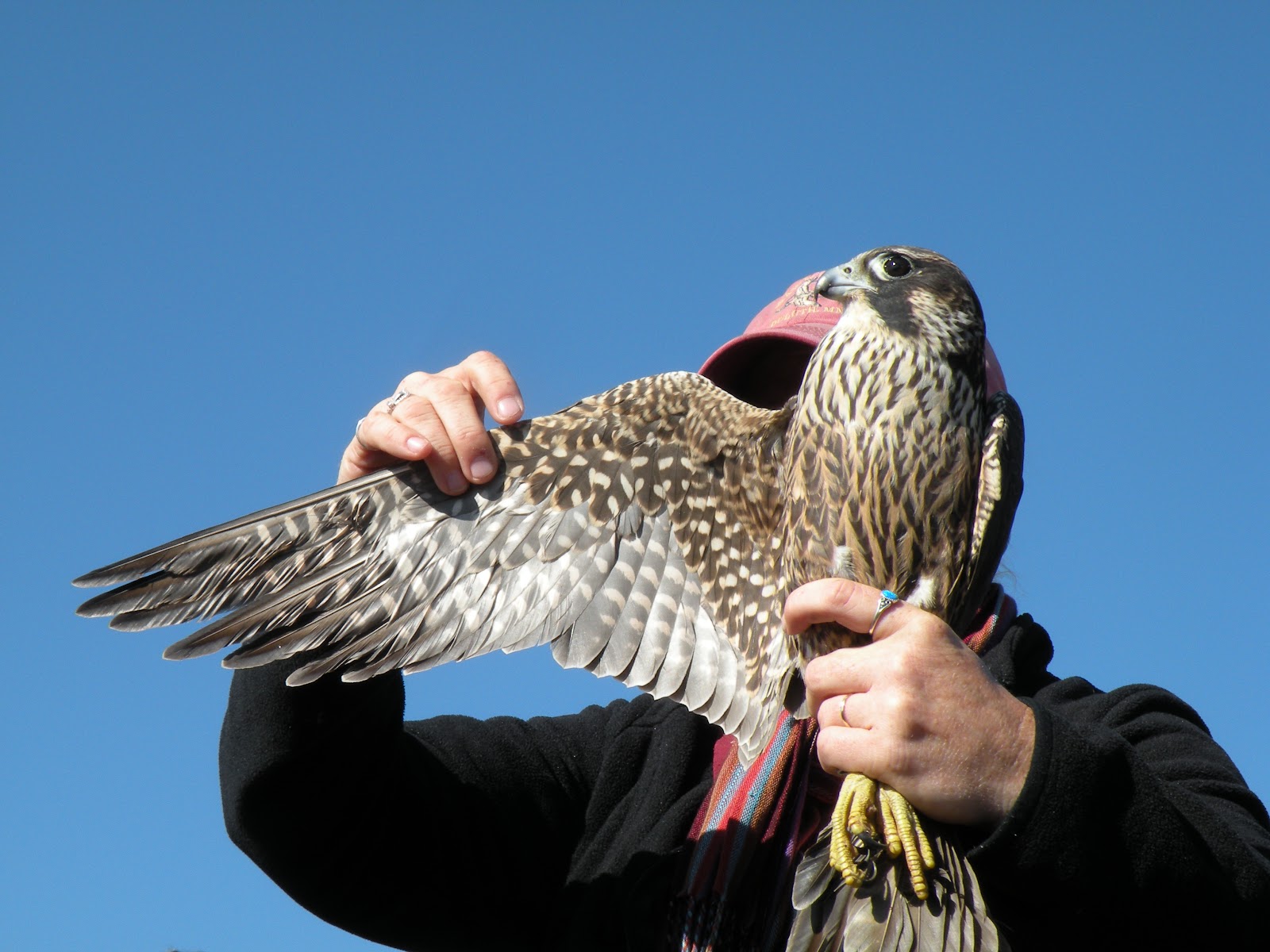
The long and tapered wings on this young
Peregrine Falcon means it was built for some
serious speed! Photo by Alyssa DeRubeis.
Maybe you’ve been put under the false assumption that humans are cool. Don’t get me wrong; our bodies can do some pretty neat physiological stuff. But I’m gonna burst your bubble: humans are lame. Just think of how fast we can run compared to a Peregrine Falcon in a full stoop: 27 MPH versus 242 MPH.

Keep thinking about all the cool things birds can do. It doesn’t take us long to realize that our feathered friends are vastly more fascinating compared to humans. Now that you’re finally admitting defeat, I ask that you read on.

The most amazing avian physiological feat is the ability to travel long distances seasonally (a.k.a migrate). Between poor weather conditions, preventing fat loss, and staying alert, migration is not easy by any means. However, birds can cope with all of these things by assimilating and using antioxidants like vitamin E.

Here’s a classic bird migration scene: thousands of Tundra Swans, geese, and ducks congregate on the Mississippi River in Minnesota. Here, they rest and refuel before continuing their journey south. Photo by Alyssa DeRubeis.

Let’s talk a little bit about bird migration. It’s a two-way street, where a migratory bird will (usually) fly north as soon as possible to rear its young, and then fly south where it can stay warm and eat all sorts of goodies. During these two bouts of intense exercise, the birds produce free radicals, which are types of atoms, molecules, and ions that can harm DNA and other important stuff inside the body. This is where vitamin E comes in to save the day, because this vitamin, along with vitamin A and carotenoids, are antioxidants. They drive away bad things like free radicals from birds’ bodies; some scientists suggest that they may even reduce risks of cancer! In the case of migrating birds, antioxidants can make this migration headache a lot more bearable.

Well, that’s great. But where do these antioxidants come from? The short answer is avian nom-noms, but it’s one thing to eat something with an antioxidant in it. It’s quite another to actually be able to assimilate and use this antioxidant. Okay…so where do the birds get this ability from? It’s parentals!

Anders Møller from the University of Paris-Sud, along with his international team including Clotilde Biard (France), Filiz Karadas (Turkey), Diego Rubolini (Italy), Nicola Saino (Italy), and Peter Surai (Scotland), pointed out that there is little research looking at maternal effects on our feathered friends. Møller hypothesized that maternal effects (the direct effects a mother has on her offspring) play a critical role in migration: If mothers put a lot of antioxidants in their eggs, the chicks will be able to absorb antioxidants better later in life. This would give these birds a competitive edge because they will migrate in a healthier condition and arrive to breeding grounds earlier.

This male Barn Swallow on the left must’ve gotten back pretty early for him to have landed himself such a beautiful female. Thank you, Vitamin E! Photo by Alyssa DeRubeis.

In the early 2000s, Møller and his five colleagues collected 93 bird species’ eggs. The crew was able to analyze how the natural differences in antioxidant concentrations (put in by the mother) related to the birds’ spring arrival dates in 14 of them. They found that vitamin E concentration, but not vitamin A concentration, was a reliable predictor of earlier arrival dates.

This European posse took it a step further by injecting over 700 barn swallow eggs with either a large dose of vitamin E or a dose of corn oil (which contains a small amount of vitamin E). It was soon evident that the chicks with more vitamin E were bigger than chicks that received less vitamin E, thus already giving the big chicks a competitive edge over their less vitamin E-affiliated brethren. The researchers kept track of the eggs that hatched out as males in the following spring via frequent mist-netting sessions (a bird-capturing technique). Guess what? The fellas with higher vitamin E concentrations arrived earlier on average by ten days than those with lower concentrations!

Sweet. But what does it all mean? First off, vitamin E is crucial for migratory birds because it allows them to process antioxidants more efficiently. In fact, another study done by Møller, Filiz Karadas, and Johannes Emitzoe out of University of Paris-Sud suggested that birds killed by feral cats had less vitamin E than birds that died of other reasons. Furthermore, the early birds get the worm. Events such as insect hatches—vital for baby birds—now occur earlier in the spring as temperatures rise (read: climate change). Plus, if you’re a male arriving at the breeding grounds early, you get to pick the best spots to raise your offspring.

Wood-warblers, such as this Palm Warbler, must get back to their northerly breeding grounds in a timely fashion in order to hit the insect hatch for da babies. Photo by Alyssa DeRubeis.

Obviously, there’s an advantage to up the vitamin E intake and get a head start as a developing embryo. In an egg, most nutrients come from the yolk…which comes from the mother. The healthier the mother, the more vitamin E she will put in her eggs. And vitamin E isn’t produced internally; birds must consume it. While Møller’s paper on maternal effects states that vitamin E can be found widely in nature, a separate study found no apparent association between vitamin E and avian diet. Hmm. So then where DO birds get vitamin E from? Is it a limiting resource? Is there competition for it?

Clearly, we’ve got some questions and answers. As the field of “birdology,” advances, we will learn more and keep humans jealous of birds for years to come.


REFERENCES

1. Møller, A., Biard, C., Karadas, F., Rubolini, D., Saino, N., & Surai, P. (2011). Maternal effects and changing phenology of bird migration Climate Research, 49 (3), 201-210 DOI: 10.3354/cr01030

2. Møller AP, Erritzøe J, & Karadas F (2010). Levels of antioxidants in rural and urban birds and their consequences. Oecologia, 163 (1), 35-45 PMID: 20012100

3. Cohen, A., McGraw, K., & Robinson, W. (2009). Serum antioxidant levels in wild birds vary in relation to diet, season, life history strategy, and species Oecologia, 161 (4), 673-683 DOI: 10.1007/s00442-009-1423-9

Tuesday, October 2, 2018

Friends Without Benefits: A Guest Post

A reposting of an original article by Joseph McDonald

Do you want to avoid the friend zone?
Photo by freedigitalphotos.net.
Guys DREAD the friend zone. That heart-aching moment when the girl you’ve been fawning over for years says you’re the best listener, the sister she never had, or so much better than a diary! You’ve been so nice to her and her friends, listening to all their drama. But that’s just the problem... you’re too nice to too many people.

Research performed by Aaron Lukaszewski and Jim Roney at the University of California – Santa Barbara (UCSB) tested whether preferences for personality traits were dependent on who the target was. In Experiment 1, they asked UCSB undergrads, on a scale from 1 to 7, the degree to which their ideal partner would display certain traits towards them and towards others. These traits included synonyms for kindness (e.g. affectionate, considerate, generous, etc.), trustworthiness (committed, dependable, devoted, etc.), and dominance (aggressive, brave, bold, etc.). Experiment 2 replicated the procedures of Experiment 1. The only difference was that the term “others” was divided into subsets including unspecified, family/friends, opposite sex non-family/friend, and same-sex non-family/friend.

Let’s go over the do’s and don’ts so that future “nice guys” aren’t friend zoned. According to the findings, as graphed below:

Figure from Aaron and Jim's 2010 Evolution and Human Behavior paper.
1. Women generally prefer men who are kind and trustworthy. So, to get that girl, don’t be mean; that’s not the point. This isn’t 3rd grade so don’t pull her hair and expect her to know that you LIKE-like her.

2. Women prefer men who are kinder and more trustworthy towards them than anyone else. So it’s not so much whether you are nice enough, its whether she knows you are nicer to her than anyone else.

3. Women prefer men who display similar amounts of dominance as they do kindness. Dominance isn’t a bad thing, as long as you can distinguish her friends from her foes; especially her male friends.

4. To make things more complicated, women also prefer men who are directly dominant toward other men but don’t display dominance toward them or their family/friends, whether male or female. Some guys may want to befriend these other men, but be weary. Women preferred dominance over kindness in this situation, so kindness may not be enough.

These preferences may have developed to avoid mating with someone willing to expend physical and material resources for extramarital relationships, and invest greater in her and the children. Moderate kindness and trustworthiness toward others will maintain social relationships and prevent detrimental relationships, which may be why women generally prefer kind and trustworthy guys. But in all fairness, women can be in the friend zone too; just look at Deenah and Vinny (excuse the shameful Jersey Shore reference).

There are some things that guys look for in a mate, so ladies, here is a little advice:

1. Guys generally want a mate who is kind and trustworthy, too. We’re not that different; so don’t act a little crazy because you think he likes it. He doesn’t.

2. Guys also prefer women who display dominance toward other women (non- family/friend). Don’t be afraid to put that random girl with the prying eyes in her place.

Contrary to the hypotheses predicting female mate preferences, male mate preferences may have developed as a way to take advantage of strong female-based social hierarchies. No matter what the reasoning, however, if you can
1) be kinder and more trustworthy towards that special someone than anyone else and
2) display dominance over other same-sex people, then feel free to say good-bye to the friend zone!


For further details, check out the original experiment:

Lukaszewski, A., & Roney, J. (2010). Kind toward whom? Mate preferences for personality traits are target specific Evolution and Human Behavior, 31 (1), 29-38 DOI: 10.1016/j.evolhumbehav.2009.06.008

Tuesday, September 25, 2018

Caught in My Web: We Are Primates

Image by Luc Viatour at Wikimedia Commons
If the news cycle these days has you wondering about our own humanity, take a moment to reflect on our primate nature. For this edition of Caught in My Web, let's explore primate behavior in the news.

1. Elizabeth Preston at Discover writes about lemur "stink flirting" in High-Ranking Male Primates Keep Wafting Their Sex Stink at Females, Who Hate It.

2. Janelle Weaver discusses how primates grant favors for their own social benefit at Nature in Monkeys Go Out on a Limb to Show Gratitude.

3. Roxanne Khamsi at NewScientist reports that Envious Monkeys Can Spot a Fair Deal.

4. Writing for The Verge, Angela Chen explains how we discovered that bonobos prefer to befriend bullies in For Bonobos, Nice Guys Finish Last.

5. In Those Lying Apes, Dale Peterson of Psychology Today discusses chimpanzee deception.

Sound familiar?

Tuesday, April 17, 2018

Birds, Vitamin E, and the Race Against Time: A Guest Post

A repost of an original article by Alyssa DeRubeis on February 6, 2013

The long and tapered wings on this young
Peregrine Falcon means it was built for some
serious speed! Photo by Alyssa DeRubeis.
Maybe you’ve been put under the false assumption that humans are cool. Don’t get me wrong; our bodies can do some pretty neat physiological stuff. But I’m gonna burst your bubble: humans are lame. Just think of how fast we can run compared to a Peregrine Falcon in a full stoop: 27 MPH versus 242 MPH.

Keep thinking about all the cool things birds can do. It doesn’t take us long to realize that our feathered friends are vastly more fascinating compared to humans. Now that you’re finally admitting defeat, I ask that you read on.

The most amazing avian physiological feat is the ability to travel long distances seasonally (a.k.a migrate). Between poor weather conditions, preventing fat loss, and staying alert, migration is not easy by any means. However, birds can cope with all of these things by assimilating and using antioxidants like vitamin E.

Here’s a classic bird migration scene: thousands of Tundra Swans, geese, and ducks congregate on the Mississippi River in Minnesota. Here, they rest and refuel before continuing their journey south. Photo by Alyssa DeRubeis.

Let’s talk a little bit about bird migration. It’s a two-way street, where a migratory bird will (usually) fly north as soon as possible to rear its young, and then fly south where it can stay warm and eat all sorts of goodies. During these two bouts of intense exercise, the birds produce free radicals, which are types of atoms, molecules, and ions that can harm DNA and other important stuff inside the body. This is where vitamin E comes in to save the day, because this vitamin, along with vitamin A and carotenoids, are antioxidants. They drive away bad things like free radicals from birds’ bodies; some scientists suggest that they may even reduce risks of cancer! In the case of migrating birds, antioxidants can make this migration headache a lot more bearable.

Well, that’s great. But where do these antioxidants come from? The short answer is avian nom-noms, but it’s one thing to eat something with an antioxidant in it. It’s quite another to actually be able to assimilate and use this antioxidant. Okay…so where do the birds get this ability from? It’s parentals!

Anders Møller from the University of Paris-Sud, along with his international team including Clotilde Biard (France), Filiz Karadas (Turkey), Diego Rubolini (Italy), Nicola Saino (Italy), and Peter Surai (Scotland), pointed out that there is little research looking at maternal effects on our feathered friends. Møller hypothesized that maternal effects (the direct effects a mother has on her offspring) play a critical role in migration: If mothers put a lot of antioxidants in their eggs, the chicks will be able to absorb antioxidants better later in life. This would give these birds a competitive edge because they will migrate in a healthier condition and arrive to breeding grounds earlier.

This male Barn Swallow on the left must’ve gotten back pretty early for him to have landed himself such a beautiful female. Thank you, Vitamin E! Photo by Alyssa DeRubeis.

In the early 2000s, Møller and his five colleagues collected 93 bird species’ eggs. The crew was able to analyze how the natural differences in antioxidant concentrations (put in by the mother) related to the birds’ spring arrival dates in 14 of them. They found that vitamin E concentration, but not vitamin A concentration, was a reliable predictor of earlier arrival dates.

This European posse took it a step further by injecting over 700 barn swallow eggs with either a large dose of vitamin E or a dose of corn oil (which contains a small amount of vitamin E). It was soon evident that the chicks with more vitamin E were bigger than chicks that received less vitamin E, thus already giving the big chicks a competitive edge over their less vitamin E-affiliated brethren. The researchers kept track of the eggs that hatched out as males in the following spring via frequent mist-netting sessions (a bird-capturing technique). Guess what? The fellas with higher vitamin E concentrations arrived earlier on average by ten days than those with lower concentrations!

Sweet. But what does it all mean? First off, vitamin E is crucial for migratory birds because it allows them to process antioxidants more efficiently. In fact, another study done by Møller, Filiz Karadas, and Johannes Emitzoe out of University of Paris-Sud suggested that birds killed by feral cats had less vitamin E than birds that died of other reasons. Furthermore, the early birds get the worm. Events such as insect hatches—vital for baby birds—now occur earlier in the spring as temperatures rise (read: climate change). Plus, if you’re a male arriving at the breeding grounds early, you get to pick the best spots to raise your offspring.

Wood-warblers, such as this Palm Warbler, must get back to their northerly breeding grounds in a timely fashion in order to hit the insect hatch for da babies. Photo by Alyssa DeRubeis.

Obviously, there’s an advantage to up the vitamin E intake and get a head start as a developing embryo. In an egg, most nutrients come from the yolk…which comes from the mother. The healthier the mother, the more vitamin E she will put in her eggs. And vitamin E isn’t produced internally; birds must consume it. While Møller’s paper on maternal effects states that vitamin E can be found widely in nature, a separate study found no apparent association between vitamin E and avian diet. Hmm. So then where DO birds get vitamin E from? Is it a limiting resource? Is there competition for it?

Clearly, we’ve got some questions and answers. As the field of “birdology,” advances, we will learn more and keep humans jealous of birds for years to come.

REFERENCES

1. Møller, A., Biard, C., Karadas, F., Rubolini, D., Saino, N., & Surai, P. (2011). Maternal effects and changing phenology of bird migration Climate Research, 49 (3), 201-210 DOI: 10.3354/cr01030

2. Møller AP, Erritzøe J, & Karadas F (2010). Levels of antioxidants in rural and urban birds and their consequences. Oecologia, 163 (1), 35-45 PMID: 20012100

3. Cohen, A., McGraw, K., & Robinson, W. (2009). Serum antioxidant levels in wild birds vary in relation to diet, season, life history strategy, and species Oecologia, 161 (4), 673-683 DOI: 10.1007/s00442-009-1423-9

Tuesday, February 27, 2018

Risky Business: Ape Style

A repost of an original article from April 3, 2013.

The decisions of this chimpanzee living in the
Tchimpounga Chimpanzee Sanctuary are affected
by his social situation. Photo by Alex Rosati.
If you have a choice between a prize that is awesome half the time and totally lame the other half of the time or a mediocre prize that is a sure-thing, which would you choose? Your choice probably depends on your personality somewhat. It may also depend on your needs and your mood. And it can depend on social contexts, like if you’re competing with someone or if you’re being watched by your boss or someone you have a crush on.

All animals have to make choices. Some choices are obvious: Choose the thing that is known to be of high quality over the thing that is known to be of low quality. But usually, the qualities of some options are uncertain and choosing them can be risky. As with us, the likelihood of some primates, birds, and insects to choose riskier options over safer ones can be affected by outside influences. And we aren’t the only species to have our risk-taking choices influenced by social context.

Anthropologists Alex Rosati and Brian Hare at Duke University tested two ape species, chimpanzees and bonobos, in their willingness to choose the riskier option in different social situations. They tested chimpanzees living in the Tchimpounga Chimpanzee Sanctuary and bonobos in the Lola ya Bonobo Sanctuary, both in the Democratic Republic of Congo. Most of the apes living in these sanctuaries are confiscated from poachers that captured them from the wild for the pet trade and for bushmeat. In these sanctuaries the animals live in social groups, generally spending their days roaming large tracts of tropical forest and their nights in indoor dormitories. This lifestyle rehabilitates their bodies and minds, resulting in psychologically healthy sanctuary inhabitants.

It is in these familiar dormitories that Alex and Brian tested the apes’ propensity for making risky choices. For their experimental set-up, an experimenter sat across a table from an ape and offered them two options: an overturned bowl that always covered a treat that the apes kinda like (peanuts) versus an overturned bowl that covered either an awesome treat (banana or apple) or a lousy treat (cucumber or lettuce). In this paradigm, the peanut-bowl represents the safe choice because whenever the ape chooses it, they know they’re getting peanuts. But the other bowl is the risky choice, because half the time they get fruit (yum!), but the other half of the time they get greens (bummer).

This figure from Rosati and Hare's 2012 Animal Behavour paper shows Alex demonstrating the steps they would go through before the ape chose one of the two options.
After spending some time training the apes to be sure they understood the game, the researchers tested their choices in different social situations. In each test session, the ape was allowed to choose between the two bowls (and eat the reward) multiple times (each choice was called a trial). But before the test session began and in between choice trials, another experimenter sat with the ape for two minutes and did one of three things: In one group, the experimenter sat at the table and silently looked down (they called this the “neutral condition”). In another group, the experimenter repeatedly offered the ape a large piece of food, pulling it away and grunting whenever the ape reached for it (they called this the “competitive condition”). In a third group, the experimenter tickled and played with the ape (they called this the “play condition”).

Alex and Brian found out that whereas bonobos chose the safe option and the risky option about equally, the chimpanzees were significantly more likely to choose the risky option. But despite this species difference, both species chose the risky option more often in the “competitive condition”. Neither species increased their risk-taking in the “play condition”.

The graph on the left shows that wheras bonobos chose the safe option and the risky option each about 50% of the time (where the dashed line is), the chimpanzees chose the risky option much more often. The graph on the right shows that both species chose the risky option more often in the "competition condition" than they did in the "neutral condition". Figure from Rosati and Hare's 2012 Animal Behavour paper.
These are interesting findings, especially when you consider the natural behaviors and lifestyles of these closely related species. Bonobos can be thought of as the hippies of the ape world, happily sharing and using sex to settle disputes and strengthen relationships. In comparison, chimpanzees are more like gangsters, aggressively fighting over resources and dominance ranks. So in general, the more competitive species is more likely to take risks. But when the social environment becomes more competitive, both species up the ante. This effect doesn’t seem to be simply the result of being in a social situation, because the apes didn’t increase their risk-taking in the presence of a playful experimenter.

This still leaves us with some questions to ponder though. Are apes more likely to take risks when an experimenter is offering food and taking it away because of a heightened sense of competition, or is this the result of frustration? And would we see the same effect if the “competitor” were another ape of the same species, rather than a human experimenter? How would their behavior change if they were hungry? These questions are harder to get at, but this research does demonstrate that like in humans, the decision-making process in chimpanzees and bonobos is dependent on social context.


Want to know more? Check this out:

Rosati, A., & Hare, B. (2012). Decision making across social contexts: competition increases preferences for risk in chimpanzees and bonobos Animal Behaviour, 84 (4), 869-879 DOI: 10.1016/j.anbehav.2012.07.010

Tuesday, December 19, 2017

Reindeer Games: 8 Surprising Facts About Reindeer

A Swedish reindeer watches you. Photo by Alexandre Buisse at Wikimedia Commons.

1. Reindeer are caribou (kinda): Reindeer are the same species as caribou (with the scientific name Rangifer tarandus), but the terms are not completely interchangeable. Rangifer tarandus is a species of deer that is native to Northern regions of Europe, Siberia and North America, which includes many different habitat types, like arctic, subarctic, tundra, snow forest and mountains. These variations in harsh environments have led to variations among populations, resulting in multiple subspecies. The Rangifer tarandus subspecies that live in North America are commonly called caribou and the subspecies that live in Europe and Siberia are commonly called reindeer. We also often refer to domesticated populations as reindeer, regardless of where they are.

A map of reindeer and caribou distributions. Image by TBjornstad at Wikimedia Commons.

2. Rudolf’s red nose was an adaptation: Technically, reindeer don’t have red noses, but they do have lots extra blood flow in them. The inside of their noses are twisted and vascularized so the warm blood can heat up the frigid Arctic air before it gets into the lungs.

3. Santa’s reindeer were probably girls: Not only do reindeer have the biggest antlers of all deer species (relative to body size), but they are the only deer species in which both males and females grow antlers. Both males and females use their antlers to scrape through the snow and look for food, but males also use their antlers to compete with one another and impress the ladies during the breeding season. Unlike horns, antlers shed and regrow every year, and this process is regulated by sex hormones. When the new antlers grow in spring, they are made up of cartilage and lots of blood vessels and are covered in a furry skin called velvet. The blood carries lots of calcium into the antlers, which helps them to grow and harden into bone. When testosterone levels drop in males at the end of their breeding season in early December, their antlers fall off. Females, however, generally keep their antlers until March or April. So, if Santa’s reindeer had antlers at the end of December, they were probably female!

4. If you’re going to pick an animal to travel the world in one night, reindeer are a good choice: Some North American caribou migrate over 3,000 miles a year (more than any other land mammal). They can run up to 50 miles per hour and swim over 6 miles per hour. Migration herds can be up to 500,000 animals and baby reindeer learn to run within two hours of birth!

A swimming caribou herd. Photo by Lestar Kovac at Wikimedia Commons.

5. Reindeer eat weird stuff: Like cows, reindeer are ruminants, which means their stomachs have multiple compartments, some of which specialize in maintaining microbial communities to help them digest. Unlike cows, reindeer predominantly eat lichen, which are combinations of algae and fungi that are typically high in carbohydrates and low in proteins. To make up for this low amount of protein in their diet, reindeer may occasionally eat rodents and bird eggs.

6. They have the coolest feet: Their hooves have four toes: two that splay out like snow shoes and two dew claws. Their hooves have sharp edges to dig for food and are paddle-shaped for swimming. Their hooves even change with the seasons to provide the best traction, being softer in the summer when the ground is soft and hard in the winter to walk on slippery snow and ice.

7. Some reindeer use clicking knees to communicate: Some subspecies have knees that click when tendons slip over bone extensions in their feet. They use this sound to stay with their herd, even when weather conditions limit visibility. But because larger reindeer have larger legs and therefore make louder knee-clicks, they also use these sounds to establish dominance.

8. Reindeer are the only mammals that can see UV light: They have a reflective layer in the back of their eyes that is golden in summer and blue in winter. When it is blue, this allows reindeer to see contrasts in UV light, such as lichen (which absorbs UV) versus snow (which reflects UV).

Tuesday, October 3, 2017

Mind-Manipulating Slave-Making Ants!

A reposting of an article from October 10, 2012.

An entire colony enslaved by an alien species to care for their young. Slave rebellions quelled by mind manipulation. It sounds like science fiction, right? But it really happens!

Myrmoxenus ravouxi (called M. ravouxi for “short”) is a slave-making ant species in which the queen probably wears a chemical mask, matching the scent of a host species in order to invade their nest without detection. Once inside, she lays her eggs for the host species workers to care for. Armies of M. ravouxi workers then raid these host colonies to steel their brood to become future slave-laborers to serve the needs of the M. ravouxi colony.

A M. ravouxi queen throttling a host queen. Photo by Olivier Delattre.

Enslaved worker ants could rebel: They could destroy the parasite brood or at least not do a good job caring for them. But to selectively harm the parasite brood without harming their own nests’ brood, the host ants would have to be able to tell them apart. Ants learn the smell of their colony in their youth, so any ants born to an already-parasitized colony would likely not be able to tell apart parasite ants from their own species. But what about ants that were born to colonies before they were invaded?

Olivier Delattre, Nicolas Châline, Stéphane Chameron, Emmanuel Lecoutey, and Pierre Jaisson from the Laboratory of Experimental Ethology in France figured that compared to ant species that were never hosts to M. ravouxi colonies, ant species that were commonly hosts of M. ravouxi colonies would be better able to discriminate their own species’ brood from M. ravouxi brood. Host species may even be better at discriminating in general.

The researchers collected ant colonies from near Fontainebleau and Montpellier in France. They collected M. ravouxi colonies and colonies of a species that they commonly parasitize (but were not parasitized at the time): Temnothorax unifasciatus (called T. unifasciatus for “short”). The researchers also collected T. unifasciatus that were parasitized by M. ravouxi at the time. Additionally, they collected colonies of T. nylanderi and T. parvulus, two species that are never parasitized by M. ravouxi. (Sorry guys. All these species go by their scientific names. But really, that just makes them sound all the more mysterious, right?). The researchers took all their ant colonies back to the lab and housed them in specialized plastic boxes (i.e. scientific ant-farms).

On the day of the tests, the scientists removed a single pupa (kind of like an ant-toddler) from one nest and placed it into a different nest of the same species or back in its own nest. They did this for colonies of both non-host species and for colonies of host species T. unifasciatus that were not parasitized at the time. Then they counted how many times the workers bit the pupa (an aggressive behavior) or groomed the pupa (a caring behavior).

Workers from all three species bit the pupa that was not from their colony more than they bit their own colony’s pupa. But the T. unifasciatus (the host species) were even more aggressive to foreign pupa than the other species. And only the T. unifasciatus withheld grooming from the pupa that was not from their colony compared to the one that was from their colony. Although all three species seemed to be able to tell the difference between a pupa from their own nest versus one from another nest, only the species that is regularly enslaved by M. ravouxi decreased care to foreign young. So that is what these ants do when they are not enslaved. How do you think enslaved ants respond to their own species’ young compared to M. ravouxi young?

A 1975 cover of Galaxie/Bis, a French science
fiction magazine, by Philippe Legendre-Kvater.
Image from Wikimedia.
The researchers repeated the study using enslaved T. unifasciatus, placing either a pupa of their own species from a different nest or a M. ravouxi pupa in with their brood. Even though prior to M. ravouxi takeover the T. unifasciatus bit foreign pupa more than their own, after M. ravouxi takeover they didn’t bite foreign pupa of their own species or M. ravouxi pupa very much. Not only that, but they groomed the M. ravouxi pupa more than the pupa of their own species! Ah hah! Mind control!

This, my friends, is the kind of truth that science fiction is made from.

But how might this work? Ants born to an enslaved colony would be exposed to both their own odors and the M. ravouxi odors. Because ants learn the smell of their colony in the first few days after they emerge from their eggs, these enslaved ants would have a broader set of smells that they may perceive as being “within the family”. That would explain why the enslaved T. unifasciatus ants didn’t attack either the foreign-born T. unifasciatus or the M. ravouxi young, but it doesn’t explain why the enslaved ants provided more care to the M. ravouxi than they did to their own species. One possibility is that the M. ravouxi produce more or especially attractive odors to encourage the host workers to take care of them.

There is still more to learn about this system: How exactly may the M. ravouxi be hijacking the pheromonal systems of their host species? How are the host species protecting themselves from exploitation? I guess we’ll have to wait for the sequel.

Want to know more? Check this out:

Delattre, O., Chȃline, N., Chameron, S., Lecoutey, E., & Jaisson, P. (2012). Social parasite pressure affects brood discrimination of host species in Temnothorax ants Animal Behaviour, 84, 445-450 DOI: 10.1016/j.anbehav.2012.05.020