We think of song as an artistic expression, a beat to groove to, a melodic story. But to animals that use it (arguably including many birds, whales, and primates), “song” is generally a competitive vocal signal used to attract mates and deter rivals. This leaves us wondering: Do any non-human animals have music? Can they even enjoy human music? Some certainly seem to:
A Cockatoo Shakes His Tailfeather:
A Beluga Whale Listens To A Mariachi Serenade:
A Dog Grooves To His Buddy's Guitar:
What do you think? There is evidence that some animals enjoy singing themselves, but can non-human animals appreciate human music? What is it about rhythms and melodies that we humans appreciate anyway and can the ability to appreciate music improve an animal’s (including our own) chance of survival?
It turns out, some researchers have tackled these questions. But that, my friends, is for another post.
Cephalopods, like octopuses, squid, and cuttlefish, are well known for their ability to alter the color and patterns on their bodies for better camouflage, mimicry, and even communication. By developing a unique set of camouflage tools, cephalopods excel at not being seen or being seen but not detected as a cephalopod. There are videos all over the internet showcasing how squid can terrify divers with their flashing red displays, or how some octopuses avoid their predators by mimicking the local venomous snakes. This video provides the perfect example of an octopus using its incredible camouflage to become invisible while convincing you it is merely a clump of algae.
You see, where many animals have lowly organelles in their skin cells responsible for pigments, cephalopods are unique in having a whole organ dedicated to this task. They’re called chromatophores. Each chromatophore is made up of colored pigment granules held in the ever so eloquently named cytoelastic sacculus, which is surrounded by 15 to 25 radially arranged muscle cells (like spokes on a wheel). Each muscle cell is also associated with a neural axon and its supportive glial cells, which puts it under the control of the nervous system.
Image created by Ian Straus.
So, when an octopus wants to change color, a signal travels from the brain and down the neural axon to the chromatophore, telling the muscles to contract. The muscle contraction pulls on the pigment-filled sac, stretching it to change its translucence and thereby changing the amount of color showing through. The chromatophores can produce yellow, orange, red, brown, and occasionally black pigments. The intensity of the color depends on how many muscle fibers are contracted, and therefore how much the sac expands and the pigment is spread out. Once a chromatophore develops, it will stay put for the rest of the animal’s life. As the animal grows, new, smaller chromatophores develop in the spaces between the old ones. These new organs are only able to produce yellow pigment at first, but darken as they get older.
Dieter Froesch of the Zoological Station of Naples conducted an experiment using the common octopus (Octopus vulgaris) to determine which of their nerves control the chromatophore organs in each part of the body. Each octopus examined was anaesthetized, had a nerve cut and was then checked a few days later for the results.
Froesch found that of the thirty nerves leaving the brain of O. vulgaris, ten have control over chromatophores, with each nerve controlling a different region of the body. These regions have well defined borders with no overlap. The head region alone is controlled by five different nerves, especially around the eyes. This suggests that fine control over color patterns around the eye may play an important role in effective camouflage. Furthermore, the coloration and chromatophores in one area of the body, the funnel, didn’t appear to be controlled by any of the nerves cut in this experiment.
This image shows the different chromatophore regions that each nerve controls. The funnel, which does not have nerve-controlled chromatophores, is the tube near the eye. Image is from Froesch’s Marine Biology paper (1973).
In most cephalopods, vision is the most important sense. Information about their surroundings is processed in vision regions of the brain, which then send along information to chromatophore regions of the brain. The chromatophore brain regions, which contain motor neurons, send signals to the chromatophores throughout the body telling them to contract. So, if an octopus sees a bright orange coral structure, the chromatophores will contract in a way that results in bright orange skin being displayed.
The vision-chromatophore pathway may be the most important part of cephalopod camouflage, but it isn’t the only set of structures that play a role. Leucophores allow for white pigment and reflective iridophores are responsible for blues and greens. Cuttlefish and many octopuses also have muscles throughout the skin arranged into papillae, which can form bumps or spikes that transform the texture of the animal into that of seaweed or an inconspicuous rock. In Octopus vulgaris, all these components are arranged into 1 mm wide units distributed across the skin, with the leucophores and iridophores in the central region, papillae at the exact center, and chromatophores distributed throughout. This complex physiological system grants cephalopods the greatest array of possible camouflages and firmly positions them as the coolest of the invertebrates.
Want to know more? Check these out:
1. Froesch, D. (1973). Projection of chromatophore nerves on the body surface of Octopus vulgaris Marine Biology, 19 (2), 153-155 DOI: 10.1007/BF00353586
2. Messenger JB (2001). Cephalopod chromatophores: neurobiology and natural history. Biological reviews of the Cambridge Philosophical Society, 76 (4), 473-528 PMID: 11762491
Guys DREAD the friend zone. That heart-aching moment when the girl you’ve been fawning over for years says you’re the best listener, the sister she never had, or so much better than a diary! You’ve been so nice to her and her friends, listening to all their drama. But that’s just the problem... you’re too nice to too many people.
Research performed by Aaron Lukaszewski and Jim Roney at the University of California – Santa Barbara (UCSB) tested whether preferences for personality traits were dependent on who the target was. In Experiment 1, they asked UCSB undergrads, on a scale from 1 to 7, the degree to which their ideal partner would display certain traits towards them and towards others. These traits included synonyms for kindness (e.g. affectionate, considerate, generous, etc.), trustworthiness (committed, dependable, devoted, etc.), and dominance (aggressive, brave, bold, etc.). Experiment 2 replicated the procedures of Experiment 1. The only difference was that the term “others” was divided into subsets including unspecified, family/friends, opposite sex non-family/friend, and same-sex non-family/friend.
Let’s go over the do’s and don’ts so that future “nice guys” aren’t friend zoned. According to the findings, as graphed below:
Figure from Aaron and Jim's 2010 Evolution and Human Behavior paper.
1. Women generally prefer men who are kind and trustworthy. So, to get that girl, don’t be mean; that’s not the point. This isn’t 3rd grade so don’t pull her hair and expect her to know that you LIKE-like her.
2. Women prefer men who are kinder and more trustworthy towards them than anyone else. So it’s not so much whether you are nice enough, its whether she knows you are nicer to her than anyone else.
3. Women prefer men who display similar amounts of dominance as they do kindness. Dominance isn’t a bad thing, as long as you can distinguish her friends from her foes; especially her male friends.
4. To make things more complicated, women also prefer men who are directly dominant toward other men but don’t display dominance toward them or their family/friends, whether male or female. Some guys may want to befriend these other men, but be weary. Women preferred dominance over kindness in this situation, so kindness may not be enough.
These preferences may have developed to avoid mating with someone willing to expend physical and material resources for extramarital relationships, and invest greater in her and the children. Moderate kindness and trustworthiness toward others will maintain social relationships and prevent detrimental relationships, which may be why women generally prefer kind and trustworthy guys. But in all fairness, women can be in the friend zone too; just look at Deenah and Vinny (excuse the shameful Jersey Shore reference).
There are some things that guys look for in a mate, so ladies, here is a little advice:
1. Guys generally want a mate who is kind and trustworthy, too. We’re not that different; so don’t act a little crazy because you think he likes it. He doesn’t.
2. Guys also prefer women who display dominance toward other women (non- family/friend). Don’t be afraid to put that random girl with the prying eyes in her place.
Contrary to the hypotheses predicting female mate preferences, male mate preferences may have developed as a way to take advantage of strong female-based social hierarchies. No matter what the reasoning, however, if you can 1) be kinder and more trustworthy towards that special someone than anyone else and 2) display dominance over other same-sex people, then feel free to say good-bye to the friend zone!
For further details, check out the original experiment:
Lukaszewski, A., & Roney, J. (2010). Kind toward whom? Mate preferences for personality traits are target specific Evolution and Human Behavior, 31 (1), 29-38 DOI: 10.1016/j.evolhumbehav.2009.06.008
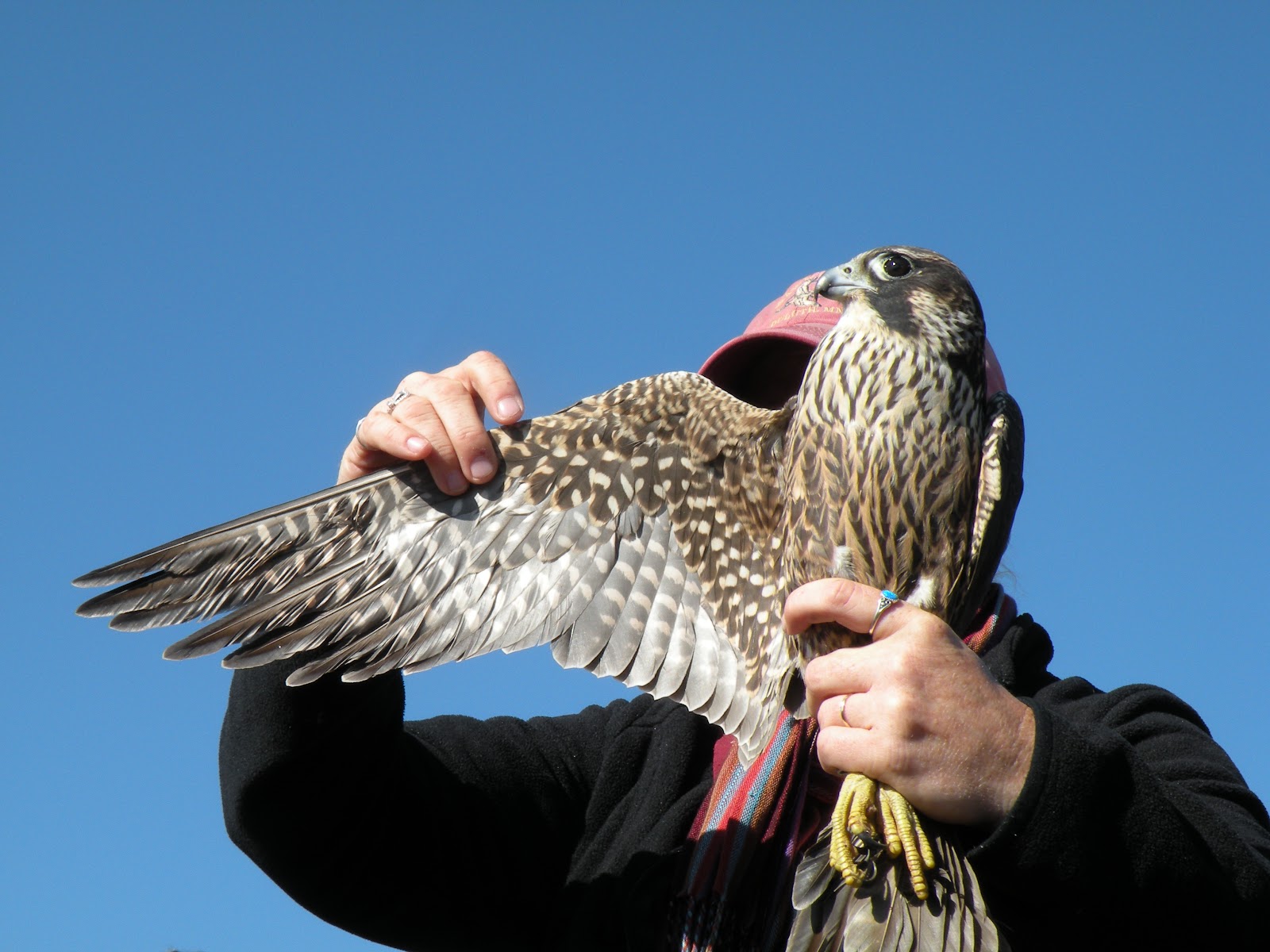
The long and tapered wings on this young
Peregrine Falcon means it was built for some
serious speed! Photo by Alyssa DeRubeis.
Maybe you’ve been put under the false assumption that humans are cool. Don’t get me wrong; our bodies can do some pretty neat physiological stuff. But I’m gonna burst your bubble: humans are lame. Just think of how fast we can run compared to a Peregrine Falcon in a full stoop: 27 MPH versus 242 MPH.
Keep thinking about all the cool things birds can do. It doesn’t take us long to realize that our feathered friends are vastly more fascinating compared to humans. Now that you’re finally admitting defeat, I ask that you read on.
The most amazing avian physiological feat is the ability to travel long distances seasonally (a.k.a migrate). Between poor weather conditions, preventing fat loss, and staying alert, migration is not easy by any means. However, birds can cope with all of these things by assimilating and using antioxidants like vitamin E.
Here’s a classic bird migration scene: thousands of Tundra Swans, geese, and ducks congregate on the Mississippi River in Minnesota. Here, they rest and refuel before continuing their journey south. Photo by Alyssa DeRubeis.
Let’s talk a little bit about bird migration. It’s a two-way street, where a migratory bird will (usually) fly north as soon as possible to rear its young, and then fly south where it can stay warm and eat all sorts of goodies. During these two bouts of intense exercise, the birds produce free radicals, which are types of atoms, molecules, and ions that can harm DNA and other important stuff inside the body. This is where vitamin E comes in to save the day, because this vitamin, along with vitamin A and carotenoids, are antioxidants. They drive away bad things like free radicals from birds’ bodies; some scientists suggest that they may even reduce risks of cancer! In the case of migrating birds, antioxidants can make this migration headache a lot more bearable.
Well, that’s great. But where do these antioxidants come from? The short answer is avian nom-noms, but it’s one thing to eat something with an antioxidant in it. It’s quite another to actually be able to assimilate and use this antioxidant. Okay…so where do the birds get this ability from? It’s parentals!
Anders Møller from the University of Paris-Sud, along with his international team including Clotilde Biard (France), Filiz Karadas (Turkey), Diego Rubolini (Italy), Nicola Saino (Italy), and Peter Surai (Scotland), pointed out that there is little research looking at maternal effects on our feathered friends. Møller hypothesized that maternal effects (the direct effects a mother has on her offspring) play a critical role in migration: If mothers put a lot of antioxidants in their eggs, the chicks will be able to absorb antioxidants better later in life. This would give these birds a competitive edge because they will migrate in a healthier condition and arrive to breeding grounds earlier.
This male Barn Swallow on the left must’ve gotten back pretty early for him to have landed himself such a beautiful female. Thank you, Vitamin E! Photo by Alyssa DeRubeis.
In the early 2000s, Møller and his five colleagues collected 93 bird species’ eggs. The crew was able to analyze how the natural differences in antioxidant concentrations (put in by the mother) related to the birds’ spring arrival dates in 14 of them. They found that vitamin E concentration, but not vitamin A concentration, was a reliable predictor of earlier arrival dates.
This European posse took it a step further by injecting over 700 barn swallow eggs with either a large dose of vitamin E or a dose of corn oil (which contains a small amount of vitamin E). It was soon evident that the chicks with more vitamin E were bigger than chicks that received less vitamin E, thus already giving the big chicks a competitive edge over their less vitamin E-affiliated brethren. The researchers kept track of the eggs that hatched out as males in the following spring via frequent mist-netting sessions (a bird-capturing technique). Guess what? The fellas with higher vitamin E concentrations arrived earlier on average by ten days than those with lower concentrations!
Sweet. But what does it all mean? First off, vitamin E is crucial for migratory birds because it allows them to process antioxidants more efficiently. In fact, another study done by Møller, Filiz Karadas, and Johannes Emitzoe out of University of Paris-Sud suggested that birds killed by feral cats had less vitamin E than birds that died of other reasons. Furthermore, the early birds get the worm. Events such as insect hatches—vital for baby birds—now occur earlier in the spring as temperatures rise (read: climate change). Plus, if you’re a male arriving at the breeding grounds early, you get to pick the best spots to raise your offspring.
Wood-warblers, such as this Palm Warbler, must get back to their northerly breeding grounds in a timely fashion in order to hit the insect hatch for da babies. Photo by Alyssa DeRubeis.
Obviously, there’s an advantage to up the vitamin E intake and get a head start as a developing embryo. In an egg, most nutrients come from the yolk…which comes from the mother. The healthier the mother, the more vitamin E she will put in her eggs. And vitamin E isn’t produced internally; birds must consume it. While Møller’s paper on maternal effects states that vitamin E can be found widely in nature, a separate study found no apparent association between vitamin E and avian diet. Hmm. So then where DO birds get vitamin E from? Is it a limiting resource? Is there competition for it?
Clearly, we’ve got some questions and answers. As the field of “birdology,” advances, we will learn more and keep humans jealous of birds for years to come.
REFERENCES
1. Møller, A., Biard, C., Karadas, F., Rubolini, D., Saino, N., & Surai, P. (2011). Maternal effects and changing phenology of bird migration Climate Research, 49 (3), 201-210 DOI: 10.3354/cr01030
2. Møller AP, Erritzøe J, & Karadas F (2010). Levels of antioxidants in rural and urban birds and their consequences. Oecologia, 163 (1), 35-45 PMID: 20012100
3. Cohen, A., McGraw, K., & Robinson, W. (2009). Serum antioxidant levels in wild birds vary in relation to diet, season, life history strategy, and species Oecologia, 161 (4), 673-683 DOI: 10.1007/s00442-009-1423-9
Starting a weekly journalistic-type blog is a daunting task, especially for someone who is holding down other jobs (as most bloggers do). But I can't be happier that I started down this path in order to share with you all these wonderfully quirky stories of animal behavior and physiology. This week, I am happy to announce that The Scorpion and the Frog turns 1! It has been a remarkable first year: We've covered topics from whale dialects, to birds that kill their "siblings", to steroids and dominance in rodents; We've learned more about the researchers that contribute this fascinating knowledge to our global society; We've had fantastic guest posts by student guest writers; We've been recognized in other blogs and with awards; But my favorite aspect of this endeavor is that we are developing a growing community of readers and animal enthusiasts from all backgrounds. So today, I would like to reflect back on how we began a year ago with a repost of the very first The Scorpion and the Frog post, The Same Clay.
The Same Clay
According to a Hopi creation myth, the world was once nothing but water and dry land. The Sun, in his
daily travels across the dry land, noticed that he had not seen a single living
being. The Sun mentioned this observation to Hurúing Wuhti of the east and Hurúing
Wuhti of the west, the deities of all hard substances, and they decided they
would make a little bird. Hurúing Wuhti of the east made a wren out of clay and
covered it with a piece of native cloth. The deities then sang a song over it
and the wren came to life. They sent the wren to fly all over the earth to
search for anything living, which it did. When the wren returned and reported
that no living being existed anywhere, Hurúing Wuhti of the west shaped the
clay to form all kinds of birds and placed these clay birds under the native
cloth. The deities sang over the clay birds, bringing them to life, and they
taught each of them what sounds they should make and sent them to populate the
earth. Hurúing Wuhti of the west then shaped the clay to form all kinds of
other animals and placed these clay animals under the native cloth. The deities
sang over the clay animals, bringing them to life, and they taught them each
what sounds they should make and sent them to populate the earth. Hurúing Wuhti
of the east then shaped the clay to form a woman and a man and placed these
people under the native cloth. The deities brought them to life with their
song, and they taught them language and sent them to populate the earth.
I
like this myth; in particular because it illustrates that despite the awesome
diversity of the animals on our planet, we are all made of the same stuff and
share many similarities. At first glance, we may be amazed by eels that resist
eating prey fish who are providing a dental cleaning service (like the one on the left),
or by snakes that
eat animals larger than their own heads and toads that save themselves from the
jaws of death by puffing up their bodies even larger than the snake can handle (like the snake and toad battling it out on the right),
or by the elaborate displays of male birds in their attempts to woo females (like the golden pheasant below),
or
by kangaroo moms that guard their toddler-like young in their own bodies (like the one on the right).
But
at closer inspection, we realize that all of these animals are facing similar
challenges: All animals are driven to eat and not be eaten, to stay healthy, to
make babies, and to keep their babies alive. And animals have developed
behavioral tools to achieve these goals, such as ways of finding or making food
and a place to live, ways to defend these things, techniques for attracting the
opposite sex, and parental methods. The details are extremely diverse across
animal groups, but the ultimate goals and many of the strategies are common.
And amazingly, the brain systems that regulate these behaviors are common too.
The social behavior network is a term first described in mammals by neuroscientist Sarah Newman to describe several brain regions that are all sensitive to steroid hormones (such as testosterone and estrogen), connect to each other, and are involved in many types of social behavior (including aggression, sexual behavior and parental behavior). We now know that reptiles, birds and fish also have brain areas that are similar in how they connect to one another and what neurotransmitters and other neurochemicals they use. More importantly, these brain areas seem to relate to the same types of social behaviors in similar ways.
The mesolimbic reward system is primarily a circuit of neurons that interact using the neurotransmitter dopamine. This neural circuit is central to how the brain controls motivation and a sense of desire and reward. This system is also involved in evaluating the importance of what is being perceived in order to behave accordingly. The mesolimbic reward system has been studied most in mammals, but birds, reptiles and fish are known to seek pleasure too and similar brain structures are likely involved.
This figure from O'Connell and Hofmann's paper in the Journal of Comparative Neurology shows corresponding brain regions in mammals, birds, reptiles, amphibians and fish. The images are shown as cross-sections of the brains as if we are looking directly at the front of the animals.
O’Connell and Hofmann show that the
social behavior network and mesolimbic reward system work together as a single
social decision-making system. For example, if one animal comes onto the
territory of another animal, the brain areas of these two systems will work
together to determine if the interloper should be fought, courted, nurtured, or
eaten. (Imagine the consequences of getting this decision wrong!) Although
mammals, birds, reptiles, amphibians and fish have very different lifestyles
and brains, most of the brain areas of this social decision-making system are
present, identifiable, and most importantly, play similar roles in regulating
social behavior across all these animal groups. In the end, we’re not all so
different after all.
Want to know more? Check these out:
1. O'Connell, L., & Hofmann, H. (2011). The Vertebrate mesolimbic reward system and social behavior network: A comparative synthesis The Journal of Comparative Neurology, 519 (18), 3599-3639 DOI: 10.1002/cne.22735
2. O’Connell, L., & Hofmann, H. (2011). Genes, hormones, and circuits: An integrative approach to study the evolution of social behavior Frontiers in Neuroendocrinology, 32 (3), 320-335 DOI: 10.1016/j.yfrne.2010.12.004